One of the things I love about YouTube is that whenever the mood strikes you to do a training session, you can find the exact kind of workout you’re looking for, led by a trainer.
I’m a runner who’s always aiming to do more supportive strength training to improve my performance and injury resilience, but I’m not the most motivated when it comes to weight training.
That means when a window opens up to train, and I do feel like doing it, I love being able to jump onto YouTube and find a session that suits my goals.
That’s exactly what happened with this 15-minute standing dumbbell workout from fitness trainer FitByMik. I wanted a lower-body session that uses dumbbells and isn’t a HIIT-style workout, and this session ticked all the boxes.
You need a couple of dumbbells for the workout — Mikala is using 15lb weights, and I used 27.5lb weights. If you have a set of the best adjustable dumbbells, then you can pick the exact weight required for each move as you do the session.
Watch FitByMik’s 15-minute lower body workout
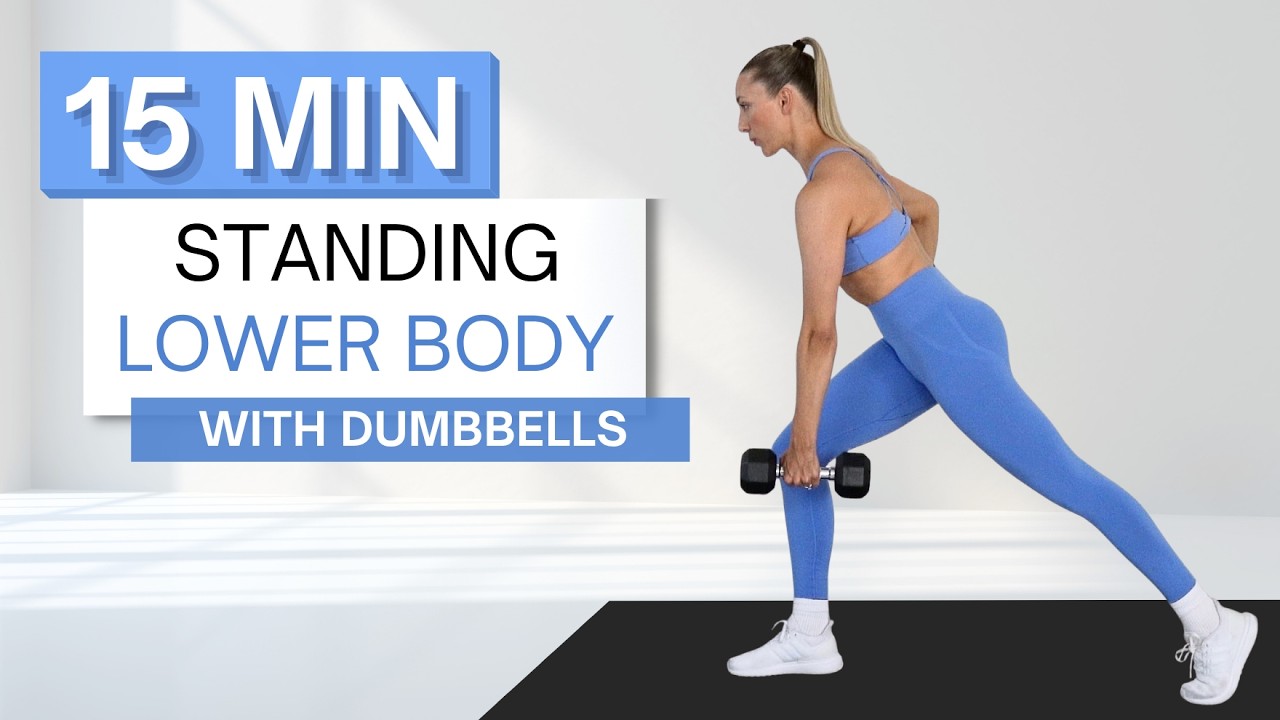
Along with the workout itself, Mikala leads you through a quick warm-up and cool-down in the video, which are worth doing too unless you’re really pressed for time — they only add an extra two to three minutes in total.
During the workout itself, you do each move for 45 seconds and then rest for 15 seconds before going on to the next one. That rest does not feel like a long time, I can tell you, since you spend most of it getting into position for the next exercise.
Along with your dumbbells, it’s handy to have one of the best yoga mats to give you better traction during the workout, but it’s not essential.
I did the workout after a run one morning. Here are five reasons why I think any runner will find it a worthwhile addition to their training routine.
It’s a controlled session so you can use heavy weights
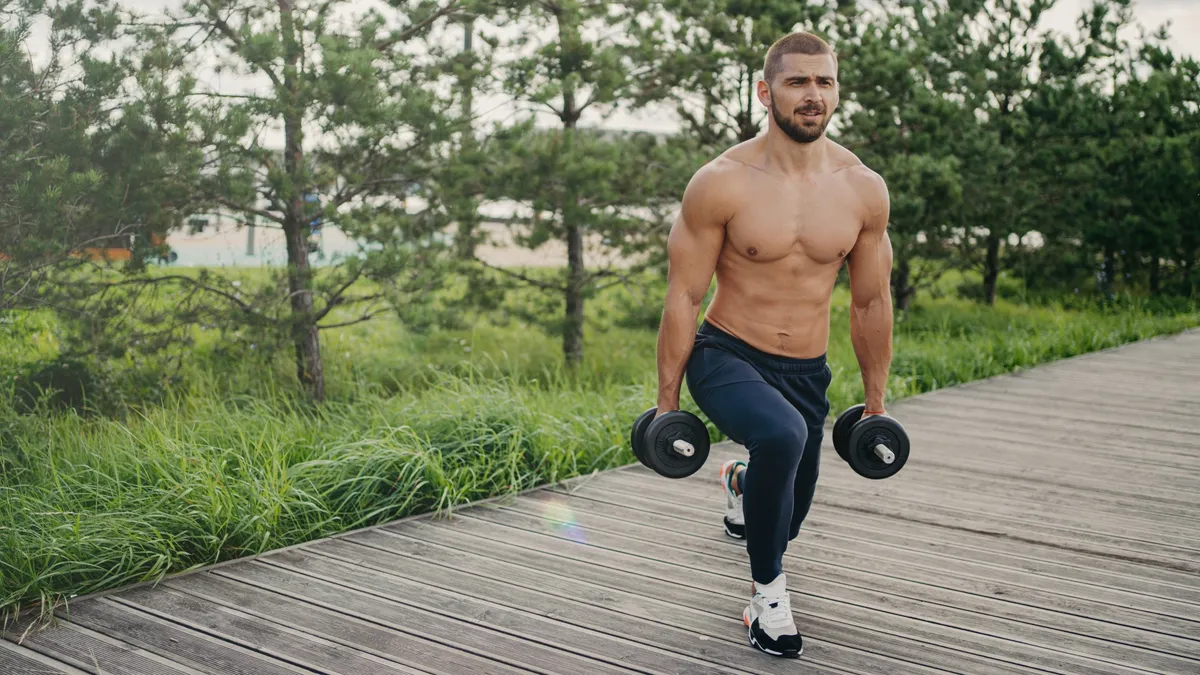
This is not a frenetic HIIT workout where you move as fast as possible. In each set, you move with control, focusing on maintaining good form.
This means that you not only ensure you’re working the right muscles and maintaining your technique, but also that you can use heavy weights more safely.
Since this is a lower-body-focused session, it’s helpful to use heavy weights that target the big lower-body muscle groups, and as a runner, that kind of training is highly beneficial.
There’s a lot of single-leg exercises

Whenever I’m doing strength training, I aim to incorporate a lot of single-leg exercises, which mimic the challenges involved in running effectively.
This session has moves like split squats, single-leg deadlifts, and side leg lifts, all of which make you work each leg individually and strengthen them for your runs.
It improves your balance and core stability

Along with directly working your legs and glutes through moves like squats and deadlifts, the workout is great for your core strength and stability and also boosts your balance.
This is because you’re wielding heavy dumbbells while maintaining your form, so your trunk is working hard to keep your balance throughout, especially when you’re working on one leg.
I value this kind of stability highly, because late in long races like marathons, you need a strong core to hold your upright form and keep running efficiently.
The whole lower body is worked from different angles

Running is a repetitive sport where you move in mostly the same way for several hours a week, which can mean that some of your muscles get neglected relative to others.
This workout involves moves like curtsey lunges, side-to-side squats, and side leg lifts, all of which forced me out of the up-and-down, forward-and-backward planes of motion I mostly operate in, working muscles that needed attention.
It doesn’t completely trash the legs and give you major DOMS

If you follow a structured training plan for your running, then you’ll know that there’s always an important session coming up — you might do one or two of them a week.
I always want to nail those sessions, and as a result, I can put off strength training because I don’t want to push myself too hard with the weights and have horrible muscle soreness during my running workouts.
For me, this workout is the perfect length and intensity to get some beneficial strength training done without pushing so hard that I’m tired or negatively impacted on my next run — I did it the day before a big session, and didn’t feel worried it was going to hold me back.

Follow Tom's Guide on Google News and add us as a preferred source to get our up-to-date news, analysis, and reviews in your feeds. Alternatively, you can read our content on the Tom's Guide app available now for iOS and Android. Subscribe to Tom's Guide on YouTube and follow us on TikTok.
More from Tom's Guide
- I teach people how to be more mobile: 3 low-impact back and shoulder moves that build stability and strength after 40
- I’m a personal trainer who works with clients aged 65+ daily. Here are the 2 exercises I always recommend when it comes to building mobility and balance
- A Pilates instructor shares a 6-move routine for over-60s to build balance, mobility and functional core strength