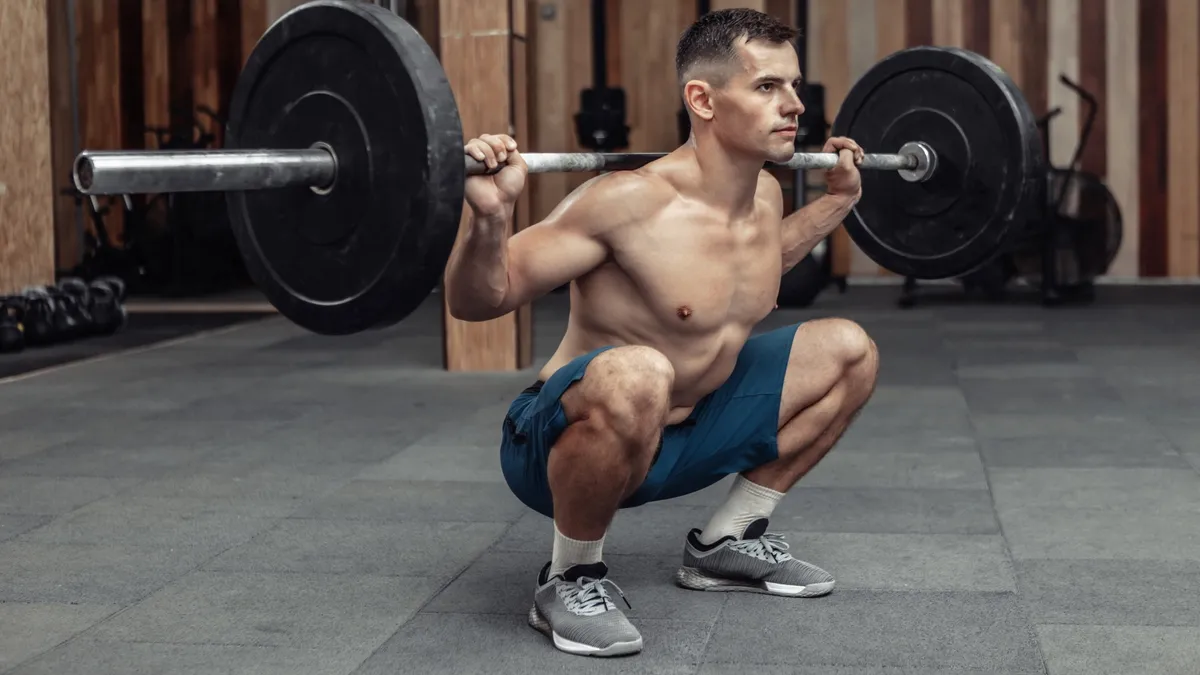
Squats are one of the most effective compound exercises you can do to build lower-body strength and muscle. For many, limited mobility can negatively impact mechanics, as well as how well the strength exercise can be performed.
If your form is off or you’re limited by mechanics, you may not achieve adequate squat depth (we like to live life below parallel) or get the most from the lower body exercise. And you could increase your likelihood of developing an injury.
One mobility exercise I highly recommend to combat this and boost squat mobility is the duck walk. This exercise is designed to strengthen the lower body, open the hips, and improve posture and joint range of motion, helping prepare you for squatting with or without weights.
Here’s how to do the duck walk, the benefits and why I’m adding the mobility drill to my routine.
What is the duck walk?
To do the duck walk, you’ll sit low into a squat position, place your hands behind your head, then walk forward, keeping your back straight, chest proud and butt low.
When adding duck walks to my warm-ups, I took inspiration from Sonny Webster, an ex-Olympic weightlifting athlete, mobility king and Olympic weightlifting specialist. He says: “The key to mobility, just like strength training, is consistency and progressive loading. That’s why I love exercises like the duck walk.”
Progressive loading doesn’t just refer to lifting weights — you can progressively add intensity to an exercise in so many ways, not just by adding weight over time.
Webster recommends making the exercise harder by either adapting positioning or adding weight. “This builds strength through your full range of motion,” he says.
How to duck walk
Webster teaches the drill in three ways.
The first is the bodyweight duck walk. Link your fingers behind your head and drive the elbows up and forward. From here, take a shoulder-width stance with your feet and lower into your squat — chest proud and back straight.
Drive the knee over the toes and take your first step, planting the heel down without the knee touching the ground. Repeat on the other side and continue to walk forward with your knee always driving past your toes before you step. The elbows must stay up and forward like you would for a clean.
The second option is to hold a weight plate behind your head and gently press your head back into the plate to keep your gaze up and back straight. The third option, Webster coaches flats of the hands underneath a plate, then presses the weight overhead with elbows locked out. You may need to move more slowly and your hands must remain beneath the plate — a bit like holding a platter of food.
The overhead squat variation, for most people, is the toughest. Build up to it if you're new to the exercise.
As Webster coaches each option, watch the rolling motion as he drives knee-first, then steps. It’s a great way to learn how to track the knees over the toes while targeting ankle mobility. You'll feel your quads working hard here, too.
What are duck walks good for?
If you haven’t paid much attention to mobility versus stretching when warming up, learning to utilize both methods in your exercise routine will be a game-changer for your workouts. Historically, I used to turn up to workouts and throw myself straight in or bundle manically into class minutes before they started.
Over time, through becoming a coach and developing my own fitness journey, especially since I started taking CrossFit more seriously, I’ve learned just how important mobility work is for weightlifters and anyone who takes part in exercise.
Mobility refers to your joints dynamically moving through a range of motion using strength and control. That means rather than hitting the hip and hamstring stretches before squats, you’ll utilize exercises like the duck walk to prepare your joints and muscles instead.
This strength training bodyweight exercise is an absolute game-changer for developing lower-body mobility. Why not add it to your warm-ups and watch your strength, stability and control transform?
More from Tom's Guide
- How to squat with proper form
- 7 best ways to fix "butt winks" during squats
- Best ankle stretches for tight ankles