For a lot of commuters who want an electric scooter to get to and from work, you don’t need a tricked-out ride that costs over $1,000 and keeps up with the Porsches on the road. Something much more modest — and affordable will do the trick.
I’ve recently been testing two scooters — the Apollo Dash and the Segway E3 Go — which are made for commuters, and can be purchased for less than $600. I’ve found them to be fairly evenly matched, so to help you decide which is best for your needs, I’ve broken things down into a round-by-round comparison.

The Apollo Dash has a top speed of 22 MPH, a max range of 25 miles, and has a 600W motor and 480Wh battery.

The Segway E3 Go has a top speed of 20 MPH, a max range of 25 miles, a 400W motor, and front suspension.
Specs at a glance
| Header Cell - Column 0 | Apollo Dash |
Segway E3 Go |
|---|---|---|
List Price |
699 |
649 |
Top speed |
22 MPH |
20 MPH |
Max range |
25 miles |
25 miles |
Motor |
600W (1200W peak) |
400W (800 peak) |
Battery |
480 Wh |
276 Wh |
Apple FindMy |
Yes |
Yes |
Suspension |
None |
Front, dual coil |
Tires |
9.5-inch tubeless |
10-inch tubeless |
Charging time |
5 hours |
5.5 hours |
Weight |
43 pounds |
46.7 pounds |
Size (unfolded) |
45.7 x 43.7 (L) x 19.7 in |
45.9 × 48.8 x 22.7 in |
Max rider weight |
220 pounds |
220 pounds |
Water resistance |
IP66 |
IPX5 (IPX7 battery) |
Price
The Apollo Dash is regularly priced at $699, but as of this writing, is on sale for $529 at Apollo.com; the Segway E3 Go is regularly $649, but for Black Friday, I've seen it on sale for $449.
Winner: Segway
Design

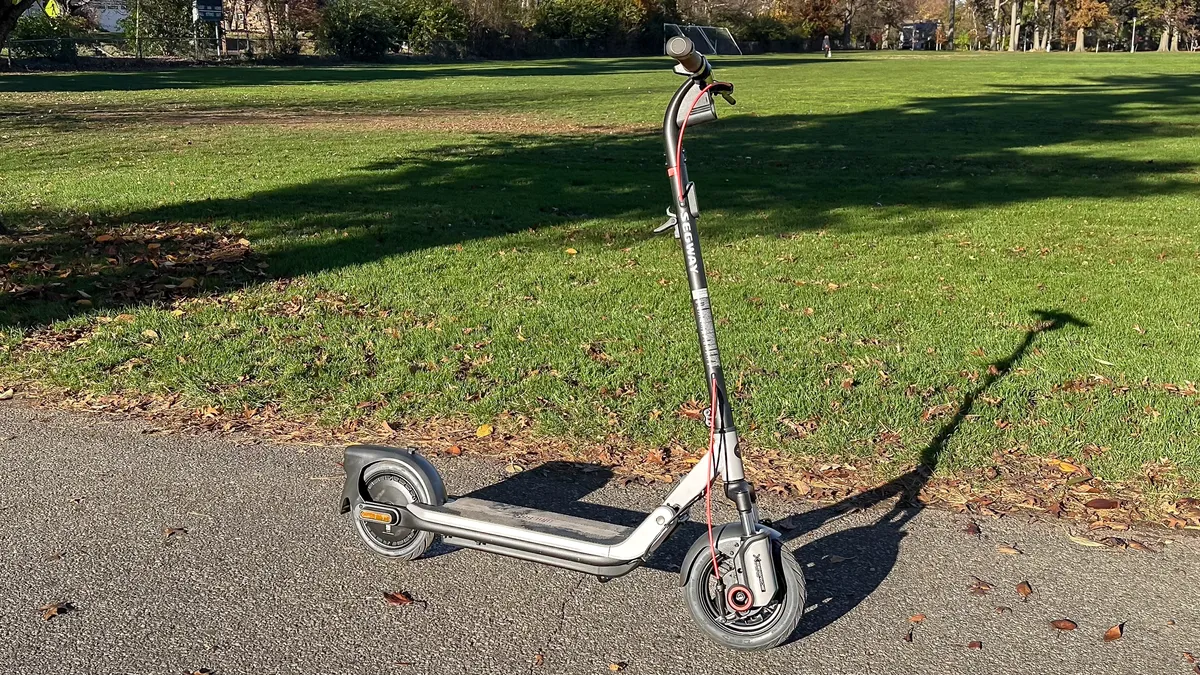


Both of these scooters cut a pretty sleek profile. I personally like the cleaner lines of the Apollo as it transitions from the downtube to the deck; Segway’s folding mechanism, as well as its front suspension, makes things look a little busier
However, from a comfort standpoint, I liked the raked handlebars of the Segway over the Apollo, and the fact that the turn signal switch is located by your left thumb. By comparison, the Dash requires you to use your right thumb to activate the right turn signal, which means you have to take your thumb off the throttle.

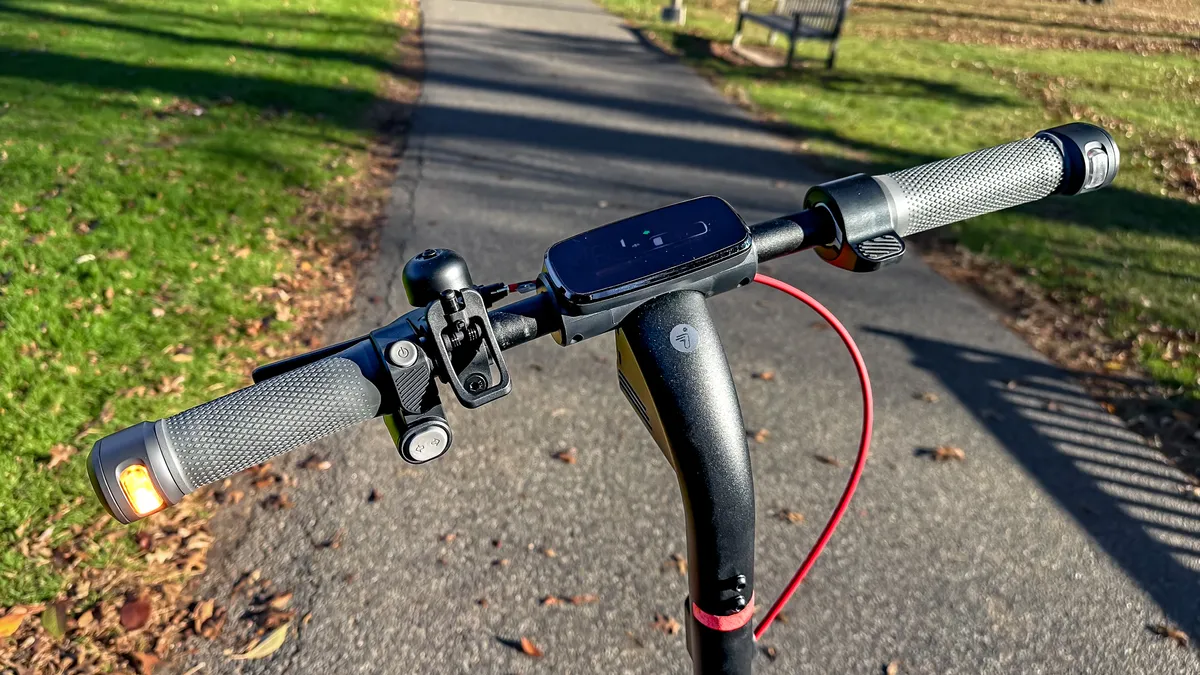


The display is one area where Segway and Apollo really differ; the E3 Go has a more traditional color LCD screen that shows your speed and battery life. The Dash, on the other hand, uses a grid of white LEDs, which also shows your speed and battery life in a more basic way. However, The Apollo Dash also has a quad lock mount just below, so if you have a compatible phone case, you can use your phone as a digital dashboard.

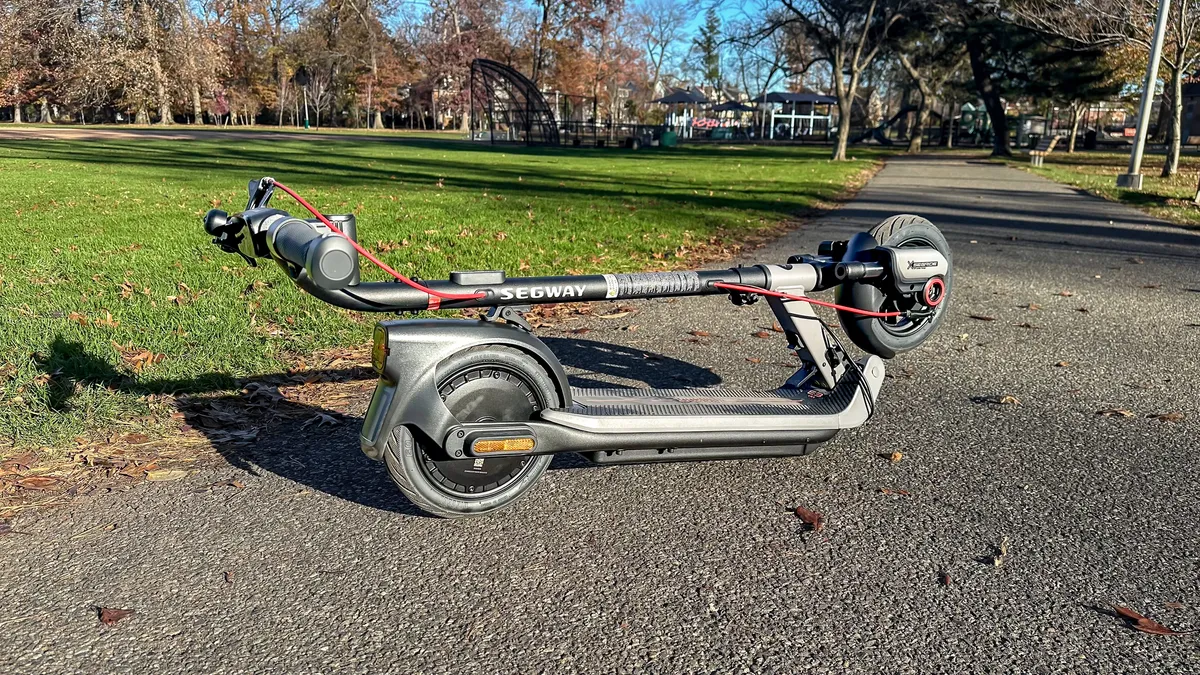


I like the folding mechanism on both scooters; you can collapse them in mere seconds, but I'm giving the advantage here to Segway. You can simply press on a flap with your foot, so you don't have to lean down.
Apollo’s scooter is slightly lighter than Segway’s — 43 pounds as opposed to 46.7 pounds. You’re going to get a workout either way.
Winner: Segway
Lighting
One of my biggest concerns as a rider is being seen by other drivers. The Apollo’s large light bar, which extends the length of the downtube, makes you far more noticeable at night. In addition, you can adjust the angle of its headlight. By comparison, the Segway’s headlight is fixed, and it has no other lights in the front.
Both scooters have turn signals in the handlebars; however, only Apollo lets you adjust how long they remain on; from within the app, you can set a period from seven seconds or until you deactivate it.
I still wish both had turn signals in the rear of the scooter too, like the Segway Max G3 Plus or the Apollo City.
Winner: Apollo.
Hill Climbing
On my steep hill test (which has a max grade of 10%), the Segway slowed down to 4 MPH on the steepest section; I had to do a little wiggling of the handlebars to keep it balanced. By comparison, the Apollo managed to get up the same hill at 8 MPH — not exactly a speed record, but it was twice as fast as the Segway.
On a hill with a less steep grade of 5.7%, both scooters performed about the same, slowing to around 12 MPH.
Winner: Apollo.
Comfort
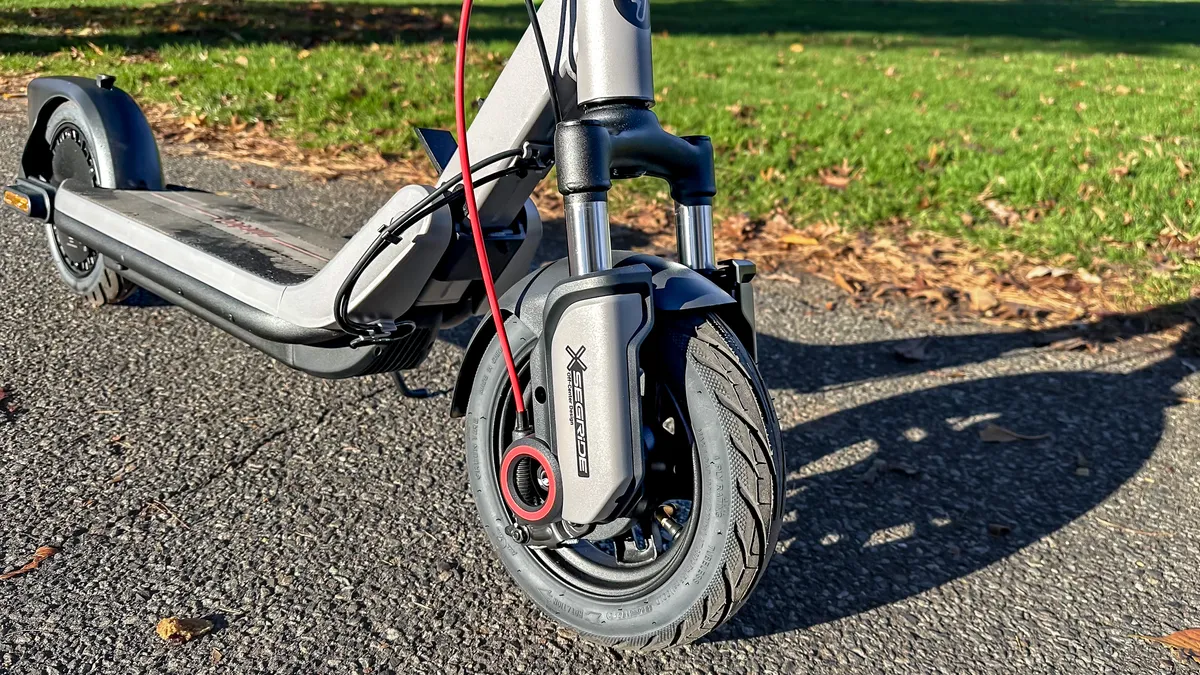
The raked handlebars, front suspension, and larger tires of the Segway E3 Go really made a difference, especially at speed. The scooter felt more stable when I was cruising at 20+ MPH, and was much less jarring than the suspension-less Apollo when I went over bumps and potholes.
Winner: Segway
Range
Both the Apollo and Segway are rated for a max distance of 25 miles, but that’s assuming ideal conditions, and if you poke along at around 9 MPH on a flat road. With both scooters at full charge, Segway estimated that it had 11.2 miles of range, compared to 17 for the Apollo when both were set to their max performance levels. If you want to eke out a bit more range, both scooters offer regenerative braking.
I took them one at a time on an identical 5.5-mile loop around my town, going up and down the same hills. After a 5.5-mile ride, the Apollo had 55% battery left, while Segway’s had just 32%.
Now, range will vary greatly from one rider to another, but I suspect that the more powerful motor in the Apollo scooter enabled it to use power more efficiently during my test.
Winner: Apollo
App

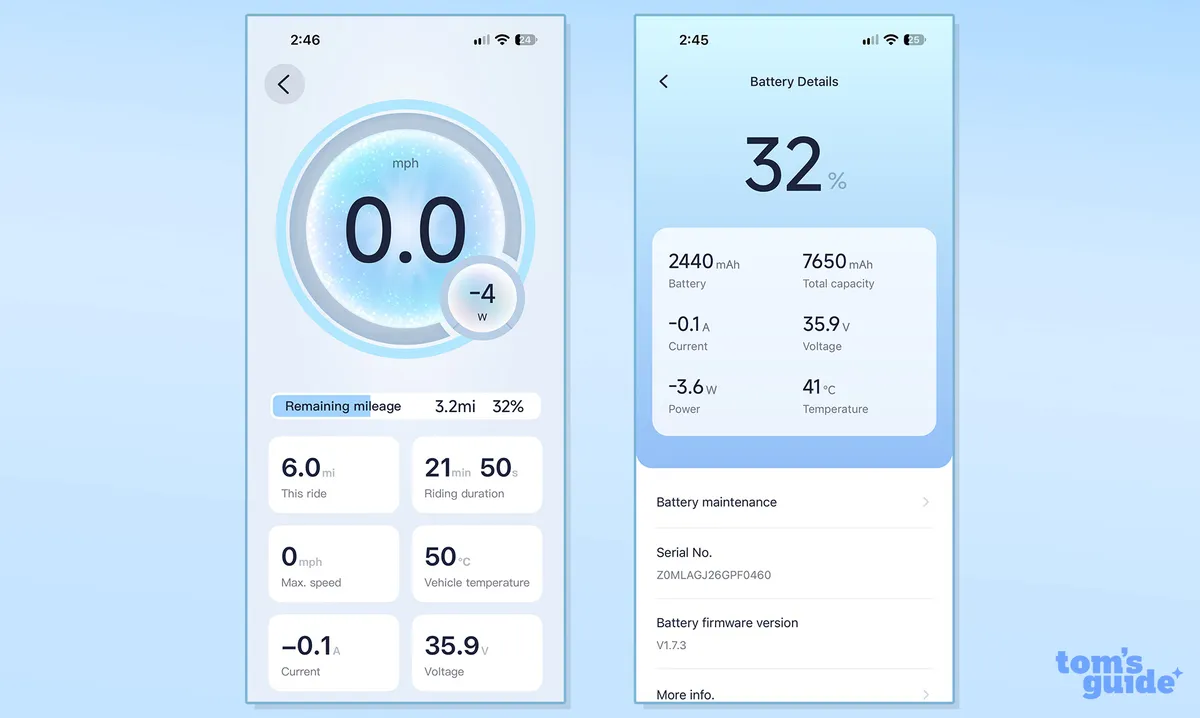


Both Segway’s and Apollo’s apps let you customize how the scooter performs, to a certain extent. For example, with each, you can specify the max speed for each performance setting, so if you don’t want to zoom along at 20 MPH in Sport mode, you don’t have to.
However, Apollo’s app offers a bit more customization. You can, for instance, set the amount of time that the turn signals remain on, and also fine-tune the throttle response, if you want to get off to a faster start.
Winner: Apollo
Bottom line
| Header Cell - Column 0 | Apollo Dash |
Segway E3 Go |
|---|---|---|
Price |
Row 0 - Cell 1 | X |
Design |
Row 1 - Cell 1 | X |
Lighting |
X |
Row 2 - Cell 2 |
Hill climbing |
X |
Row 3 - Cell 2 |
Comfort |
Row 4 - Cell 1 | X |
Range |
X |
Row 5 - Cell 2 |
App |
X |
Row 6 - Cell 2 |
Total |
4 |
3 |
After testing both the Apollo Dash and the Segway E3 Go, neither really pulls away from the other to make this a decisive victory. Still, over these seven rounds, the Apollo Dash takes this matchup, winning four rounds to the Segway E3 Go’s three.
I liked the design of the Segway’s handlebars and controls, and it felt more comfortable and stable while riding. And, at the time of this writing, it was $80 cheaper. However, the Apollo Dash proved more capable when scooting up hills, its lighting makes it far more visible, and it had a better range in my testing.
If you don't have hills to climb, then the Segway would be the better pick, but if you're facing some inclines, then I would lean towards the Apollo.

Follow Tom's Guide on Google News and add us as a preferred source to get our up-to-date news, analysis, and reviews in your feeds.
More from Tom's Guide