Tom's Guide Verdict
I thoroughly tested the Galaxy Z Fold 8 and I feel like this could be the new form factor to beat for foldables. It’s compact and light yet delivers a big screen when you want it. I especially appreciate the anti-reflective coating and that the crease is less noticeable. Add in strong performance and longer battery life and you have a foldable phone winner for the most part. But I wish Samsung included a telephoto camera, and the lack of dust resistance at this point is getting annoying.
Reasons to buy
- +
Light and pocket friendly design
- +
Bright display with anti-reflective coating
- +
Crease a lot less noticeable
- +
Helpful AI features like Now Nudge and My FanCam
- +
Good battery life
- +
Great performance
Reasons to avoid
- -
No telephoto zoom
- -
Not dust resistant
- -
Lacks S Pen or Flex View
- -
More apps need to be optimized for wide screen
Why you can trust Tom's Guide Our writers and editors spend hours analyzing and reviewing products, services, and apps to help find what's best for you. Find out more about how we test, analyze, and rate.
I’ve been reviewing foldable phones since the very first Galaxy Z Fold, and there’s something that’s “just right” about the Galaxy Z Fold 8. It’s super light, gives you a wide front display, and the big inside screen has two distinct orientations for video watching and browsing or reading.
Other perks include a much less noticeable crease, an anti-reflective coating for the main display and handy new AI features that take full advantage of the wide canvas.
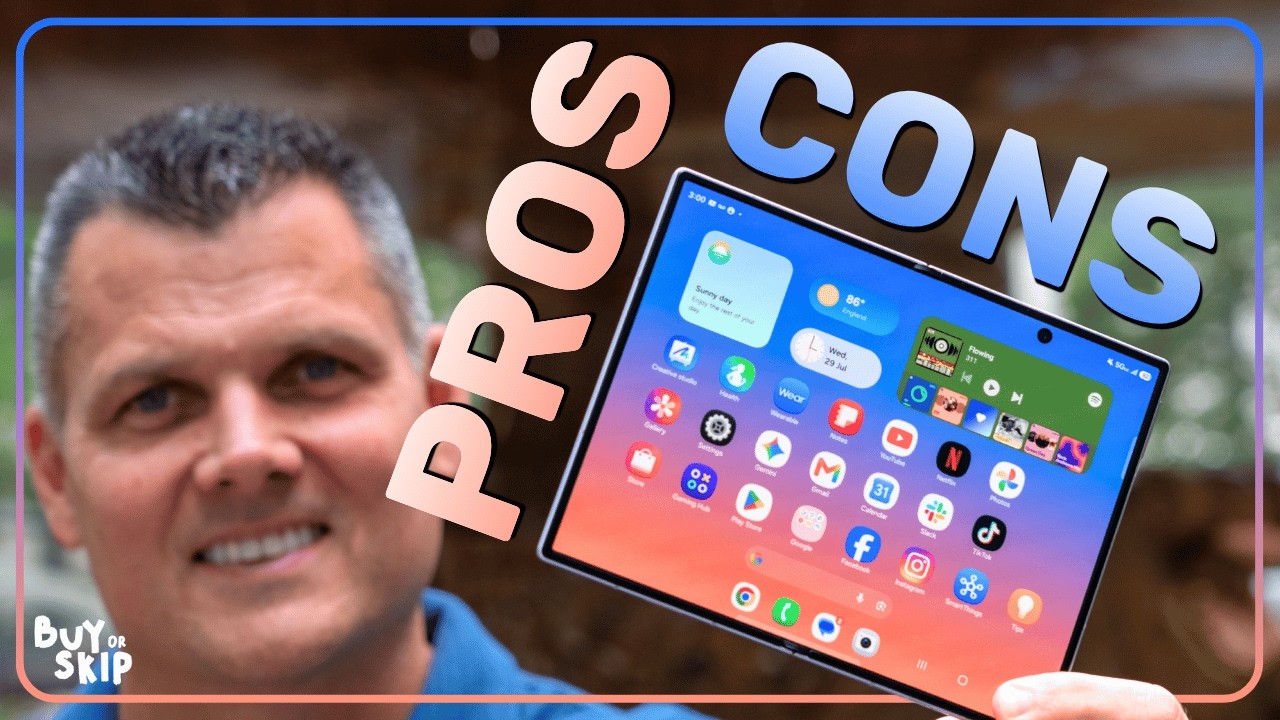
But Samsung has definitely made some trade-offs, like no telephoto zoom lens. But now that I’ve been living with the Fold 8 for a few months, this feels like the future of foldables — and not just because Apple is making a similar design with the iPhone Duo.
Galaxy Z Fold 8 review: Release date and price

The Galaxy Z Fold 8 has a release date of August 7th and is available now.
This foldable has a starting price of $1,899/£1,699/AU$2,699 for 12GB of RAM and 256GB of storage. You’ll pay $2,099 or $200 more for the 512GB model and $2,499 for the 1TB Fold 8 with 16GB of RAM and 1TB of storage.
Storage |
RAM |
United States |
United Kingdom |
Australia |
256GB |
12GB |
$1,899.99 |
£1,699.00 |
AU$2,699.00 |
512GB |
12GB |
$2,099.99 |
£1,869.00 |
AU$2,999.00 |
1TB |
16GB |
$2,499.99 |
£2,209.00 |
AU$3,599.00 |
The Galaxy Z Fold 8 Ultra starts at a steeper $2,099, but it also gives you bigger displays, a telephoto zoom and larger battery.
Galaxy Z Fold 8 specs
Price |
From $1,899 / £1,699 / AU$2,699 |
Release Date |
August 7 |
Cover display |
5.5 inches |
Main display |
7.6 inches |
Chip |
Snapdragon 8 Elite |
RAM |
12GB, 16GB |
Storage |
256GB, 512GB, 1TB |
Rear cameras |
50MP wide, 50MP Ultra wide (10x digital zoom) |
Selfie cameras |
10MP (main), 10MP (cover) |
Battery |
4,800 mAh |
Wired/Wireless Charging |
45W, 20W |
Size open |
161.4 x 123.9 x 4.5 mm (unfolded) |
Size closed |
123.9 x 81.9 x 9.7 mm (4.88 × 3.22 × 0.38 inches) |
Weight |
201 grams (7.09 ounces) |
Colors |
Lavender, Graphite, Cream, Pistachio (online) |
What I Like
The passport-like design

The Galaxy Z Fold 8 is about the same size as a passport, which makes it really easy to slip into a front pocket. And at 201 grams (7.1 ounces), this is the lightest book-style foldable in the world.

I really like the 10:16 front display for scrolling through TikTok videos, and there’s plenty of room for typing with two hands. Reaching across the display with one hand can be a stretch, but overall using the Fold 8 just feels right compared to the taller Fold 8 Ultra.
Plus, opening the display is a lot easier versus the Galaxy Z Fold 7 and the Fold 8 unfolds almost perfectly flat.

As for colors, the Fold 8 comes in Lavender, Graphite and Cream, and there’s a Pistachio option online only. I prefer the Lavender hue on our review unit because it has more personality.
The display is awesome (especially anti-glare coating)

If the crease on foldable phones has always bugged you, the Galaxy Z Fold 8’s main 7.6-inch display will make you happy. Thanks to Flex Titanium tech, the crease is much less visible than before.

Samsung paired a titanium alloy film with a titanium base plate with micro-perforations that allow the display stack to adhere flush to the plate with virtually no air gaps. The result is a crease you can still feel but almost disappears when you’re viewing content.
The bigger deal for me is the anti-reflective coating. It drastically cuts down on glare when viewing the Fold 8 outside. Check out the difference between the new Fold and the Fold 7.

The main 7.6-inch display has a 4:3 aspect ratio when you open it up. The benefit here is that you get smaller black bars above and below the display when watching videos versus the more square 8-inch Fold 8 Ultra.
The viewing area itself is not larger, but I found watching the Red Hot Chili Peppers documentary on Netflix pretty immersive, as well as the “Avengers: Doomsday” trailer.

When you flip the Fold 8 around into portrait mode with the main display open, you get a 3:4 aspect ratio. This gives you more real estate vertically, making it the better option for surfing the web and reading ebooks.
Helpful AI features

The Samsung Galaxy Z Fold 8 has some AI features that I really like.
My favorite is Now Nudge, which prompts you to open a related app in Split View without having to leave the app you’re currently using.
For example, I received a text message asking if I was free for dinner next Friday at 7 p.m. A little calendar icon appeared, and when I tapped that I opened the Calendar app in split screen mode. That’s pretty handy.
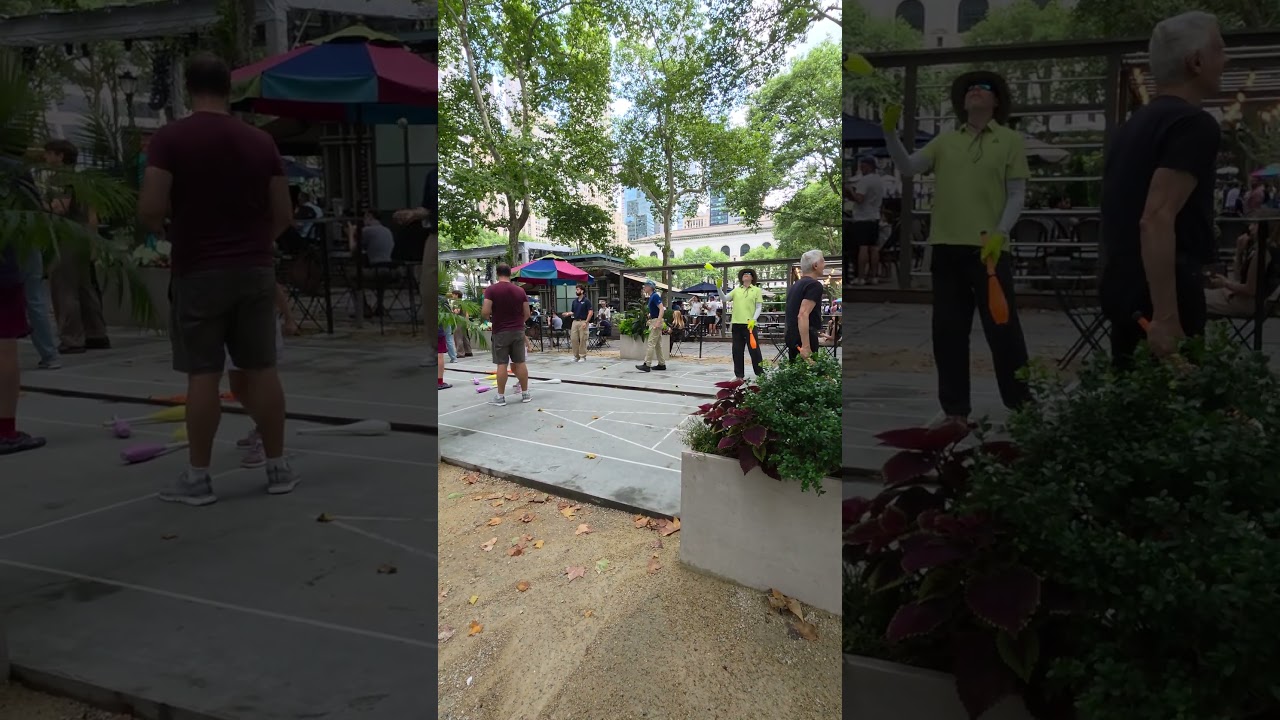
Another super useful AI feature is My FanCam. When editing a video with multiple people in the frame, you can select the subject you want, and the Fold 8 will crop in and “follow” that person throughout the clip.

You can even choose the aspect ratio. This is great for sports parents, concert lovers and more, though it only works on humans — and only one at a time.
Very snappy performance

Powered by a Snapdragon 8 Elite Gen 5 for Galaxy chip, the Galaxy Z Fold 8 offers flagship-level performance on par with the Galaxy S26 Ultra. I mowed down several enemies in Call of Duty Mobile and raced around tracks in Asphalt 8 without seeing any slowdowns.
| Row 0 - Cell 0 | Geekbench (Single/Multicore) |
3DMark Solar Bay Unlimited |
Geekbench AI |
Galaxy Z Fold 8 |
3,659/11,020 |
47.35/12,454 |
72242 |
Motorola Razr Fold |
2.711/9,134 |
35.12/9,413 |
59663 |
Galaxy Z Fold 7 |
3,052/9,735 |
41.21/10,812 |
61,299 |
Galaxy S26 Ultra |
3,785 / 11,563 |
49.37 / 12,984 |
83047 (TensorFlow Lite QNN) |
iPhone 17 Pro Max |
3,871 / 9,968 |
46.6 / 12,260 |
48549 (Quantitized Score ML/Neural Engine) |
The Fold 8 is also a multitasking champ. I could run up to three apps on screen at once without any noticeable lag. For example, I scrolled through my inbox in Gmail while playing 311 Radio on Spotify and skimming through and zooming in on my photos in the Gallery app.

The Galaxy Z Fold 8 performed very well on our lab tests, too. It beats the iPhone 17 Pro Max on multi-core performance in Geekbench and in the 3DMark graphics benchmark.
Solid battery life, faster charging

The Galaxy Z Fold 8 is one of the first Samsung phones to offer a silicon carbon battery, which allows for more capacity without adding thickness to the phone. The Fold 8 has a 4,800 mAh battery, compared to just a 4,400 mAh Li-ion battery on the previous Fold 7.
Hours : Minutes |
Charging % in 30 minutes |
|
Galaxy Z Fold 8 |
12:19 |
70% |
Galaxy Z Fold 8 Ultra |
14:33 |
76% |
Galaxy 7 Fold 7 |
10:44 |
54% |
Motorola Razr Fold |
14:44 |
73% |
Galaxy S26 Ultra |
16:10 |
77% |
iPhone 17 Pro Max |
17:54 |
64% |
On the Tom’s Guide battery test, which consists of web surfing over 5G, the Fold 8 lasted a pretty good 12 hours and 19 minutes. That beats the Fold 7 by nearly 1.5 hours, though the Fold 8 isn’t good enough to make our best phone battery life list.
In my time with the phone I enjoyed fairly strong endurance. For example, after a day of mixed usage, including checking email, capturing photos and videos and playing music, the battery meter was at 52%.
Still, other foldables last longer. The Galaxy Z Fold 8 Ultra with its 5,000 mAh silicon carbon battery lasted 14:33, and the Razr Fold’s 6,000 mAh battery lasted 14:44.
The Galaxy Z Fold 8 benefits from 45W charging, up from 25W on the Fold 7. At 30 minutes the Fold 8 reached 70%, compared to 54% for the Fold 7.
Wireless charging sees a boost for the Fold 8, too, going from 15W to 20W. Unfortunately, you need to buy a case if you want to get magnets for Qi 2 charging, as they’re still not built into the phone.
What I Mostly Like
Cameras are good, but where's the telephoto?

Don’t get me wrong. The dual rear 50MP cameras on the Fold 8 are solid. But not having a telephoto zoom is pretty frickin’ lame for a $1,900 flagship.
On the plus side, check out the excellent dynamic range in this photo of a street in London dappled in sunlight. This close-up of a zinnia flower is vibrant and detailed and the richer colors in this shot of peppers versus the more washed-out Razr Fold.
The 50MP ultrawide lens is a major upgrade over the 12MP Fold 7. I actually give the edge to the Fold 8 over the iPhone 17 Pro Max in this ultrawide shot of a beach. The green trees pop a pit more, and there’s more detail in the rocks along the sand.


Samsung also improved the Nightography on the Fold 8 for better low-light shots. And you can see the difference in these photos of a clock tower. It’s brighter and crisper. And in this image of string lights the Fold 8’s makes everything brighter and you can make out the individual bulbs easier.


What makes the Z Fold 8 Ultra an Ultra camera phone is its 200MP main camera. In this fountain shot you can make out more detail in the water bubbles and in the rocks. You just have more freedom to crop in overall.
But the biggest Z Fold 8 vs Fold 8 Ultra difference is the lack of telephoto zoom. At 4x, the Fold 8 delivers a crisper image of this Queen Anne statue in London. Check out the lines in the stonework.
But this 10x digital zoom shot of a tree stump rising from water shows the Fold 8’s limitations. The lines in the bark look blurrier compared to the 10MP Fold 8 Ultra with 3x optical. And the Razr Fold’s 50MP telephoto is even sharper.
For more, check out my Galaxy Z Fold 8 vs Fold 8 Ultra camera face-off.


I don’t have any complaints about the selfies from the Galaxy Fold 8. The front 10MP camera. My blue shirt pops, and there’s plenty of detail in my hair and the surrounding grass. The inside 10MP produced a vivid but somewhat blurrier image.
Plus, you can always flip the display around and use the main 50MP wide camera to take selfies. The results look sharp though the shadows are more pronounced than I’d like.


What I Don't Like
More apps need optimization for the big screen

There’s a fair number of apps that are truly optimized for the Fold 8’s wide display. In Gmail, you can see your inbox on the left and the content of your images on the right. And in TikTok the comments will pop up on the right side of the display while the video plays on the left. Spotify looks pretty slick, too, with your playlists here and play window there.
However, some apps just feel like stretched out phone experiences. Slack should have you rooms and contacts on the left and messages on the right instead of just really wide conversation windows. Other apps that could use the dual-pane treatment include Reddit and especially X.
I get that the iPhone Ultra isn’t out yet. But you know there's going to be a better app experience right from day one. Just look at iPadOS on the iPad mini.


Where is the dust resistance?

Unfortunately, you’re stuck with the same IP48 durability rating on the Galaxy Z Fold 8. That means this device can withstand being submerged in water for 30 minutes but is not dust resistant. I’d like to see Samsung take the leap to IP68 so you can actually take foldables like this to the beach.
Other foldables like the Google Pixel 10 Pro Fold and Motorola Razr Fold are IP68 rated.
During a roundtable discussion, a Samsung exec told us that the company is not chasing numbers but real-world scenarios. But I’d argue dust and sand are “real world.”
Flex view is Ultra exclusive

Because of the way the hinge was designed, there’s no Flex Mode on the Fold 8 — that’s exclusive to the Fold 8 Ultra. So that means you can’t use the Fold 8 as a mini laptop. I missed not being able to watch YouTube videos in this mode or do quick Google Meet calls.
Still no S Pen
The Galaxy Fold 8 one again eschews the S Pen. While I’ve never been a heavy user, there’s lot of people who would like a stylus for taking notes, editing photos and drawing, especially on such a wide canvas.
Samsung has clearly prioritized thinness and the lack of a crease over including a digitizer. Company reps have told us they are open to exploring the possibility of the S Pen’s return. But that will have to be another foldable.
Galaxy Z Fold 8 vs iPhone Duo
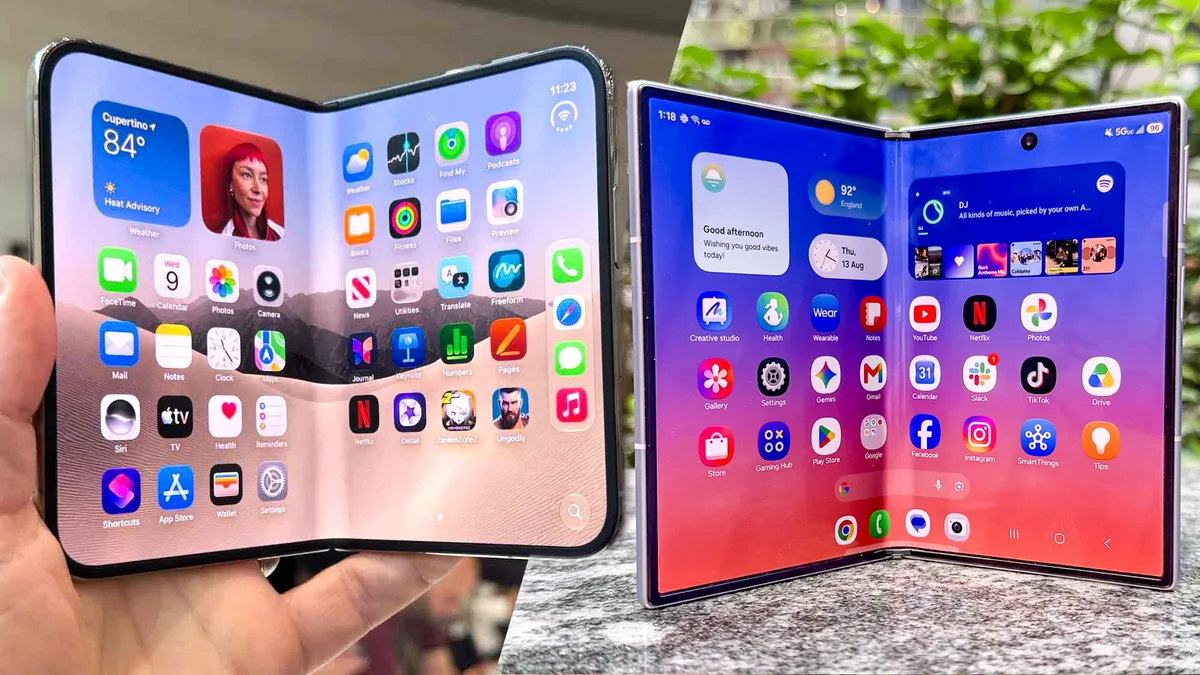
The Galaxy Z Fold 8 has serious competition in the iPhone Duo, which launches October 23. But Samsung has some advantages over Apple's first foldable. The Fold 8 is significantly lighter and thinner than the iPhone Duo, making it easier to carry around. In addition, the Fold 8 lets you run up to three apps at once on screen, compared to just two for the Duo. Plus, you can put up to five floating windows on top, so it's a multitasking dynamo.
Other unique Samsung perks a physical SIM slot, DeX mode for using the Fold 8 as a mini PC with keyboard and mouse and a 16GB RAM option for those who opt for 1TB of storage. Plus, the Fold 8 is $100 cheaper than the Duo.
However, the iPhone Duo offers some advantages of its own. It's more durable, thanks to its IP68 rating. The software actually adapts based on the angle of the display, while Samsung ditched its Flex mode for the regular Fold 8. And you get MagSafe support and Apple Pencil support built in. Samsung doesn't offer an S Pen for its passport-style foldable.
Apple's biggest advantage is likely going to be app that are optimized for the platform, witch Netflix, Slack and Zoom on board — with more to come. But we'll revisit this comparison once we've tested the Duo.
Galaxy Z Fold 8 review: Verdict

Overall, I’m a big fan of the Galaxy Z Fold 8. It’s the foldable design I’d rather carry and use every day over any other foldable. It’s lighter and more compact than the Fold 8 Ultra, and the main display is big enough for split-screen multitasking and binge watching.
I also really appreciate that the crease is less visible and especially the anti-glare coating, as well as the strong performance and pretty solid battery life. And while I’m getting AI fatigue, features like Now Nudge just make sense on a foldable.
On the other hand, I don’t like that I have to give up a telephoto lens. And while I personally don’t mind the lack of an S Pen, there are apparently many people who do.
I do care about the lack of dust resistance, and that some pretty high-profile apps aren’t optimized for the big screen — when you know the iPhone Ultra will likely have an advantage on day one.
So for now the Galaxy Z Fold 8 is the foldable I want. But Samsung please give us a better zoom next time.