Buying one of the best refrigerators to suit your budget and your needs is a great purchase. But, working out where to put it fast becomes the next important step. It’s a large home appliance, so having the correct space is key. Then it comes down to where’s safe, how it integrates into the way you use your kitchen, and where it’s situated alongside your other appliances like the microwave, gas range, or toaster oven.
Thankfully, we’ve talked to home design experts and manufacturers to get their advice on where the best place is for your refrigerator. Plus, the three places you should never place it, and why. So, whether you’re planning a remodel, or working with an existing kitchen layout, read on below for the top tips on making sure your refrigerator is perfectly positioned.
Where is the best place to put a refrigerator?

There’s a multitude of things to consider when choosing the right place for your refrigerator, but first and foremost you want to think about the space you have/need, then it comes down to the overall layout, and finally finding the most cohesive spot that works with the way you move and function in your kitchen. All with safety in mind.
Al Bruce, Founder of Olive & Barr, recommends, “Think about door clearance, positioning and airflow. Fridges require enough space behind and above to allow for adequate ventilation. Remember, always make sure that appliances, if required, are installed by a qualified electrician, following the manufacturer’s recommendations.”
5 refrigerator placement tips from experts

With both safety and design in mind, Gino Grossi, Home Appliances, Samsung Electronics UK suggests these five important tips for placement:
- The fridge needs to be on a flat, hard surface and again have adequate ventilation around it.
- Make sure your space has room for the door(s) to open fully. If your refrigerator is being installed where there is a wall on one side, and a fridge door could make contact with the wall when opened, make sure to leave at least 2.5 inches of clearance on the side closest to the wall.
- You need a minimum of one inch of clearance at the back of the fridge for proper air circulation, water connections, and electrical connections.
- For built-in fridges, allow at least a centimetre of clearance on both sides and the top for ease of installation.
- A key factor that many forget about is whether the door will open on the left or right, as this can have a substantial impact on how you use the space around the fridge. Many fridges can be configured to open from either side, optimising your fridge in your space.
After all, the location of your refrigerator is one of the most common reasons you may ask the question, why is my refrigerator not cooling? With Grossi’s advice in mind, you’ll avoid this problem.
Consider the 'kitchen triangle' design rule

Marc Duckworth, Product Manager at Product Care Group for Russell Hobbs, says when it comes to placement, “The main elements of a kitchen are usually the fridge, sink and oven, it can be useful to create a loose triangle between the three areas with unrestricted access between each point.” This is often referred to as the kitchen triangle design rule and helps make an optimal zone for putting groceries away, as well as leaving room to follow our how to clean a refrigerator guide too.
Duckworth adds, “You don’t want to block any walkways or entrances when the fridge doors are open. Similarly, if the kitchen is a popular social area, consider where people often stand; you want the fridge to always be easily accessible.”
With all this in mind, essentially you want to place your refrigerator in a position where it can optimally function, where it’s safe, and where it works best for you and your family - with both convenience and practicality at the fore. If you don’t tend to use your refrigerator a lot, then you can even opt to keep it in a utility room, or if you do, you can place it as close to the other cooking areas of your kitchen as possible.
3 places you should never place a refrigerator
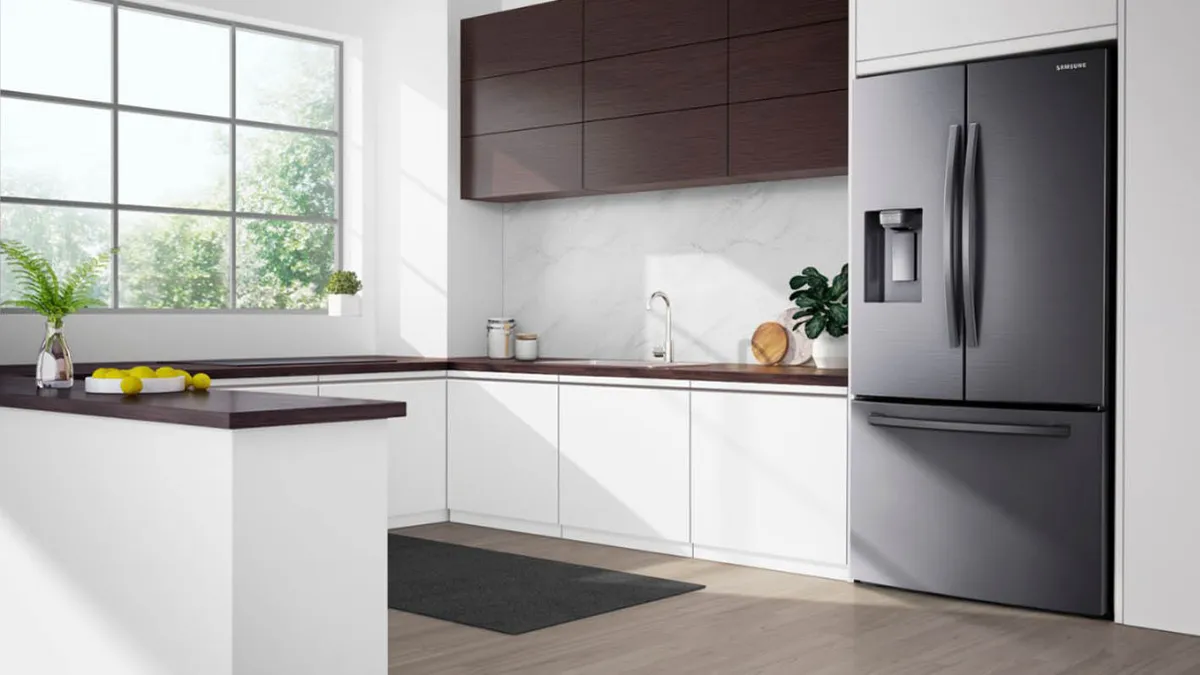
1. Next to the oven or stove
Experts at Hisense UK reveal that “Placing a refrigerator next to heat sources like an oven or stove can make the appliance work harder to maintain its internal temperature, leading to increased energy usage and potential wear and tear on the unit.”
2. In a garage or unheated space
“Extreme temperatures, both hot and cold, can affect the refrigerator’s performance and efficiency, and may cause it to break down more quickly.”
3. In a completely enclosed space
"Placing a refrigerator in a tight, enclosed space, such as a custom-built cabinet with little airflow, can cause it to overheat, reducing its lifespan and increasing the risk of malfunction.”
Can a refrigerator go next to an oven?

As mentioned above, you shouldn’t place your refrigerator next to an oven as the heat created by the oven when its in use makes it harder for the fridge to stay cool, but you can, if you need to.
If it's not possible in your kitchen layout to divide the two, then it’s possible to add insulation between the appliances. For this, it’s important to check the manufacturer’s instructions for both appliances before placing them together.
Duckworth adds, “Although modern fridges have much better insulation, you can minimise energy inefficiency by keeping the fridge out of direct sunlight. Ensure the fridge isn’t positioned opposite a window or directly near appliances that get hot, such as an oven.”
More from Tom's Guide
- Don’t make these 7 refrigerator mistakes
- How often should you clean your refrigerator? Here’s what the experts say
- The 3 places you should never place a microwave in your kitchen, according to experts