




On Monday, 8 April, a rare solar eclipse will sweep across the North American continent, passing over Mexico and the United States before ending in Canada. A total solar eclipse occurs when the Moon’s passage takes directly in between the Sun and the Earth, blocking our star out completely and darkening the sky as if it were dawn or dusk.
According to NASA, the eclipse will be the last of its kind for quite some time, with the next totality visible in the US has been predicted to occur in 2044. As with any total solar eclipse, NASA recommends wearing safety 'eclipse goggles' to anyone planning on looking directly at the event.
The Moon will begin its passage across the Sun in Mexico at 11:07am PT / 2:07pm EDT and will move rather rapidly up the continent, with the event predicted to conclude in Newfoundland, Canada, at 5:16pm NDT (1:16pm PT / 4:16pm EDT). The 'path of totality' includes 13 US states, 6 Canadian provinces and all of Mexico.
Unfortunately for eclipse watchers living elsewhere, you won’t see the skies darken at all, but there are (thankfully) several live streams you can tune into from the comfort of your couch to view this astronomical phenomenon.
Depending on where you live, the start of the eclipse will take place at 7:07pm BST in the UK on April 8, or at 4:07am AEST on Tuesday, 9 April in Australia.
NASA live stream

NASA's live stream of the total solar eclipse will begin at 10am PT / 1pm EDT / 6pm BST / 3am AEST (April 9). The space agency will be streaming views from different telescopes, provide expert commentary and host an interactive live chat, too.
TimeAndDate.com livestream
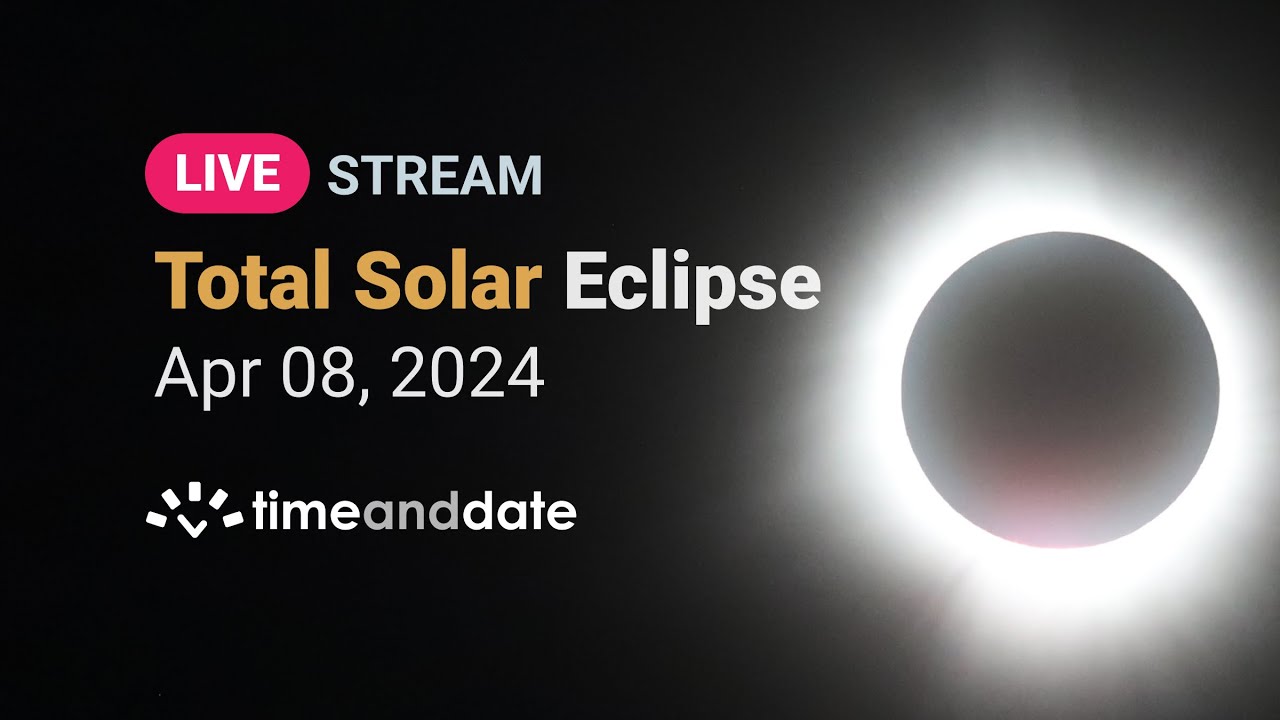
TimeAndDate.com's detailed explainer of the event is already live on the site, but its livestream will feature animations, maps and more, watchable from the comfort of your own home.
Other ways to watch the eclipse
If you're planning to watch the live stream and you're not located in the US, your best bet is tuning into NASA's live stream, as it is available to watch in most countries.
For US and Canadian viewers, you can also stream the eclipse on TV channels or TV apps, like CNN, PBS and ABC, or you can tune into the 'Eclipse Across America' special on Disney Plus or Hulu from 11am PT / 2pm EDT.

