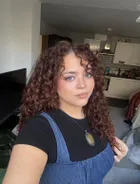
It’s the ultimate illusion of authenticity. A creator in their car, warm smile, relaxed pitch. Totally genuine. The voice is hers. The subtle nods and hand gestures are hers. Even the pitch is hers. The only thing that isn't is the face.
Welcome to the era of digital body-snatching, a fast-growing, lucrative corner of the internet where anyone with access to AI tools can hijack another person's physical presence.
Why swap a face onto someone else’s video? The motives blur together. It could be for clicks, affiliate payouts, or engagement inflation. But while the endgame varies, the blueprint is unmistakable: taking a creator's likeness without their consent.
I spoke with Paige Davis, a creator who recently found her content stolen and reposted, to understand how this theft works — and why the platforms building these AI tools are leaving victims on their own.
"What the hell is this?"
Paige learned her identity had been reskinned when a friend and a follower messaged her an AI video using her voice, body, outfit, and background.
"I clicked on the video and thought, what the hell is this?" she recalls. "I’d never seen such accurate AI and it’s infinitely more jarring when it’s you. That’s my outfit, my voice, my seatbelt. Literally all she did was change the face."
The economics driving these videos are simple. Trust is expensive to build, but cheap to clone. Instead of generating a completely synthetic human from scratch, it is far more effective to steal authentic human charisma.
Tools like SyncLabs and Wav2Lip take stolen audio and overlay it onto target video, automatically re-syncing the mouth movements frame by frame.
When Paige rallied thousands of her followers to report the viral stolen clip, she hit an automated moderation wall. "I had thousands of people report it, and within 48 hours every single person got denied," she explains. "Every single person received the same notification back saying this AI girl does not go against community standards."

Days later, the video was briefly removed, only to reappear 48 hours later. "I was celebrating, telling everybody the video got taken down," Paige says. "And then two days later, every single person got the same notification saying it's back up."
It was only after submitting a manual Intellectual Property claim, a 20-minute form requiring government-issued identification, video timestamps, and formal legal language, that the content was scrubbed.
For creators without massive followings or legal literacy, the process is practically insurmountable.
Algorithms don't care about ethics
There is a stark double standard at play. On one front, tech giants rely on default opt-ins that treat user identities as raw material. Meta's rollout of Muse Image is a prime example.
If given the chance to sit down directly with product managers and executives pushing these default tools, Paige knows what she would ask:
"How did you think this feature was a good idea? What were the pros that you envisioned? Because if they can tell me some pros, maybe we could have a conversation. But I really don't see an upside to it."
When discussing Meta's opt-in rollout, Paige draws an instant parallel to one of Big Tech's most infamous missteps. "It reminds me of when Apple put that U2 album on everyone's iPod."
Tech companies are once again assuming ownership of personal assets by default. Except this time, instead of an unrequested rock album, they're taking your face.

On another front, when lawmakers try to construct actual safety nets, AI companies sue to tear them down. Case in point: xAI suing to strike down state bans on unauthorized deepfakes.
By claiming platform liability infringes on protected speech, xAI exposes the industry's broader playbook: shift the entire burden of defense onto victims while claiming total immunity for the tools enabling the theft.
Beyond the creator economy
While full-time creators have built dedicated followings, the underlying tech poses an even more insidious threat to everyday internet users.
"Millions of people are on Instagram as professional content creators... it's my job now," Paige says. "They are not protecting those people who are using their platform for what it's meant for."
When identity theft is reduced to a few clicks, the targets expand well beyond influencers. "That's what's scary and frustrating about normal people who aren't content creators," Paige points out. "They don't have the larger platform, they don't have the followers to help them get stuff taken down."
"These lengths that are being taken to use AI in people's likenesses and images is incredibly dangerous," Paige warns. "It has major consequences with people's jobs, people's lives."
Platforms like Meta and Tiktok might be in no rush to fix a scam that keeps people engaging, and the synthetic version of you will never get tired. But code can't fake accountability forever. Every time we have these conversations, we make the digital skin-walker harder to sell. We might not control the algorithm, but we still control the truth.

Follow Tom's Guide on Google News and add us as a preferred source to get our up-to-date news, analysis, and reviews in your feeds. Subscribe to Tom's Guide on YouTube and follow Tom's Guide Entertainment on TikTok and Instagram.
More from Tom's Guide