
Google has always seemed pretty predictable. You typed a question, scanned a list of blue links and picked the website that looked most useful. Now, increasingly, many users are seeing AI-generated answers first.
Google’s AI Overviews have become one of the company’s biggest shifts to Search in years, summarizing information directly at the top of results pages before users ever click a website. Google says the feature helps people get answers faster, but not everyone is thrilled with the experience.
In response, a surprisingly simple workaround has started spreading online:
adding “&udm=14” to Google search URLs.
To most people, that little code looks like internet speak or maybe even a mistake. But among a growing number of users, it has quietly become shorthand for getting the “old Google” back.
What “&udm=14” actually does
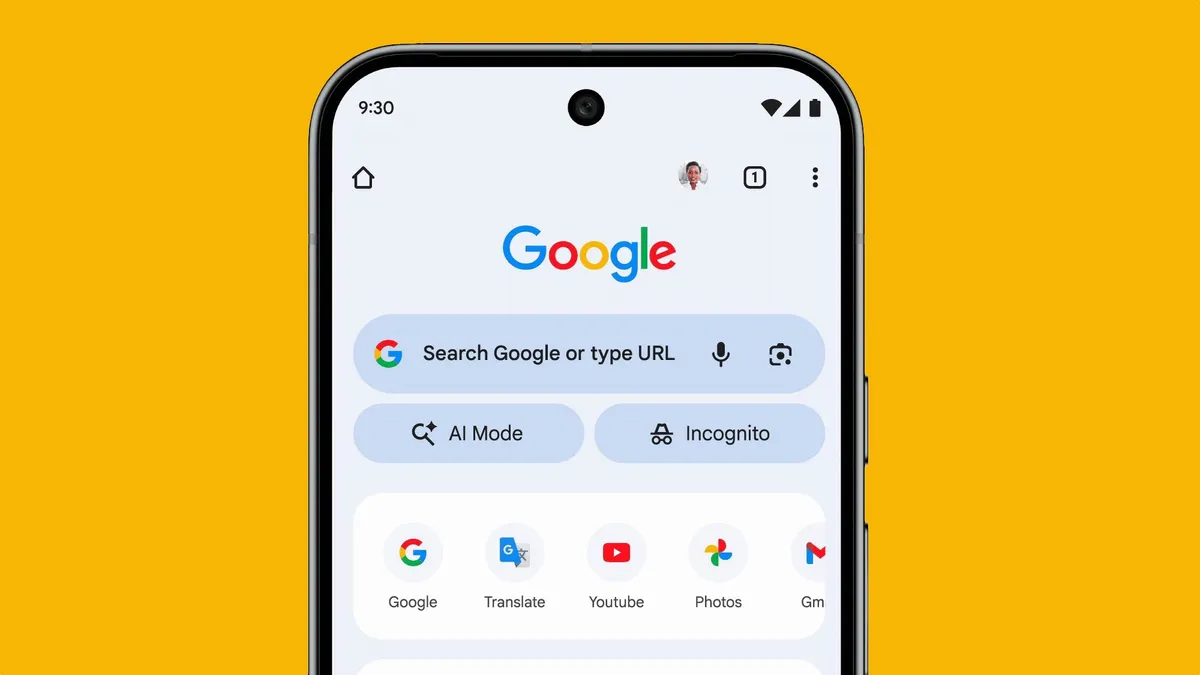
The parameter tells Google to display results in a stripped-down “Web” view that focuses primarily on traditional links instead of AI summaries, shopping modules and other modern Search features. Simply put, it makes Google feel more like Google used to feel.
Some users have even created browser extensions, bookmarklets and custom search engines that automatically force Google into this mode. Discussions about the trick have spread across forums, Reddit and tech communities as frustrations with AI-heavy search experiences continue to grow.
The trend reflects more than just annoyance with AI answers, for many users it's about having control.
The growing backlash against AI-heavy search

AI Overviews can certainly be useful. They’re fast, convenient and often good enough for quick questions. But some users feel the experience has become too cluttered, too predictive or too detached from the open web itself. AI summaries aren't always needed, yet they've become the default.
Instead of discovering information through multiple sources, people increasingly receive a synthesized answer generated by AI before they ever reach a website. Critics argue that AI Overviews are shifting Search away from traditional link-based exploration and toward AI-generated interpretation, where information is summarized before users ever visit the original sources.
The takeaway
Google used to be so much simpler, and many users are using this workaround to get back to simplicity.
The rise of “&udm=14” suggests there is now a meaningful group of users actively looking for ways to reduce AI involvement in their online experience because they want more intentional control over when and how they use it.
As tech companies race to make products more proactive, predictive and automated, some users are pushing back and asking for simpler, quieter experiences with fewer AI layers between them and the internet. What do you think? Have you tried this workaround? Let me know in the comments.

Follow Tom's Guide on Google News and add us as a preferred source to get our up-to-date news, analysis, and reviews in your feeds. Subscribe to Tom's Guide on YouTube and follow us on TikTok.
More from Tom’s Guide
- I almost gave up on Apple TV’s No. 1 show — then ChatGPT convinced me to keep watching
- I asked ChatGPT to apply Lewis Howes’ ‘Greatness’ mindset to my life — and it completely changed how I approach work
- I gave ChatGPT permission to disagree with me with this prompt — and its responses became dramatically better