I’ve tested every model of the Apple Watch to date, and ever since they updated the sensor on the Apple Watch Series 4, I’ve found that it has been one of the best smartwatches for heart rate accuracy during workouts.
The latest models — the Apple Watch Series 12 and Apple Watch Ultra 4 — now promise the most accurate heart rate sensor on the market, based on an in-house Apple study comparing the Series 12 to other wearables and using the Polar H10 chest strap as a reference.
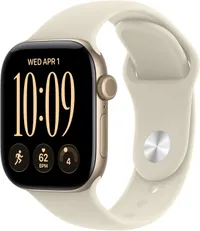
I was keen to put these claims to the test myself, and along with racing a half marathon while wearing both watches and a chest strap, I’ve done a variety of workouts with the Apple Watch Series 12, comparing its heart rate readings to a Garmin HRM 600 chest strap.
How I tested the Apple Watch 12’s heart rate accuracy

My main sport is running, and I’ve logged over 100 miles with the Apple Watch 12 while also wearing a chest strap. I’ve also done two strength workouts with weights, a bodyweight HIIT session, and an indoor bike ride.
For each test, I paired the Garmin HRM 600 chest strap to the Coros Pace 4 Pro on one wrist and wore the Apple Watch 12 on the other, then checked the graphs of their readings using the DC Rainmaker Analyzer.
I used the Apple Watch 12 with both the silicone and nylon sports bands, and it was similarly accurate with both, but mostly, I used the nylon sport loop as I find it more comfortable and easier to tighten quickly for a snug fit for heart rate readings.
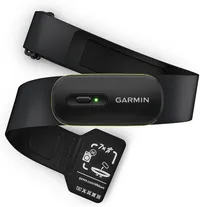
Chest straps are the gold standard for consumers seeking accurate heart rate data because they measure electrical signals directly from the heart, rather than using lights to measure your pulse at the wrist like optical sensors in watches. They're generally more accurate and faster to respond to changes in heart rate as a result.
However, most people find just wearing a watch more comfortable and convenient than putting on a chest strap — especially in winter when putting a cold strap on your chest is no fun, trust me. So if a watch proves to be just as good, it’s a better option for most people.
Let’s dive into the results, starting with how the Apple Watch 12 fared on the run.
Apple Watch 12 heart rate accuracy test: Running

I’ve got a lot of data from my runs with the Apple Watch 12, and the vast majority of it shows the watch to be very accurate with regard to heart rate accuracy during those runs.
One common problem is that the watch would gray out the heart rate reading at the start of a run if it lacked confidence in the reading.

These periods without readings were always short and show on the graphs below as straight lines between readings the watch did take.
As an aside, the Apple Watch 12 has been better than the Apple Watch Ultra 4, which has often grayed out its readings for long stretches of my runs during testing.


Once locked on, the Apple Watch 12’s heart rate sensor has stuck closely in line with the reading from the chest strap on all my outdoor runs, including a lot of easy miles, a half marathon race, and several challenging workouts in training.

I also did one treadmill run comparing it to a chest strap, which did feature a few more minor errors from the Apple Watch 12 that results in a slightly higher average heart rate reading from the watch by the end of the run.
It hasn’t been perfect, with the odd erroneous dip or spike, and it doesn’t respond to fast changes in heart rate quite as quickly as the chest strap, which is common for optical readings, but the Apple Watch 12 impressed me overall during my runs.
It could certainly be used to judge my training based on heart rate, which is the main benefit of it being accurate, in my mind.
Apple Watch 12 heart rate accuracy test: Indoor cycling

I did one indoor bike ride testing the Apple Watch 12 against the Garmin HRM 600 chest strap, cycling for just over 40 minutes total, with most of that done at an easy effort.
To put the Apple Watch 12’s sensor through its paces, I did 30-second sprint efforts every five minutes during the cycle to spike my heart rate quickly — something that can be very hard for optical sensors to track as quickly as a chest strap.

The Apple Watch 12 performed brilliantly during this test, responding rapidly to these spikes and drops in effort and ending up with an average heart rate of 109.97 compared to 109.89 for the chest strap.
While the graph shows it lagged a tiny fraction behind the chest strap when I started an interval — something I could see when looking at the watches during these efforts — the Series 12 captured each and every sprint well, and should be a reliable option if you love spinning sessions.
Apple Watch 12 heart rate accuracy test: Strength and HIIT workouts

In my experience, the hardest test for an optical sensor is gym workouts, because unlike sports like running and cycling, you don’t move in a predictable, consistent way when lifting weights or doing HIIT, which means the watch has more random noise to filter out when trying to detect your heart rate.
It’s such a challenge for watches that when you select a HIIT workout on the Apple Watch 12, a message actually pops up saying you can connect a chest strap to the watch via Bluetooth if you’re not getting consistent heart rate readings from the watch.

I did two strength sessions lifting weights with the watch, where my heart rate was mostly quite low, and a bodyweight HIIT session doing circuits of five exercises, three of which were jumping moves like burpees that get the heart pumping.


In both strength workouts, you can see the heart rate readings from the watch largely rose and fell in line with the chest strap but lagged and were rarely in line. The watch also missed one small jump in heart rate during one of the workouts.
The average heart rate reading was only a couple of beats off from the chest strap overall, though, and most spikes in effort were spotted and logged by the watch, even if it was a few seconds behind the strap.

It was a similar story with the HIIT workout, where I was actually pretty impressed with the Apple Watch 12’s readings. It lagged behind the chest strap, but did catch each of my intervals and rise to the right level.
It did also add in a couple of erroneous spikes, though, and for both HIIT and strength workouts I’d say a chest strap, or even an armband, will still deliver better results than a watch.
Apple Watch 12 heart rate accuracy test: Verdict

The Apple Watch 12 performed well overall in my testing, but I wouldn’t say it’s a marked improvement over other watches I’ve used for heart rate accuracy.
I typically wear a Garmin watch for training and have found the latest Garmin models like the Forerunner 970 that use the brand’s Elevate v5 heart rate sensor very reliable for heart rate accuracy; at least as good as the Apple Watch 12.
I’d say the Apple Watch 12’s heart rate accuracy is up there with the best wearables for me, but if you are relying on heart rate to judge your training, especially in HIIT or strength sessions, a chest strap might still be a worthwhile investment.

Follow Tom's Guide on Google News and add us as a preferred source to get our up-to-date news, analysis, and reviews in your feeds.
More from Tom's Guide