First and foremost, I'm not saying to avoid push-ups. I’m actually saying the opposite. If you find push-ups uncomfortable from a foundational strength or mobility standpoint, this move might help you, as it did me, to strengthen your triceps and improve shoulder mobility.
I was first introduced to the sphinx push-up variation while researching upper-body exercises to try for a Tom’s Guide Fitness Challenge. I stumbled upon the sphinx while down the YouTube rabbit hole, and it stood out. Considered an advanced push-up for those who need one, you can also use it as a mobility drill; depending on your experience, I’d try it from your knees using one of the best yoga mats for home workouts.
Here’s how to do sphinx push-ups and the benefits of adding them to your exercise routine.
What do sphinx push-ups work?
Like standard push-ups, sphinx push-ups work your triceps, pecs and anterior deltoids (the fronts of your shoulders) while recruiting your core muscles for stability. Moving from the forearms to the starting push-up position targets the triceps through extension and challenges shoulder stability during both motion phases to ensure your arms don't collapse.
If your goal is to improve push-up form and build upper-body strength without weights, I’d consider giving the sphinx push-up a try to help mix things up.
However, I don’t recommend them if you have an existing shoulder injury or a known joint weakness. In this case, the transitions could aggravate your joints, so checking with a qualified medical professional is strongly recommended.
How to do sphinx push-ups

- Start in a push-up position. Slightly round your upper back and push your shoulder blades apart, then walk your hands forward, shoulder-width apart
- Engage your core, shoulders, glutes and quads
- Keep your arms close to your body, then bend both elbows and lower your forearms to the floor
- Keep your hips aligned with your shoulders
- Pause, then push upward to extend your elbows, returning to the starting position. Avoid flaring your elbows.
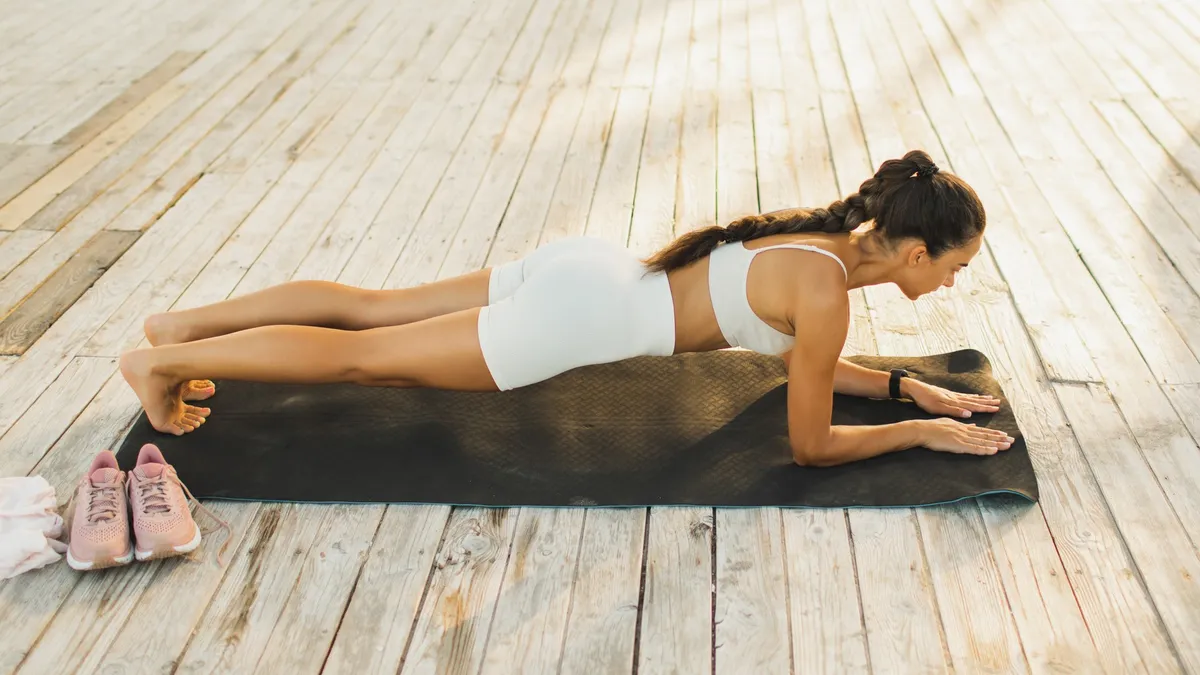
I did 100 sphinx push-ups every day for one week a while ago, so I’m already familiar with the exercise, which is why I've recently returned to them from a mobility perspective.
Most coaches will encourage you to save stretches for post-workout and prioritize dynamic stretching and mobility drills for your warm-ups, which is where this exercise slots in nicely (read: stretching versus mobility).
If you watch someone perform a standard push-up versus a sphinx push-up, you’ll notice they use a different movement pattern; you get more range of motion through elbow flexion and extension during a "normal" push-up and the hands start beneath the shoulders so you can lower your chest and shoulders almost entirely to the floor.
In short, you will feel the regular push-ups far more through your chest and shoulders than during the sphinx, which is more of a triceps burner. For that reason, I wouldn’t exactly say they’re interchangeable. If anything, the sphinx, although named as a push-up, closely resembles a high-to-low plank transition, with the hands starting further in front of the shoulders.
But if you’re working on building stable shoulders and stronger triceps, the sphinx could be a great shout, while also working your core muscles hard to stabilize you. It’s about hitting muscles differently through varying planes of motion and building transferable skills. The sphinx can almost certainly strengthen up the triceps enough to support your standard push-up.
Unlike my 100-rep fitness challenge (I’m still not over it), I’d aim for 3-4 sets of 8-10 reps, practiced from your knees or toes depending on your experience. The exercise relies on a controlled range of motion without heavily dropping the elbows to the mat.
If your elbows are sore afterward, you might be smacking them down too fast. While performing sphinx push-ups, focus on tracking the elbows backward rather than sideways and avoid flaring.
Another way to (kind of) access the same feeling is to move from a downward dog to a dolphin plank pose — if you’re a yogi familiar enough with this cruel transition, you’ll know how this burns. A tip I picked up during these testing yoga classes: turn your hands slightly outward and ground down through the palms to pull your biceps inward.
If you notice your left or right side coping far better than the other, use your knees until you balance things up. The sphinx push-up is a great weakness identifier and can help you build strength in both sides of the body if you let it. In other words, try not to use your favored side to facilitate movement; allow the weakness to show up, then work on correcting it.
There’s no rush to “get it right” straight away. Over time, sphinx push-ups are brilliant for building upper-body strength, mobility, and stability. Be patient, use a spotter or mirror to help you stay accountable and practice.
More from Tom's Guide
- I just added 'Mike Tyson push-ups' to my upper-body routine, and here's what happened
- I did 70 weighted push-ups every day for a week — here’s what happened to my upper body
- I did 20 push-ups a day for 14 days — here’s what happened to my upper body