I’ve been living with the Fitbit Air for two weeks now, and I’ve been impressed with the affordable screenless tracker. The Fitbit Air is a new, $99 device, taking on the likes of Whoop with its simplistic design. It’s designed for people like me who want to keep track of all their health and sleep, without the constant distraction of a buzzing wrist.
Yet no fitness tracker is perfect, and after two weeks, here’s everything I love about the Fitbit Air, plus the things to consider before investing. For a more in-depth look, check out our Fitbit Air review here, as well as the results of my colleague Dan’s Fitbit Air vs Garmin Forerunner 70 walk test.
3 reasons to buy the Fitbit Air
It’s distraction-free
I struggle to live in the moment, and the constant buzz of my Apple Watch 11 on my wrist doesn’t make it any easier. One of the huge selling points of the Fitbit Air is that it’s completely distraction-free, with no screen to stare at. The device fits neatly on your wrist and quietly collects data in the background.
Like the Whoop or Oura Ring 5, a screenless device is only ever as good as its connected app, and the updated Fitbit app, now Google Health, is excellent. It’s simple and easy to use, and the Google Health Coach is the best AI health tool I’ve used, helping translate data into actionable advice.
It’s extremely comfortable
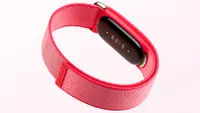
One of the first things I loved about the Fitbit Air was how lightweight and discreet it was on the wrist. The unit I got in for review came with the Performance Loop in Lavender, but you can also choose a hardy plastic Active Band.
The sensor easily pops in and out of the band in seconds. The Performance Loop is extremely comfortable — it’s long enough to wear around the wrist or the top of my arm if I’m lifting weights in the gym, and it’s extremely comfortable and lightweight. My colleague Dan has reviewed all of the Fitbit Air bands here.
A pet peeve of mine, as a female, is that sports watches in particular often feel like they’ve been designed for the male wrist. If you want the top tech and safety features, you’ll often have to choose a bulky device that just isn’t comfortable. The Fitbit Air, on the other hand, disappears, which is what you want from a screenless tracker.

It’s affordable
Unlike Whoop, which locks your data behind a subscription, you can get all of your core biometrics completely free after the $99/£85 purchase. The main difference between the free and premium subscriptions in the Google Health app is the AI coaching. You get a premium subscription for three months when you buy the Fitbit Air, but if you don’t use the coaching or you’re on a budget, you can still get all of your data for free.
3 reasons to skip the Fitbit Air
Bugs
It’s worth pointing out that this is a new device, so there’s bound to be some teething issues, and during my testing of the Fitbit Air, I found a few glitches. The main glitch being the tracker doesn’t give me a sleep score some mornings, despite recording my overnight sleep. This can be fixed by logging out and back into the Google Health app, and I’m sure it’ll be fixed soon, but it’s worth flagging if you have bought a Fitbit Air and are experiencing the same.

Subscription cost
One of the main things I love about the Fitbit Air is the Gemini-powered AI Health Coach. It’s the best AI health coach I’ve used, as unlike others, it doesn’t just regurgitate what you can already see from your workout breakdown, but gives you useful, actionable advice.
After a particularly sleep-disturbed night with my toddler, my Health Coach told me in the morning, “Your Readiness is 46 this morning. While you spent nearly two hours awake between 4 am and 6 am, the sleep you did get was high quality — you actually hit the top 5% for deep sleep restoration. After yesterday’s 18,000 steps, your legs need a bridge day. Stick to a gentle 20-minute walk to keep blood flowing without adding stress.”
Rather than a bad sleep score adding stress to my day, I found this incredibly reassuring. Of course, the downside here is that this useful coaching is behind a paywall that’ll cost $10/£8 per month.

Screenless devices won’t be for everyone
There are obvious drawbacks to screenless devices, the main being that you get zero real-time feedback. For the Fitbit Air, as with the Oura Ring 5, you’ll need to use the app on your phone to see how hard you’re working or how fast you’re running.
Talking of running, there’s no built-in GPS on the Fitbit Air. The device won’t map workouts unless you start it as a manual workout on the Google Health app, and even then, it uses your smartphone’s location services, so you’ll need to have it with you.

Follow Tom's Guide on Google News and add us as a preferred source to get our up-to-date news, analysis, and reviews in your feeds.
More from Tom's Guide
- I just spent 36 hours with Garmin’s new entry-level watch for runners — 5 things to know about the Garmin Forerunner 70
- I just ran my first 5K — 5 practical ways I conquered my pre-race nerves for a strong finish
- I tested the $79 Amazfit Bip 6 vs the $249 Apple Watch SE 3 — and the cheaper smartwatch is a lot better than I thought