The LG C6 is the latest in a long line of perennially popular, mid-range OLED TVs. It offers the exceptional performance we've come to expect from an LG OLED TV along with a class-leading selection of gaming- and streaming-related features.
As a Samsung-branded, mid-range OLED TV, the Samsung S90H is the C6's top rival. Its price, performance and size availability is similar to that of the C6, but its overall design is quite different.
If you're in the market for an OLED TV this year, and you're willing to spend on something above the entry-level tier, the C6 and S90H are two of the best OLED TVs to consider. Here's how they stack up when it comes to performance, design and features.
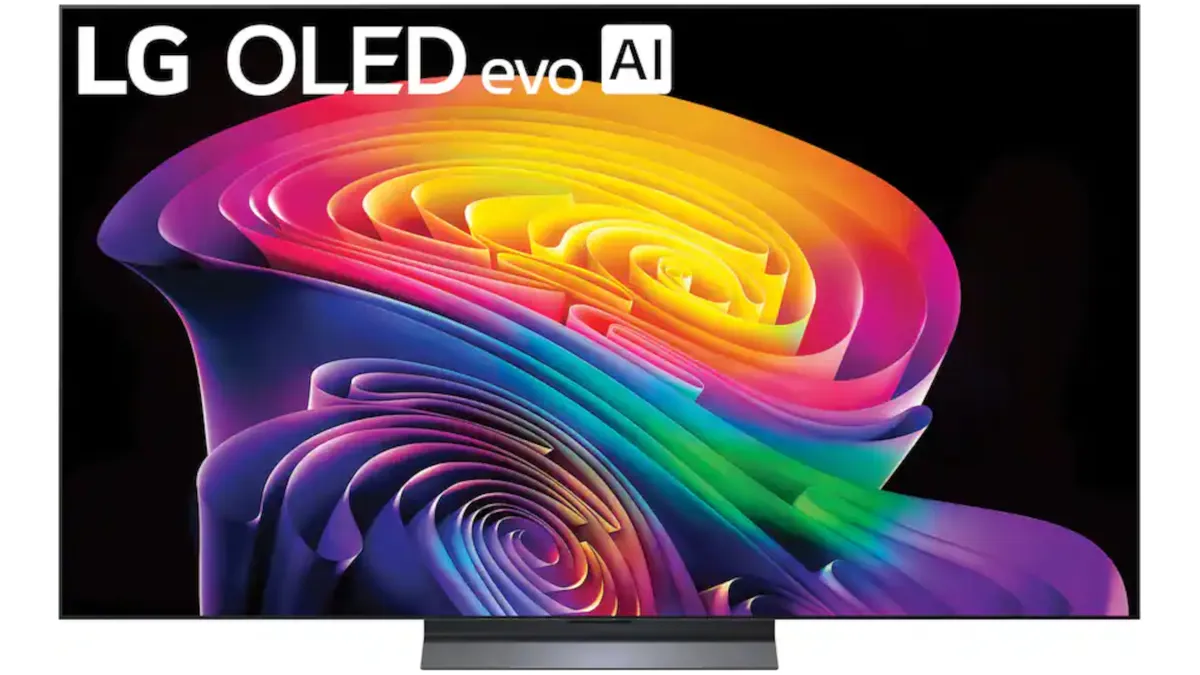
As the brand's newest mid-range OLED TV, the LG C6 delivers an excellent blend of performance and value. Its picture quality is roughly on par with the Samsung S90H and the two TVs are similar in price, so the biggest differences come down to the C6's Dolby Vision support and its glossy-style screen.

The S90H is Samsung's newest mid-range OLED, and its performance, size availability and features are similar to the LG C6. Unlike the C6, the S90H comes with a matte-style finish to combat direct glare, so people with bright light sources in their room may prefer the S90H. Unfortunately, it doesn't support Dolby Vision.
LG C6 vs Samsung S90H: specs compared
| Header Cell - Column 0 | LG C6 |
Samsung S90H |
|---|---|---|
Sizes |
42", 48", 55", 65" |
42", 48", 55", 65", 77", 83" |
Ports |
4x HDMI 2.1 |
4x HDMI 2.1 |
Resolution |
3,840 x 2,160p |
3,840 x 2,160p |
Refresh rate |
165Hz |
165Hz |
HDR |
Dolby Vision, HDR10, HLG |
HDR10, HDR10+, HDR10+ Advanced, HLG |
Smart TV software |
webOS 26 |
Tizen OS |
ATSC 3.0 support? |
No |
No |
Processor |
a11 AI Processor 4K Gen3 |
NQ4 AI Gen3 |
Before we dive into the rest of the specs, let's discuss size availability. The LG C6 is available in in 77- and 83-inch screen sizes, but these variants are classified as an altogether different model called the LG C6H. This means if you want a 77- or 83-inch LG C6, you'll technically have to buy the C6H.
We've not yet tested the 77- or 83-inch versions of the C6H, but LG promises better performance on these sets due to the fact that they leverage LG Display's newest RGB Tandem OLED display. This type of OLED panel allows for higher brightness and better color volume than the standard WOLED displays found on the 42- to 65-inch versions of the C6.
One of the biggest differences between these sets concerns HDR support. Like all LG OLED TVs, the C6 supports Dolby Vision, a licensed version of enhanced HDR.
The S90H does not support Dolby Vision. No Samsung TV does. Instead, it offers HDR10+, a royalty-free version of Dolby Vision that uses metadata to adjust the picture on a scene-by-scene basis, similar to Dolby Vision.
You'll still be able to watch Dolby Vision content on the S90H, and it'll certainly look great, but without Dolby Vision support, the S90H won't be optimized to replicate the creator's intent on Dolby Vision-mastered movies and shows . (To learn more check out our guide to whether or not you need Dolby Vision.)
Neither one of these OLED TVs supports ATSC 3.0, which supports native 4K over-the-air broadcasting. However, both sets offer a full slate of four HDMI 2.1-compatible inputs, along with support for 4K gaming at 120Hz (and up to 165Hz when a PC is linked up).
It's close, but the C6's Dolby Vision support gives it an edge..
Winner: LG C6
LG C6 vs Samsung S90H: design
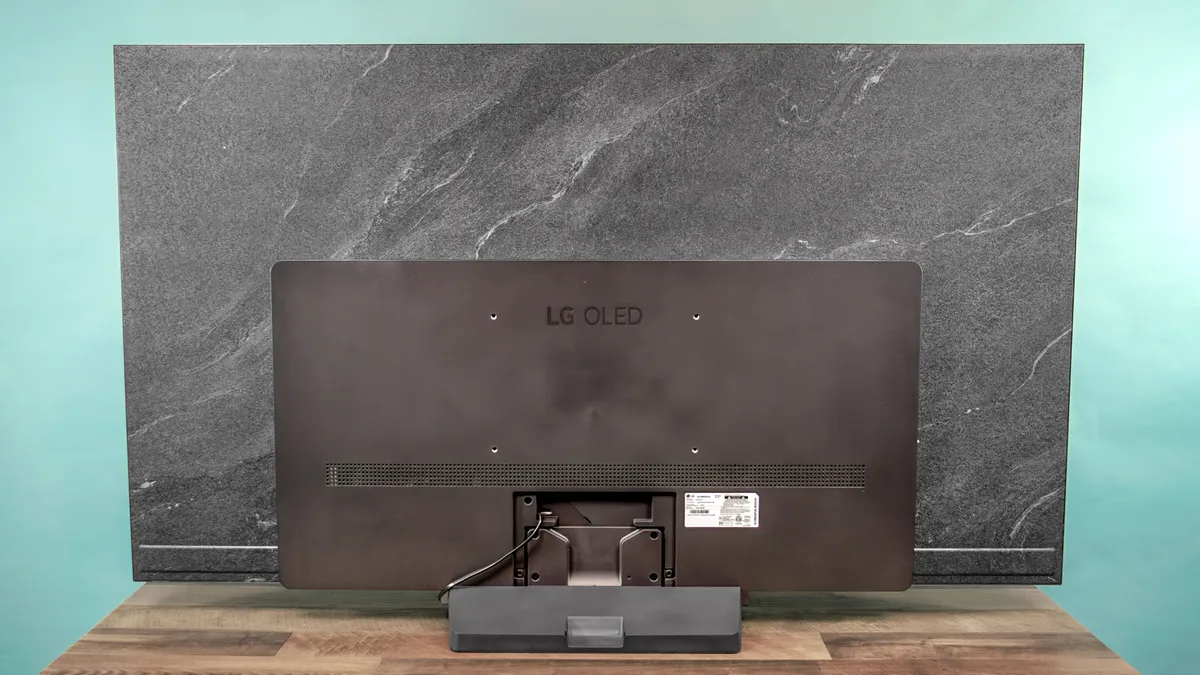
Given their performance similarities, I suspect that the design differences between the C6 and the S90H will inform many people's choice about which to buy.
The C6 (seen above) looks remarkably similar to its predecessor, the LG C5. That's not a bad thing, as both the C5 and C6 are quite sleek.
The C6's wedge-shaped stand sits below the center of the screen. The stand isn't very tall, so people with larger soundbars should make sure that their device won't obstruct the screen.
Every size in the C6 series ships with the newest version of LG's remote control. Like previous iterations, this remote features Wii-mote-like motion controls for pointing and clicking. (If you don't want to use this feature, the remote's directional pad can override the motion controls.)

Like the C6, the S90H — the back of which you can see above — also leans into the ultra-thin look that OLED TVs are typically associated with. (It doesn't, however, feature a unique, marble-like design on the back of its panel like LG's OLED.)
The C6's stand is a flat plate rather than a wedge-shaped piece, and it lifts the S90H slightly higher above its surface than the C6's stand. If your soundbar is extra tall, you might want to take a closer look at the S90H.
Samsung's Solar Cell remote control is included in the box, and while I'm annoyed at its lack of a dedicated input button, I do appreciate the fact that it charges by way of a solar panel on its back. It really cuts down on battery waste.
Unlike its predecessor (the S90F OLED), the S90H is the first mid-range Samsung OLED to feature the brand's Glare Free display. This matte-style finish is the most effective I've seen in combating direct reflections, but it it does so at a cost.
The S90H is the first mid-range Samsung OLED to feature the brand's Glare Free display. This matte-style finish is the most effective I've seen in combating direct reflections, but it it does so at a cost.
In average-to-well-lit rooms, the S90H's matte finish significantly lifts the picture's black levels. Big, bold reflections will disappear, but the light from those sources will scatter across the display. When this happens, the darker portions of the screen can appear purplish-gray and lose the deep, inky presentation that many people associate with OLED picture quality.
The C6's glossy screen isn't as adept at fighting direct glare, but it maintains the inky OLED patina in well-lit environments. With the lights off, both presentations look similar.
Depending on your living space and viewing habits, you'll likely prefer one of these designs over the other. Folks who are concerned about reflecting light ought to favor the S90H's matte-style screen, and viewers without competing light sources will likely prefer the C6's glossy screen.
Winner: Draw
LG C6 vs Samsung S90H: performance

Before we dive into which of these TVs is the better performer, let's compare their test results. (Both TVs were in their respective Filmmaker picture mode when these tests were taken.)
| Header Cell - Column 0 | LG C6 |
Samsung S90H |
|---|---|---|
SDR Brightness (10%, in nits) |
355 |
226 |
Delta-E (lower is better) |
1.5 |
1.6 |
HDR Brightness (10%, in nits) |
1,355 |
1,497 |
UHDA-P3 Gamut Coverage |
99.77% |
109.61% |
Rec.2020 Gamut Coverage |
75.92% |
77.83% |
Input latency (milliseconds) |
9.1 |
9.3 |
As much as I'd love to regale you with a multi-point breakdown of the many ways in which the performance of these rival sets diverge, the truth of the matter is that they're almost the same TV.
Both deliver the key benefits that OLEDs are known for: perfect black levels, pixel-level dimming and ultra-wide viewing angles. Given these benefits, pretty much everything looks terrific on the C6 and S90H.
The C6 is slightly brighter during SDR content (like cable TV and most TV shows), but it's close enough in this category that it almost doesn't matter. Ditto for HDR content, too — the S90H offers slightly brighter HDR performance, but in normal viewing scenarios, the difference is barely noticeable.
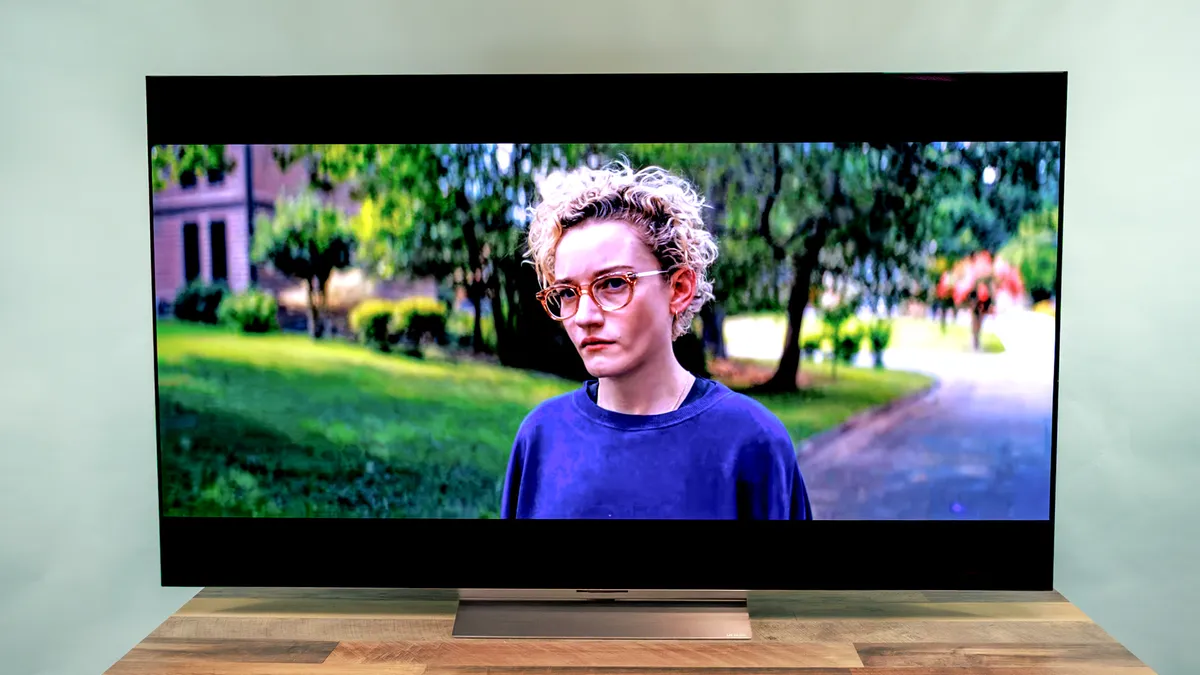
They're almost the same TV.
When it comes to color, these OLEDs are neck and neck, too: The S90H's marginally higher brightness allows for a wider range of color, but — and stop me if you've heard this one before — the difference is too subtle to matter.
The story here would've been different if Samsung had outfitted the S90H with a quantum dot-enhanced OLED display, just as last-year's S90F did. With quantum dots in tow, the S90H would likely produce a much wider range of colors. Unfortunately, with WOLED panels in play, Samsung's mid-range OLED has lost a step to LG's this year.
Nevertheless, home theater enthusiasts will be thrilled to learn that both sets are remarkably accurate in their out-of-the-box state. You won't have to shell out for a professional calibration in order to enjoy a precise picture.
Both of these TVs look fantastic. However, even in a direct, side-by-side comparison, their differences are subtle.
Winner: Draw
LG C6 vs Samsung S90H: smart platform and features
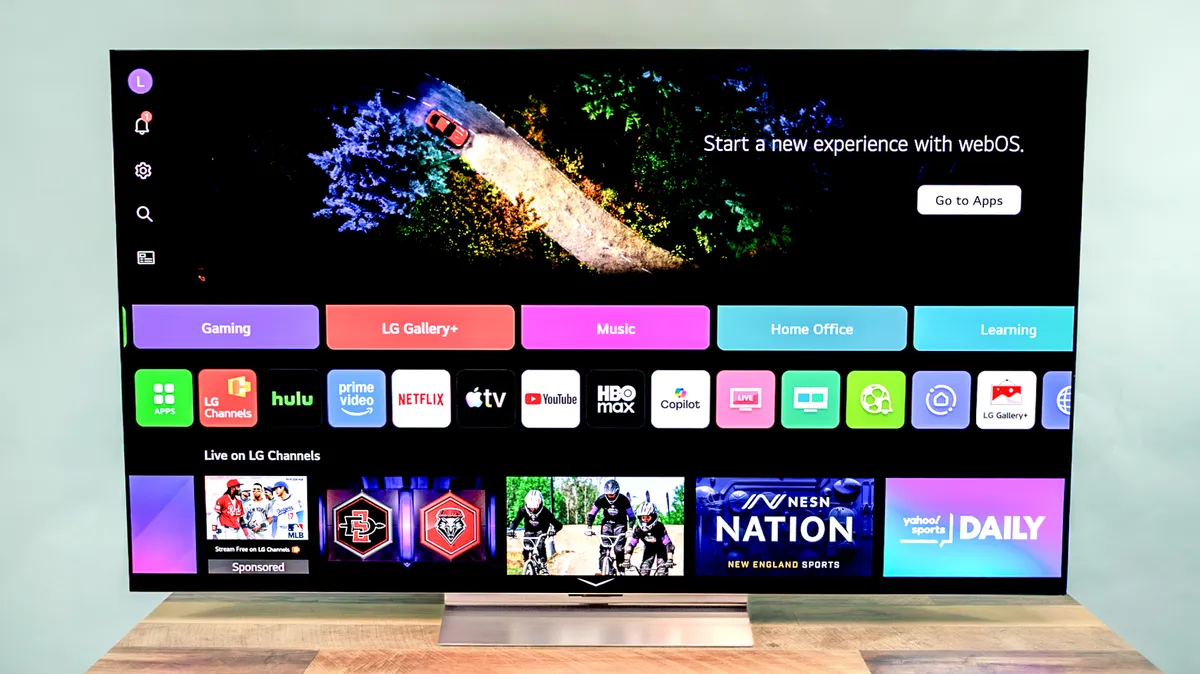
The C6's user experience is built around the latest version of LG's webOS. Dubbed webOS 26, it's a similar experience to the version we tested last year, but a handful of small changes to the interface make it a bit easier to navigate.
While I'm always in favor of software improvements, webOS still isn't my top choice for daily streaming on account of its heavy ad placement and occasional slow-down. Still, webOS will get the job done if you'd rather not deal with a separate streaming box.

Samsung's Tizen-based streaming platform, Smart Hub, has similarly seen some subtle improvements year over year. For instance, there's now a quick-access menu at the top of most of the pages on the home screen, and its convenient placement makes it easier to access often-used settings.
Unless you favor LG's software over Samsung (or vice versa), both of these user experiences are on a similar level when it comes to sponsored content and navigation speed.
Both TVs offer HDMI 2.1-compatibility across all four of their primary inputs, and they're equipped to make make the most out of 4K titles on current-generation consoles since they each support 4K gaming at 120Hz.
And, as far as gaming features go, the similarities continue. Both TVs offer HDMI 2.1-compatibility across all four of their primary inputs, and they're equipped to make make the most out of 4K titles on current-generation consoles since they each support 4K gaming at 120Hz. With a gaming PC hooked up, you can stretch that to 4K/165Hz on both sets.
In addition, both the C6 and S90H support Variable Refresh Rate (VRR), Auto Low Latency Mode (ALLM) and a version of AMD FreeSync Premium for smooth, tear-free gameplay.
We've already factored in the S90H's lack of Dolby Vision support, and once you set this aside, these TVs offer essentially the same set of features and ehancements.
Winner: Draw
LG C6 vs Samsung S90H: verdict
| Header Cell - Column 0 | LG C6 |
Samsung S90H |
|---|---|---|
Specs (25) |
24 |
23 |
Design (25) |
23 |
23 |
Performance (25) |
23 |
23 |
Features (25) |
24 |
24 |
Total Score (100) |
94 |
93 |
Regardless of which set you settle on, you're getting equally impressive performance and a near-identical selection of features. That said, the LG C6 is the OLED TV I recommend for most people. Its glossy screen is less divisive and the S90H's lack of Dolby Vision support is likely to be a sticking point for a certain type of viewer.
That said, you should consider the S90H if your living space and viewing habits are such that you'd make the most of its matte-style screen (or if you'd rather have Samsung's software suite).
Price is less of a factor in this matchup since both TVs are similarly priced. The 65-inch LG C6 is on sale for $1,799 at Best Buy and the 65-inch Samsung S90H is currently $1,999 at Best Buy. These prices will fluctuate in the coming weeks and months, but I don't expect them to stray too far from one another.

Follow Tom's Guide on Google News and add us as a preferred source to get our up-to-date news, analysis, and reviews in your feeds.
More from Tom's Guide