I’m a huge Pilates fan — I aim to attend a class at least once a week, whether that’s on the mat or on the reformer, and even attended a week-long Pilates retreat in Thailand. So when a new form of Pilates started trending, I was keen to unroll my mat, find a wall and give it a go — read on to find out what happened.
In wall Pilates, instead of using a reformer machine, which you’re unlikely to have in your living room, you use the resistance of the wall and your body weight to work your muscles. It’s also a hell of a lot cheaper than a reformer Pilates class, which can be costly.
As a reminder, what works for me might not be right for you and your body. If you’re new to Pilates, or you’re returning to Pilates following an injury, it’s always a good idea to go to a class with an instructor, who can correct your form and offer advice or modifications based on your body.
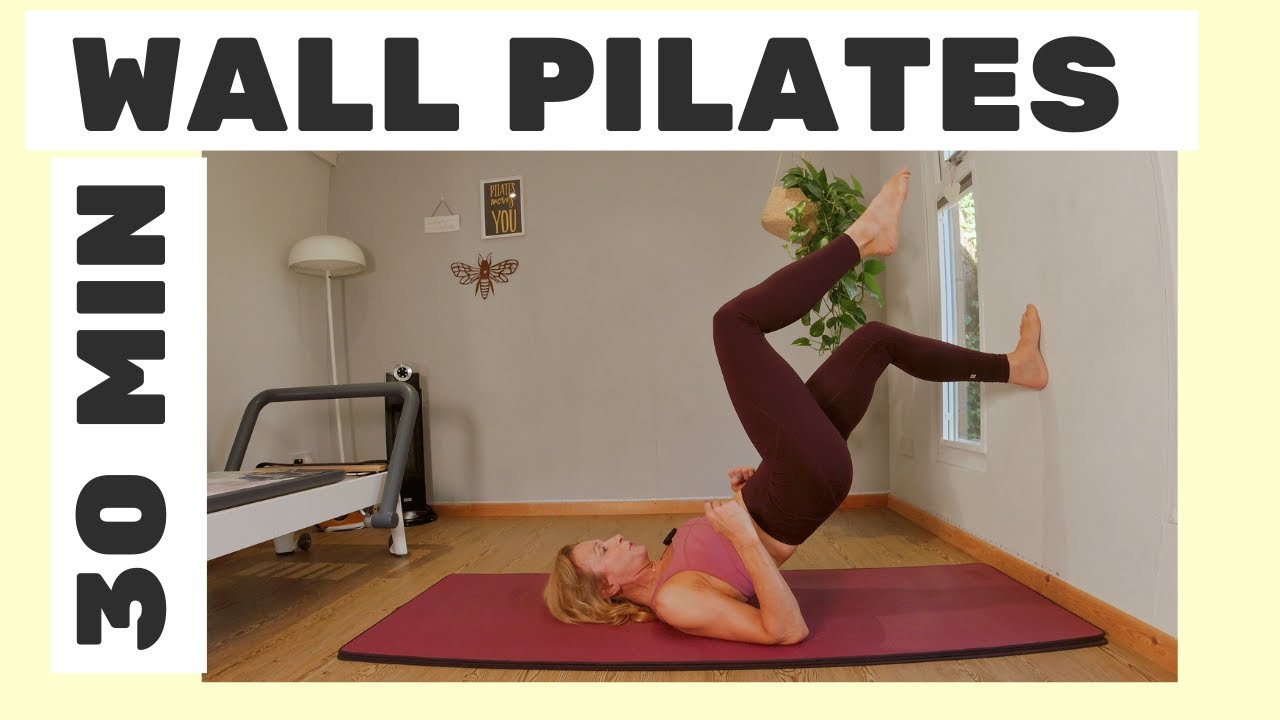
I tried my first wall Pilates workout — here’s what happened
For my first wall Pilates class, I positioned my best yoga mat next to a wall in my spare room and found a Full Body Wall Pilates class on YouTube by Donna Finnie, which has over 125K views.
The class started gently, like any other, and for a few minutes I didn’t quite understand where the wall came in, but things took a turn. The wall supported me during some exercises, helping me really extend my range of motion, as the reformer would, yet it also challenge me during other exercises — glute bridges, I’m looking at you.
Here are my main takeaways from the class:
The wall bridges fired up my glutes
Similar to the bridges you’d do on the reformer, with your feet on the handlebar, elevating my legs during the glutes really upped the intensity. As a runner, I struggle with lazy glutes and often find I’m pretty quad-dominant when I run. After just a few reps, my glutes were shaking.
After just a few reps, my glutes were shaking.
Before we got onto the wall bridges, however, Finnie started with spine curls using the wall as resistance. I found the wall really helped me to find a neutral spine, with my lower back pressed into the mat, and it’s probably one of the first times I’ve really felt each vertebrate roll up and back down.
I quickly noticed a weakness on one side
During part of the workout, Finnie instructed me to stand strong against the wall and put my weight into one leg to do single-leg glute bridges on the other. It only took a couple of reps for me to notice the difference between sides. I’m right handed, so it’s probably obvious that my right side would be stronger, but I really felt my legs shaking on the left. As a runner, it’s important to address these weaknesses to avoid injury.
The wall helped with my alignment
Finnie is an excellent instructor — when I first put my feet up on the wall, I found my heels were hovering slightly away from the wall, no bother I thought. Seconds later, Finnie said if this happens you should walk your feet up the wall slightly, as it’s a sign you’re struggling with ankle flexion. The wall helped me to listen to my body, and get my alignment right.
The wall helped me to listen to my body, and get my alignment right.
The wall also helped me during the calf raises and clams — Pilates exercises I’d do without support, yet by using the wall as a guide, I was able to really focus on the movement, safe in the knowledge that my posture was correct. One of the downsides of working out from home is that you don’t have an instructor in the room, to tweak your movements and make adjustments to your form, but the wall seemed to help, and I’d definitely recommend wall Pilates to beginners.
I’ll definitely be back on the wall soon
My verdict? 30-minutes later, I was hooked. I loved this class and found the addition of the wall challenging and exciting. The best part? Unlike the best resistance bands or the best ankle weights this Pilates prop is completely free! Sign me up.
Looking for more Pilates home workouts? Check out this at-home Pilates workout that targets your entire core, 8 of the best Pilates exercises for working your abs, and this abs and glutes Pilates workout.