As nighttime temperatures begin to drop, your lawn is preparing for its winter shutdown. But while established grass is slowing down, early fall actually presents the single best window of the entire year to grow new, thick turf fast.
If you want a lush, green carpet ready for spring, understanding when grass goes dormant, and taking advantage of the crucial weeks right before it happens, is the secret to success.
Here is when your lawn enters winter dormancy, why September and early October are ideal for overseeding, and how to accelerate grass growth before the first frost arrives.
When does grass go dormant?
Grass doesn't die when cold weather arrives. It simply enters a protective state called dormancy to conserve energy and survive freezing temperatures.
For most cool-season grasses (like perennial ryegrass and fine fescues), dormancy is triggered when daytime air temperatures consistently drop below 50°F (10°C) and soil temperatures fall below 46°F (8°C).
As your lawn prepares to sleep for the winter, the shift doesn't happen overnight. Here’s what you’ll see as your grass slips into dormancy:
- Early fall: Blade growth stalls as daily temperatures drop into the 50s. You’ll notice you don’t need to mow nearly as often.
- Late fall: Your lawn loses its bright summer luster and fades slightly as energy retreats from the blades and channels into the root system.
- First hard freeze: Once soil temperatures dip below 41°F (5°C), the grass shuts down completely, holding its ground until warmer weather returns in spring.
Why fall is the golden window to overseed your lawn
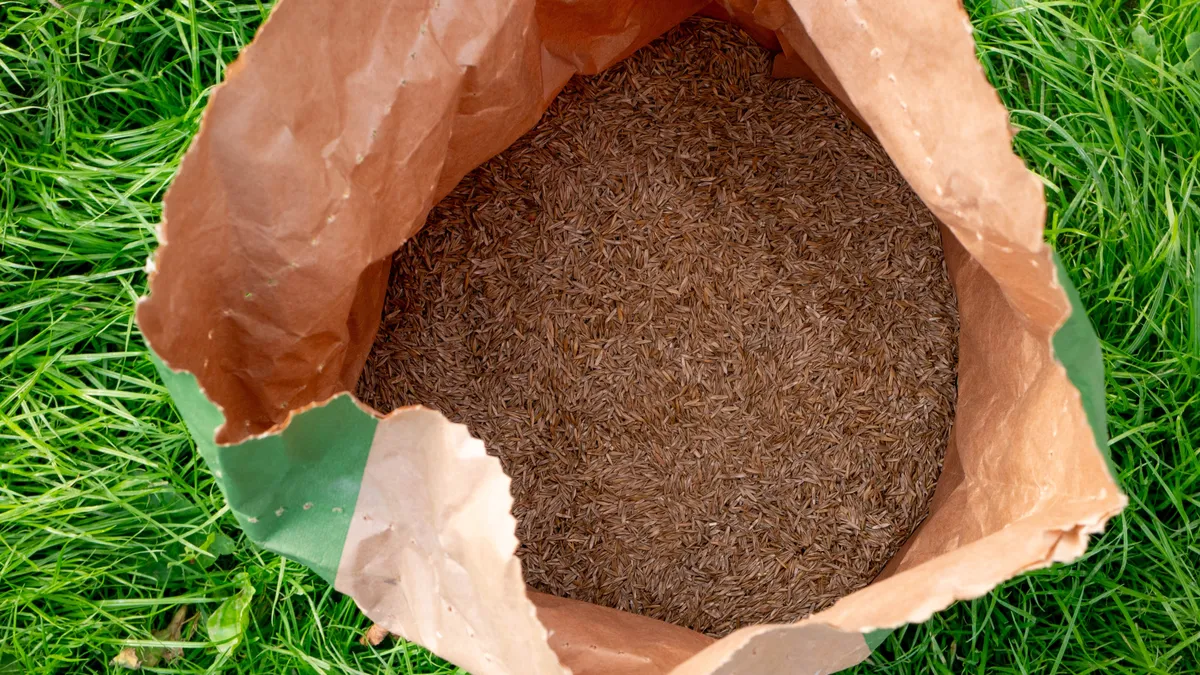
Because grass goes dormant in winter, many homeowners assume lawn care ends in late summer. In reality, the weeks leading up to winter dormancy are prime time for overseeding — spreading fresh grass seed directly over an existing lawn to repair tired, bare patches.
Timing this job for early fall yields vastly better results than waiting until spring. Summer's leftover heat stays trapped in the soil to jumpstart rapid germination, while the crisp autumn air keeps delicate tender seedlings from drying out.
Throw in predictable fall rain to handle the watering for you and a seasonal decline in weed growth, and your new grass gets a clear runway to establish deep, sturdy roots completely unbothered by spring weeds.
How to force root growth before grass goes dormant
If you want new seed to establish strong roots, timing is everything. For cool-season grasses, the ideal window is when soil temperatures are between 50°F and 65°F (10°C to 18°C). Once soil temperatures drop below the 50°F (10°C) baseline, germination slows drastically or stops entirely.
Also, when consistent fall air temperatures fall to 45°F (7°C), the grass will trigger winter dormancy, leaving late-planted seeds unable to develop the root system needed to survive the winter. Follow the four steps below to guarantee rapid germination and establishment.
1. Mow short and clear debris
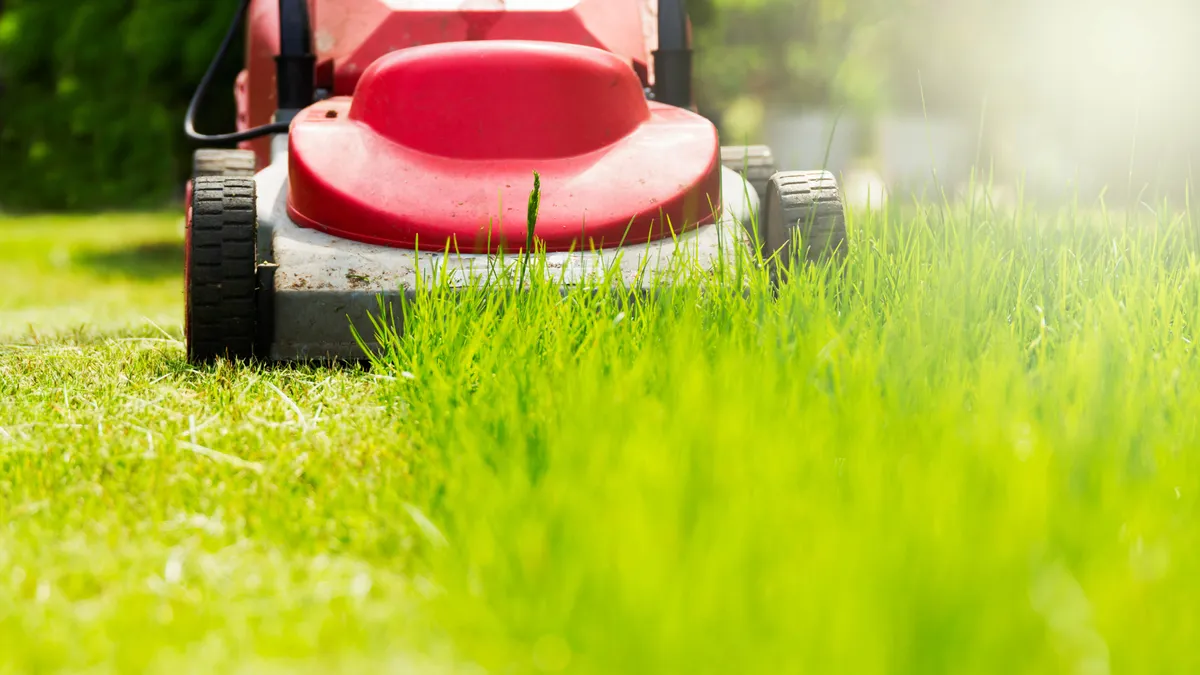
Before spreading seed, cut your existing grass down to about 1 inch. Once your lawn is mowed, vigorously rake the lawn to remove dead moss, clippings, and thatch. Seed sitting on dead organic matter will never germinate — it must make direct contact with bare soil.
2. Relieve soil compaction

Use a garden fork or core aerator to punch holes across thin patches. Opening up hard-packed soil gives young roots an easy pathway to push deep into the earth before freezing conditions lock up the ground.
3. Choose fast germinating, cool-season seed

For quick fall results, pick a seed mix rich in perennial ryegrass or tall fescue. Perennial ryegrass can germinate in as few as 7 to 10 days in ideal fall conditions, offering rapid green coverage.
4. Feed with a starter fertilizer

While summer fertilizers are packed with nitrogen for top-blade growth, early fall planting requires a dedicated starter fertilizer.
These blends feature elevated phosphorus and potassium to strengthen root structure under the surface, ensuring new shoots survive cold snaps and bounce back vigorously in early spring.
Always check your local environmental regulations, as some regions restrict phosphorus use unless you are explicitly establishing new seed.
Have a lawn secret of your own? Drop your favorite fall prep tip in the comments below.

Follow Tom's Guide on Google News and add us as a preferred source to get our up-to-date news, analysis, and reviews in your feeds. Make sure to click the Follow button!
More from Tom's Guide