Gas cooking is an incredibly popular choice for many at-home chefs due to its ease-of-use, cheap running costs, speed between temperatures and flexibility with compatible cookware.
If you're asking the question: "Induction vs. gas cooktop: Which is best for you?" you'll find many reasons why gas cooking is the number one pick for a lot of people, although it's a totally personal choice.
But, despite its many positives, gas cooking does raise some concerns, especially when it comes to health and safety.
Cooking with an open flame heightens the risk of accidents, from burning yourself to causing fires. Gas flames can also release harmful air pollutants, affecting your indoor pollution levels, especially in homes with poor ventilation.
This brings me to an important question: what does an orange flame on your gas stove mean? Well, it's a huge red (or orange) flag. Here's what the experts have to say.
Why your gas flames turn orange

With something so important to discuss, I thought it was a good time to turn to the experts for their advice.
Jason Reese, co-founder and partner attorney specializing in personal injury at Wagner Reese explains exactly what an orange flame means:
"Orange flames are a warning sign of danger, indicating incomplete combustion. In other words, there isn’t enough oxygen mixing with the fuel.
"When it’s working normally, the flame should be blue. Orange flames are often the result of dirty burners, clogged ports, or poor ventilation, though they can also indicate humidity."
And James Roswold, owner at Kansas City Accident Injury Attorneys, adds: "This can occur when dust, grease, or some other material gets accumulated in the burners. This can also occur when the mixture of gas and air gets unbalanced."
So, something's clearly not right, and the biggest indicator of that is the vibrant orange flame, as opposed to the usual blue. Fortunately, there's something you can do about it. Well, several things.
Here's what to do if your gas flames turn orange
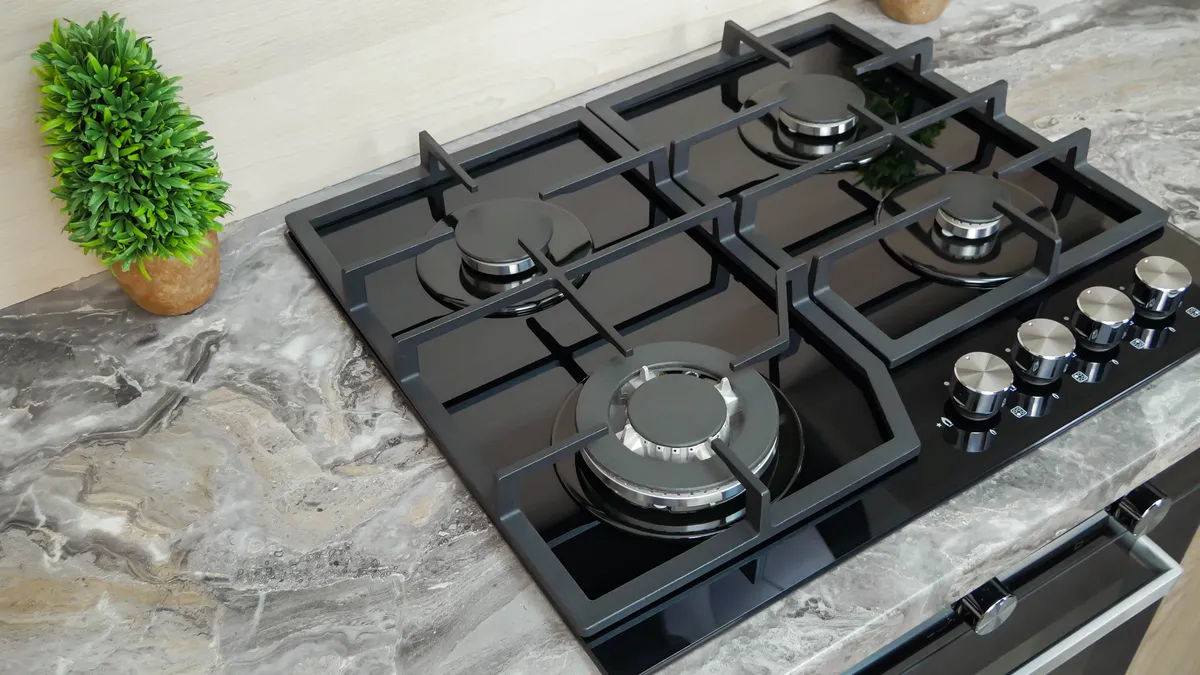
If you see an orange flame, your gas stove is unsafe to use and should be turned off immediately. If you're using a humidifier, this should also be turned off to check it isn't causing the flame.
It's important to then focus on tackling the issue before using your gas stove again. If left untreated, the problem will remain and could cause a serious health hazard.
To deal with an orange flame then, Roswold says it can be caused by something as simple as "a spillage of food around the burner ports" resolved with "a quick cleaning of the surface and a check for correct installation of the burner components".
But, if the flames remain orange even after you've checked this, then the problem could be far more serious, and the orange flame could be producing carbon monoxide.
"Continuing to use a gas stove with orange flames is one of the most dangerous things anyone can do."
Jason Reese, Attourney at Wagner Reese
Reese explains: "Continuing to use a gas stove with orange flames is one of the most dangerous things anyone can do. Repeated exposure means CO accumulates in your body, which can cause long-term neurological damage."
He explains that rather than trying to tackle the problem any further yourself, you should call a professional who can fix the problem. Then: "Once it’s fixed, make sure you install a CO detector near your kitchen to prevent future hazards, and schedule annual inspections for all gas appliances in your home.
"Professionals will clean your burner ports, adjust the air shutters, inspect for any blockages, and ensure proper ventilation so you can use your stove with peace of mind."
More from Tom's Guide