Hummingbirds are some of the most sought-after visitors in any garden. They bring movement, color, and energy to outdoor spaces, darting between flowers at incredible speed while helping pollinate plants.
They’re also delicate in size and stature, which makes for an especially cute guest, whether you’re an avid birdwatcher or not. For many gardeners, attracting hummingbirds is less about creating a perfectly manicured yard and more about building a space that feels alive and welcoming.
How to attract hummingbirds with color
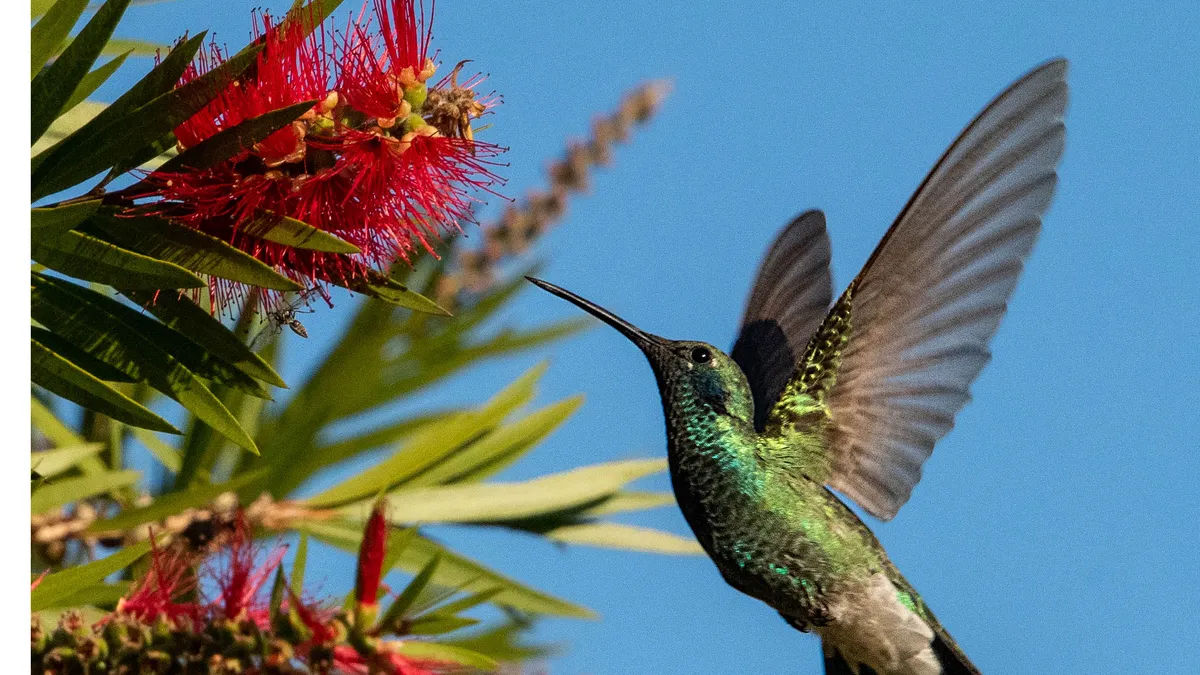
One of the easiest ways to attract hummingbirds to your garden is to focus on flower color. These birds rely heavily on vision when searching for nectar, and certain shades are much more effective at catching their attention than others. But while gardeners often hear that hummingbirds “love red,” the science is actually a little more nuanced.
Research shows that hummingbirds have extraordinarily advanced color vision. Unlike humans, who are trichromatic, hummingbirds are tetrachromatic — meaning they can see ultraviolet light and a far broader range of colors. That gives them the ability to distinguish flowers in ways humans simply can’t.
And while hummingbirds are strongly associated with red flowers, studies suggest this may be partly because red blooms tend to contain abundant nectar and attract fewer bees, rather than because hummingbirds are exclusively drawn to red itself.
This means that you actually have a lot more choice than you might think when designing a hummingbird-friendly planting scheme. The following flower colors consistently outperform others when it comes to attracting hummingbirds, especially when paired with nectar-rich, tubular blooms.
Colors hummingbirds adore
1. Red

Red is the classic hummingbird color for a reason. Bright red flowers are highly visible to hummingbirds and are often linked to nectar-rich plants like bee balm and cardinal flower. Experts also note that many insects, especially bees, struggle to detect red as easily, leaving more nectar available for hummingbirds.
Red flowers also create strong visual contrast in the landscape, making them easier for hummingbirds to spot while flying overhead. In my experience, adding even one cluster of bright red blooms can noticeably increase hummingbird activity in a yard.
Some of the best red flowers for hummingbirds:
• Bee balm
• Cardinal flower
• Trumpet vine
2. Orange

Orange flowers are another major hummingbird favorite, especially warmer coral and sunset tones. These shades stand out strongly against green foliage and often appear on tubular flowers that hummingbirds can easily feed from. Many gardeners overlook orange blooms, but they can be just as effective as red for attracting repeat visits.
Plants like trumpet honeysuckle and orange hyssop are particularly attractive because they combine vivid color with long flowering periods. This provides hummingbirds with a reliable nectar source for weeks on end. Orange flowers also pair beautifully with red varieties, helping create a more layered and natural-looking hummingbird garden.
Popular orange hummingbird plants:
• Orange honeysuckle
• Hyssop
• Orange jewelweed
3. Pink

Pink flowers are especially effective for attracting hummingbirds into smaller gardens and porch containers. Softer pink shades may not look as dramatic to us as bright reds, but hummingbirds are highly sensitive to color variation and frequently visit pink blooms for nectar.
I also think pink flowers tend to make hummingbird gardens feel less overwhelming visually. If you want a pollinator-friendly yard that still feels soft and cohesive, pink is one of the easiest colors to work with.
Good pink options:
• Petunias
• Fuchsia
• Phlox
4. Yellow

Yellow flowers can attract hummingbirds surprisingly well, particularly brighter golden shades. Although yellow doesn’t have the same reputation as red, many nectar-rich yellow flowers still receive frequent hummingbird visits. Their brightness makes them highly visible in sunny gardens, especially when planted in larger groups.
Yellow flowers also help diversify your planting palette. A garden composed entirely of red blooms can feel visually flat, whereas mixing yellow flowers throughout the borders creates more contrast and interest.
Some reliable yellow hummingbird flowers:
• Columbine
• Daylilies
• Snapdragons
5. Purple

Purple flowers are often rich in nectar and highly attractive to pollinators overall, including hummingbirds. Lavender-toned blooms can work particularly well when combined with reds and pinks, helping create a layered planting scheme that appeals to multiple pollinators at once. Purple flowers also tend to flower heavily over long periods, giving hummingbirds a more consistent food source throughout the season.
Plants with taller flower spikes, like salvia and lavender, are especially useful because they add height and movement to borders while remaining easy for hummingbirds to access.
Top purple choices:
• Salvia
• Lavender
• Verbena
How to use these colors to attract more hummingbirds

Color matters, but placement and plant choice matter just as much. The most effective hummingbird gardens combine bright flower colors with nectar-rich blooms planted in clusters, rather than isolated pots or single plants. According to wildlife experts, mass plantings create more visible “feeding zones” that hummingbirds can identify quickly while flying.
Tubular flowers are also especially effective because they match the shape of a hummingbird’s beak, so be sure to include some of these varieties in your planting. Layering flowers with different bloom times will also help provide nectar throughout the season, encouraging birds to return repeatedly rather than treating your garden as a brief stop.
How to maximize your chances of frequent hummingbird visits
• Plant flowers in groups rather than individually
• Mix reds, oranges, pinks, and purples together
• Prioritize nectar-rich tubular flowers
• Add a shallow water source or fountain nearby
• Avoid pesticides to reduce insect populations that hummingbirds also feed on
And while red feeders can help attract attention initially, gardeners shouldn’t assume red is the only color hummingbirds care about. Their vision is far more sophisticated than ours — which means a diverse, colorful garden is usually far more effective than relying on one shade alone.
Gardening essentials we love

Follow Tom's Guide on Google News and add us as a preferred source to get our up-to-date news, analysis, and reviews in your feeds. Subscribe to Tom's Guide on YouTube and follow us on TikTok. Finally, you can visit our dedicated Tom's Guide Savings Squad hub for expert help on getting the best products for less.
More from Tom's Guide
- This simple nectar recipe will attract hummingbirds to your yard — an expert reveals all
- I asked 2 ornithologists about the surprising way hummingbirds use spatial memory to find feeders — and how to attract more of them to your yard
- Hummingbirds love this one plant — and I think you’ll fall in love with it too