In a new video from well-known leaker Moore’s Law is Dead, the YouTuber details the PS6's alleged specs, including the configuration of the CPU, GPU and RAM. If this leak is accurate, Sony’s next-gen console will be significantly more powerful than the current PS5.
The PS6 will reportedly utilize an AMD “Orion” APU that’s a 280 monolithic die fabbed on a 3nm TSMC node. This chip will feature up to 10 Zen 6 cores, 52 to 54 RDNA 5 compute units (CUs), and 30GB to 40GB of GDDR7 RAM, offering between 34 and 40 TFLOPs of GPU performance.
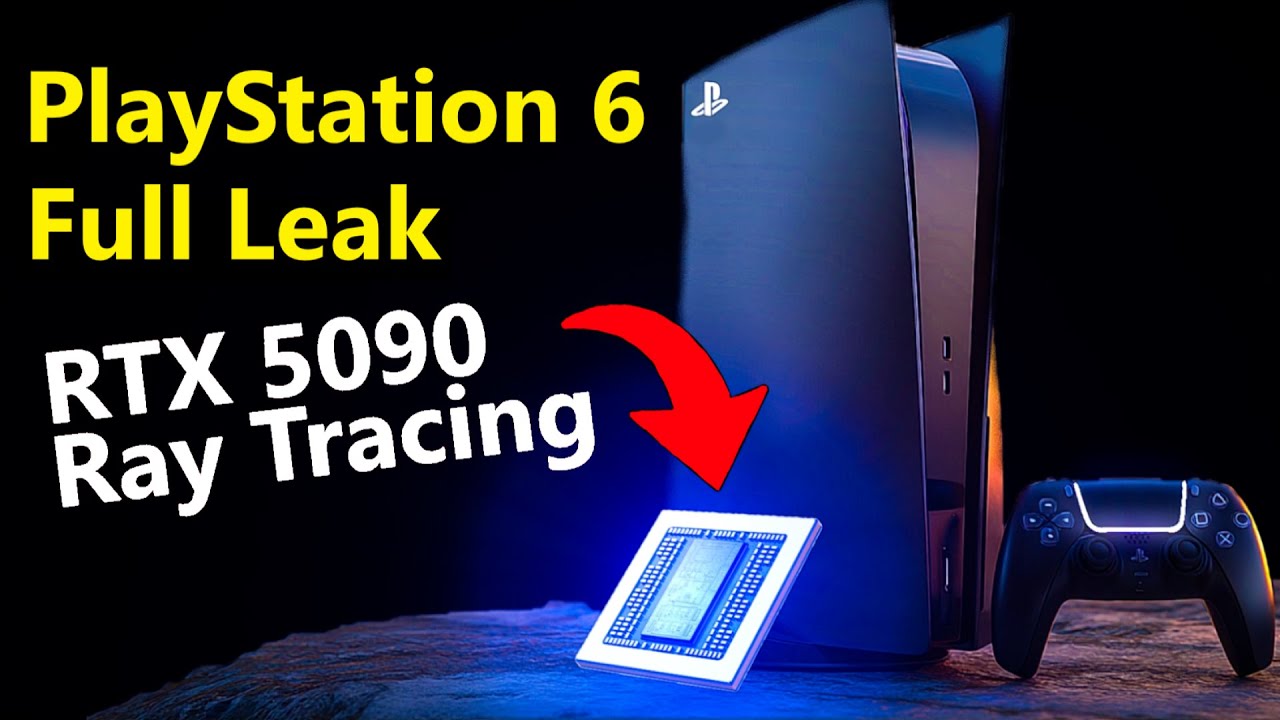
MLiD says these specs will allow the PS6 to have 2.5 to 3 times faster rasterization and 6 to 12 times improved ray tracing over the PS5. When you factor in FSR4 (AMD’s equivalent to Nvidia’s DLSS technology), the PS6 could see an overall performance boost of 4 to 8 times over the PS5. This should allow for more games to run at 4K resolution and 120 frames per second.
Given that the PS6 is expected to use the x86 architecture, like its two immediate predecessors, the next-gen console should offer full backward compatibility with PS4 and PS5. Unfortunately, it doesn’t seem we’ll get PS3 backward compatibility, which makes sense given how that system used the infamous Cell Processor that has made it difficult to port games to modern systems, PC included.
One interesting thing MLiD pointed out is that the rumored Xbox Magnus console could still be 25% more powerful than the PS6. If reports are true that the next Xbox will be more akin to one of the best gaming PCs than a home console, then this power gap would be expected.
As always, take this and all other supposed PS6 leaks with a grain of salt. If these specs are legitimate, then we might have confirmation sometime in 2027, as that’s when Moore’s Law is Dead alleges the PS6 will launch. Regardless, we’ll keep you updated on any PS6 rumors and reports as we hear them, so stay tuned!
Follow Tom's Guide on Google News to get our up-to-date news, how-tos, and reviews in your feeds. Make sure to click the Follow button.
More from Tom's Guide
- PS6 won’t abandon physical games, claims new report
- PS6 just tipped for huge specs upgrade to take on gaming PCs
- PS6 and new PlayStation handheld specs reportedly leak