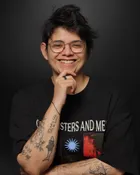
Photography means the world to me. I've loved it for as long as I can remember, and I love capturing the world around me. Every year, when World Photography Day comes around on 19 August, I can't help but think about the importance of visual storytelling. About the importance of documenting life and the world, and how this art form is a universal language.
But with developments in AI and the unprecedented rise of AI-generated images, it's becoming more and more difficult to distinguish between photorealistic images created by AI versus those created by humans. The issue goes even beyond being able to distinguish between the two, and as a wildlife photographer, it worries me that AI-altered images of wildlife is are putting research and conservation at risk.
Despite how I personally feel about the use of AI in photography, I asked myself, "How do professional photographers feel about it?"
So I reached out to three wildlife and landscape photographers and videographers — Aleksander Nordahl, Christine Sonvilla, and Marc Graf — who provided great insight into the use of AI in photography. Alongside that, they also shared what photography means to them, and advice they have for future generations.
Meet the photographers

Before we dive into the meat of this article, let's meet the three professional photographers I spoke to. Aleksander Nordahl is a visual journalist and the Managing Editor and Creative Director of Sunstone Institute, a global data science institute that conducts "data-driven studies on humanity's greatest threats and find compelling ways to tell the stories."
And that's exactly what Aleksander does, using underwater photography, videography and audio to show the impact of human activity on Norway's waters and coastline. His latest work, A Journey Past the Tipping Point, explores the effects of nutrient pollution from fish farming, and I consider it to be essential watching for anyone — not just those who consider themselves nature lovers.

I also spoke with Christine Sonvilla and Marc Graf, filmmakers, photographers and conservationists, the geniuses behind Bear Me in Mind Productions studio. Their studio aims to promote our relationship with nature and wildlife through TV documentaries, scientific shorts, and photographic assignments. They've documented Eurasian griffon vulture,, the Slovenian coast, and brown bears in Central Europe, to name a few projects.
Christine and Marc's work has earned them several accolades, including Wildlife Photographer of the Year. From human-wildlife interactions and specific ecological issues, to the return of large carnivores in Central Europe, their work has taken them all over the world.
As a wildlife photographer myself, Aleksander, Christine and Marc are great inspirations for me, as they tell stories that matter the most to the human race in an accessible and visually pleasing format.
'It serves as a personal retreat from the human world'

Photography can mean a lot of different things to different people. For me, it's about capturing the wildlife and people around me, to keep as memories I can look back on when I'm older. It's also about highlighting specific birds that are often overlooked or hated by society, like pigeons — that's why my Pigeons of the South West series on Instagram exists.
Visual storytelling can be a way to escape into another world, too, and Marc concurs. "It might sound egotistic, but what I appreciate most about photography is being exposed to wildlife, nature and the outdoors," he tells me.
"It serves as a personal retreat from the human world. Apart from this rather very personal meaning, I also consider a strong piece of photography the most powerful tool in communication since a photo allows to be consumed more than once and does not lose its power over time."
His partner, Christine, agrees. "There are two main reasons why I take photos: to communicate a message and to remember moments," she adds. "When viewing a photograph, I immediately dive back into the moment, not just visually but also with all other senses. Pictures are like a memory book to me. Initially, however, I started photography mainly to communicate messages I consider important. A powerful image sticks with people’s minds better than words alone."

While Christine and Marc mostly work with animals on land and birds in the sky, Aleksander dives deep underwater to capture a world not many of us have the pleasure of seeing — and he's been photographing for a long time.
"Photography is a really important part of my life, and it has been since I was 14 years old," he says. "It is my most important professional tool as a storyteller, journalist, artist, editor, investigator, and even freediver. But it also shapes how I see the world around me."
'To capture a real photo today is to show the world like it really is'

As I mentioned earlier, generative AI seems to have taken over most online spaces today — and it's having a detrimental impact on conservation. According to The Guardian, experts say that the increasing presence of these on birding platforms threaten credibility of tools used by scientists.
Since Christine, Marc and Aleksander's work focuses on conservation in one way or another, I had to ask them about what it means to capture a real photo in 2026. "I think the crucial point each photographer should question him- or herself is the following: Why am I photographing and what do I intend to achieve?" Christine muses. "In my case, it’s easy: If there is a gripping nature and wildlife topic, then I’d like to convey gripping imagery, which should be as authentic as possible.
"That means, I just do basic editing. The photo itself really happens out there. I don’t see a point in massively altering an image with the use of AI. I want to go out there and capture authentic moments. I personally consider it a hazardous development to overly alter or completely change nature and wildlife images with the use of AI. It distorts our understanding of nature, creates unattainable expectations and alienates us further and further from nature."

Marc agrees with that sentiment. "To me, it means the world! I consider photography the most individual, personal and intimate approach to a subject. And 'photography' to me means working with a camera in hand, with your brain developing ideas and finding ways to literally capture the right moment while at the same time your heart has to be convinced that this moment is the perfect one as well."
When I posed the same question to Aleksander, he shared a story. "The other day I saw a young photography influencer making an advertisement on social media showing how you could use his AI tool to make your concert photos even better. The example was removing some of the gear on stage, allowing the artist to stand out more. If you do that, can you still call it a real concert photo? Of course not."
Aleksander also said something that's going to stick with me for a long time: "To capture a real photo today is to show the world like it really is, in all its perfect and imperfect ways."
'What I see and document is what you get: nothing more, nothing less'

It's difficult to ignore the negative impact of generative AI and the increasing population of data centers around the globe continues to receive backlash. All human needs and human activity, according to Aleksander, negatively impact the environment. "In Norway, where a vast amount of our electricity comes from hydropower, the demand for this and clean energy is increasing," he shares. "This will, of course, materialize in the increasing loss of nature. All my investigations into human activities in nature have been about the negative impacts of 'human needs.'"
But can AI actually be beneficial to workflows and post-production processes for photographers? "I work at an AI-native workplace," Aleksander answers when I pose the question to him. "Still, here we practice human input and human output. We let AI do the time-consuming, boring work, for instance, renaming and archiving visuals like photos and videos. But I never let AI make creative decisions on visuals for me. I will do that.
"We still need to make our own decisions. We must always control the parameters and set restrictions based on our human ethics and logic. Our visual storytelling is about real humans and the impact we have on real problems. We show them how it really is, and let our visual evidence speak for itself."

For Aleksander, his "line in the sand" is sticking to what he has always practiced since he was shooting on film. "What I see and document is what you get. Nothing more, nothing less. AI-generated/enhanced visuals have no place in my work as a documentarian. It can't. I am a witness. I am present when and where life unfolds. I record what is in front of me. That is what I show."
Christine and Marc have found some use for AI in post-production — but they never overuse it either. "I personally use very little AI in my photography editing workflow," Christine tells me. "One thing I find very helpful is AI-generated noise reduction. This works very well, however, each AI-generated step, like the noise-reduction, is very time-consuming, especially if these steps are being conducted for a multitude of images."
As someone who has tried using AI-powered noise reduction in Adobe Photoshop Lightroom, I can confirm that it takes a very long time — and for Christine, her prime credo is "spending the least amount of time necessary in front of the computer and working focused and diligently in the field, in order to reduce the necessity of more intensive editing."

Recently, the European Union has started enforcing transparency obligations for tech companies, requiring them to clearly label any photos, videos or audio created using AI systems, designed to look authentic. I welcome this, and so does Marc, and he hopes that this extends to photography communities too.
"I don't use AI in post as I believe that any AI-enhancement should be labelled — the pure craft of photography lies in all our very own hands and not in the machines’ abilities to enhance or optimize our vision.
"And to be honest, I personally get bored very quickly by all those super perfect images out there — no matter if they are fully AI generated or over-optimized. Being imperfect is the most human thing, so why shouldn't we allow our images to mirror our imperfection?"
'Don’t just aim for likes and attention; aim for meaning, respect and lasting impact'

In an age of AI-saturated images, how do new photographers future-proof their work and their art? It's a question I keep asking myself, struggling to answer it, but thankfully, I had three pros share some great advice with me — and with you! Christine says one should ask themselves why they take photos. "Why do I take pictures, what’s my purpose and what audience do I want to reach?" she adds.
"For nature and wildlife photography, there should be a clear ethos, which is putting nature first. Massively altering images and conveying a distorted image of nature, which is either over-romanticized, over-glorified or falsified in terms of species integrity, is not doing nature a favor. Don’t just aim for likes and attention; aim for meaning, respect and lasting impact.
"AI can be helpful for one’s workflow and one certainly needs to acquaint oneself with it, but it must not be used to distort nature’s integrity. Less AI is more when it comes to nature and wildlife photography."

Marc reflects on his 15-year-long career upon being asked this question, and as someone who has waited hours to get the perfect shot, I can't help but smile at his anecdote. "During my 15 plus years in the wildlife photo/film business, I have learned that most of the time and effort that drives my photography has to be invested in preparation, research, waiting and doing nothing but just crossing fingers that an image will be produced during a session.
"So, my advice is this: if you love what you are working on, carry a heavy backpack, and have invested in an expensive camera, then why not stay true to yourself and focus on capturing the moment. And if you do so, it's the most natural thing to be proud of your work. And it should be in all our photographers' interest to label our products as '100% human made.' A label that is still missing in the greater picture of woman/man-made photography but needed so much."

Aleksander is doing all that he can to protect his work's authenticity too. "I use the new equipment and formats that safeguard the authenticity of my work, so you can backtrack what is done with my pictures," he says. "Maybe new photographers should do this too. Sell authenticity and don't rely on AI-driven shortcuts. Be the producer and documentarian of real life, in a market where you can make and get whatever you want. Maybe this is the future."
He also quotes his late colleague and war photographer Harald Henden: "The individual photographer's most important asset is credibility. When I put my name under a photograph, readers should be able to trust that the content is accurate. No further verification is needed."

Follow Tom's Guide on Google News and add us as a preferred source to get our up-to-date news, analysis, and reviews in your feeds.
More from Tom's Guide
- ‘It’s more of a lifestyle, a fashionable device, not just tech’: We Are Rewind’s CEO on how the Pink Floyd collab is turning cassette players into ‘collector’s items’
- My 13-year-old Nikon DSLR has been battered, bruised, beaten and survived it all — it’s what made me fall in love with photography
- The best cameras in 2026