My job is very cool. I get to test the best drones which means that not only do I get to spend time in the great outdoors, but I also get to capture some incredible shots from a bird’s-eye view. You’re spoilt for choice these days as there are some incredible quadcopters available — for every budget.
DJI is, naturally, the first name that comes to mind when you hear the word “drone.” But DJI’s drones have been facing lots of scrutiny due to the ongoing ban on its quadcopters. But DJI isn’t the only drone manufacturer out there — just take a look at Potensic. I’ve recently finished testing the Potensic Atom 3, a drone that hopes to go toe-to-toe with the DJI Lito X1, and it's excellent for beginners.
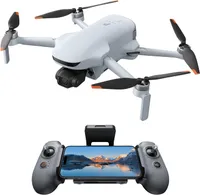
The Atom 3 improves on its predecessor, the Atom 2, by introducing 4K/60fps video and 50MP RAW output, making it great for color grading and flexibility in post-production. I awarded it 4-stars in my Atom 3 review, and while I think it’s a capable quadcopter, I’m not convinced it’s the best beginner drone right now… and I’d still spend on DJI.
What’s good about the Potensic Atom 3?

Good things first. The Potensic Atom 3 features a 1/1.3-inch CMOS sensor, which is larger than the 1/2-inch sensor on the Atom 2. While the Atom 2 could shoot 4K video at 30fps, the Atom 3 can do the same at 60fps, which means that motion doesn’t look as jarring anymore. And for the first time on a Potensic drone, the Atom 3 can output 50MP RAW images.

The Atom 3 also introduces the new RC PTD2 controller, so you don’t need to rely on using your smartphone as a screen anymore. The controller’s 5.5-inch touchscreen is bright at 900 nits and is easy to view and read in even direct sunlight. Flight distance has been upped from 6.21 miles on the Atom 2 to 9.94 miles on the Atom 3, too.
Lastly, the Atom 3 boasts class-leading battery life. Using the Smart Battery, you can fly for 40 minutes, and this jumps to 50 minutes when using the Smart Battery Plus. The parallel charging hub is capable of charging all three batteries at the same time, and it now comes with a USB-C port instead of a proprietary one (like on the Atom 2).
What’s not so great?

You can probably tell by now that I really like the Potensic Atom 3 — after all, I awarded it 4-stars. But the thing is, it could have very easily been a 4.5-star product… if it weren’t for its fairly significant drawbacks. My biggest gripe with the Atom 3 is its lack of obstacle avoidance. This means that the drone can’t automatically avoid obstacles in its way.
I wouldn’t have marked the Atom 3 down for its lack of collision avoidance if it wasn’t for its direct competitors featuring it. The similarly priced DJI Flip ($439) features front-facing obstacle avoidance. Now, this isn’t as good as omnidirectional avoidance, but it is something, and it gives the Flip a leg-up over the Atom 3. The DJI Lito X1 (£369), on the other hand, does feature omnidirectional collision sensors — but unfortunately, it isn’t available in the U.S. at the time of writing.

My other primary issue with the Atom 3 is its poor low-light performance. Even though it features a 1/1.3-inch sensor, its aperture has been narrowed to f/2.8 from f/1.8 on the Atom 2, and it struggles in dimly lit environments. You’ll find the full explanation in my Atom 3 review but to sum it up: the Atom 3’s AI Night Mode, which is a big part of its advertisements, is simply not good enough. It overexposes the video so the “AI processed” video ends up looking a little fake. It drops the frame rate down to 25fps too, resulting in a fair amount of motion blur.
And of course, because there’s no obstacle avoidance, I wouldn’t recommend flying in low-light environments anyway, because visibility is already extremely low, and you may not always be able to maintain visual line of sight (VLOS).
What I’d buy instead

If you’re okay with the lack of obstacle avoidance and poor low-light performance, then by all means, get the Potensic Atom 3. Everything else it offers is excellent and the drone doesn’t give you much else to complain about.
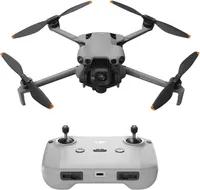
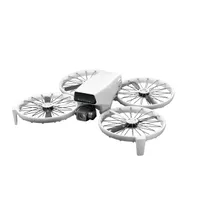
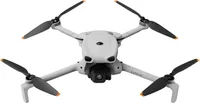
But if those are deal-breakers for you, you’ve come to the right place. Here are the DJI drones with better features I’d buy instead — and most of them are still available in the U.S.!


Follow Tom's Guide on Google News and add us as a preferred source to get our up-to-date news, analysis, and reviews in your feeds.
More from Tom's Guide
- I’ve spent two weeks testing the new Potensic Atom 3 — and this DJI alternative is one of the best beginner drones you can buy today
- The DJI Osmo Pocket 4 is already getting an update — I spent 3 days with the Osmo Pocket 4P in Malta and here's what I'm allowed to tell you (with sample footage!)
- The best drones in 2026