Tom's Guide Verdict
The HoverAir Aqua is a highly specialized, waterproof drone that brings peace of mind when flying over lakes or pools thanks to its buoyant foam guards and self-flipping mechanism. However these features come with a high price tag, loud flight noise, and limited obstacle avoidance.
Reasons to buy
- +
Worry-free water flight
- +
Several ways to fly
- +
Built-in display on drone
- +
Beacon with hands-free tracking
- +
Safer to fly in tight spaces
Reasons to avoid
- -
Loud flight noise
- -
Limited obstacle avoidance
- -
Shorter battery life
Why you can trust Tom's Guide Our writers and editors spend hours analyzing and reviewing products, services, and apps to help find what's best for you. Find out more about how we test, analyze, and rate.
The best drones are continuously improving their range or camera quality, but something that really hasn't changed is their fear of deep water. If your drone loses connection, runs out of battery, or just falls out of the air, that machine isn't flying another day. But what if a drone could plunge into the water, float, and fly away without skipping a beat?
The HoverAir Aqua might have solved that. This specialized, IP67-rated drone features built-in foam prop guards that double as its personal flotation device. It is designed to take off and land directly from the water, removing the usual terror of flying over lakes, ponds and pools. I took the drone along on a recent family beach vacation to the Outer Banks (OBX), North Carolina, to see if its wet-and-wild innovations translate into a practical everyday flyer or if it's just a gimmick.
Price |
Starts at $1299 |
|---|---|
Weight |
249g |
Camera Sensor |
1/1.28-inch CMOS |
Video Resolution |
Up to 4K at 100fps |
Max Flight Time |
Rated up to 23 minutes |
Storage |
128GB internal |
Water resistance |
IP67 |
Obstacle Avoidance |
Downward millimeter-wave radar only |
HoverAir Aqua review: Price and availability

Innovation doesn’t come cheap. The HoverAir Aqua starts at a relatively steep $1,299 for the Standard Combo. For this review, I tested the Fly More Combo, which retails for $1,499. This kit steps things up by adding two extra smart batteries (three total), a multi-battery charging hub, three waterproof battery bags, and the wearable Lighthouse tracker beacon.
If you want a better manual control experience, you should to step all the way up to the $1,699 Land and Sea Combo which adds HoverAir's dedicated joystick remote controller to the mix alongside the touchscreen beacon.
For perspective, one of my favorite drones, the DJI Mini 5 Pro, starts at just $709. Even with its premium Fly More Combo featuring the integrated screen remote, it maxes that'll set $1,009. That model comes with a larger 1-inch sensor, a 3-axis gimbal, and omnidirectional obstacle avoidance. With the Aqua, you are paying a massive premium specifically for its ruggedized, buoyant engineering and making a few trade offs in return. Here's what stood out to me.
HoverAir Aqua review: What I like
Safely fly over water
Hands down, the best thing about the HoverAir Aqua is its buoyancy. The drone's built-in prop guards look and act like mini pool noodles, allowing it to float effortlessly on the surface of calm water. On the beaches of OBX, this completely changed how I flew. Instead of the usual anxious thoughts in the back of my head, I knew worst case, so long as I was flying relatively close to the coast, this drone would be safe.

Even cooler is its self-righting mechanism. If a splash or a bad wave knocks the drone upside down on the water, it can flip itself right-side up and take off again. This was huge crowd-pleasing party trick during our afternoons by the pool. My younger nieces and nephews, and even my aunts and uncles absolutely got a kick when I showed this off.
This offers incredible peace of mind if you are regularly flying over water and makes it a fantastic tool for people filming water sports like surfing or jet-skiing. Just keep a caveat in mind: limit your water landings to no-current zones. If you try it in a heavy rip current, the drone might just wash away before you can spin the props and safely take off.
Easy to operate

There are several ways to fly and operate the Aqua. On top of the drone sits a bright, built-in 1.6-inch AMOLED screen that handles setting changes and flight mode selections directly on the aircraft, complete with clear auditory cues.

With the wearable Lighthouse beacon that you strap to your arm, you can perform basic manual flight movements and command a Return-to-Home. This will also provide tracking (thanks to its centimeter-level RTK tracking technology) and be able to follow you as you move around. This specialized RTK tech creates a highly precise virtual tether, ensuring the camera stays locked on your position even if water spray or waves temporarily block the camera's line of sight.

You can also connect directly via Wi-Fi with your phone, see a live view from the camera, and fly with the touch screen controls. The range is shockingly steady and long. It's great when I'm packing light and want to use this as a more traditional drone for cinematic shots from land, but it is hard to be precise with a touch screen. For those more precise controls, there's the traditional joystick controller option included in the Land and Sea Combo. This modular system snaps on both sides of your phone and gives you physical joysticks for when you need to nail more complex shots.
Built in prop guards

The foam noodles pull double duty as full-coverage prop guards. It makes the Aqua feel incredibly safe to fly close to people, objects, or tight spaces, similar to the built-in guards on the DJI Neo or DJI Flip. This bumper system gave me the confidence to pull off one of my favorite drone shots to date.

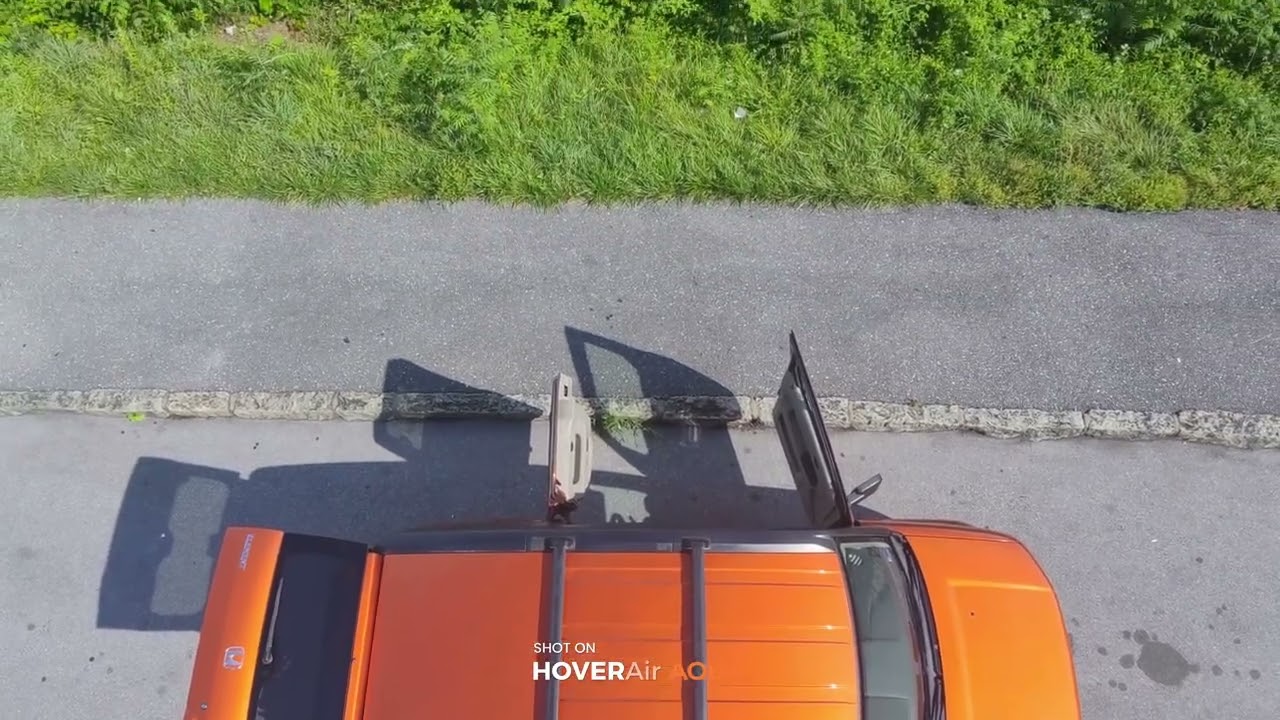
I lined up the Aqua and flew it straight through the open side-split doors of my new-to-me parked Honda Element, revealing the beautiful Shenandoah mountainside hidden right behind it. If I tried that with a standard exposed-prop drone, a tiny drift would mean shattered plastic and a ruined car headliner.
HoverAir Aqua review: What I didn't like
It sounds like a swarm of angry bees

If you are looking for a stealthy drone that can quietly capture cinematic landscapes, look elsewhere. Because of its smaller props, the HoverAir Aqua is incredibly loud. Compared to the relatively quiet flight profile of the newer DJI Mavic Minis, the Aqua emits a high-pitched, buzzy whirr. Whether I was flying it by the beach, near the pool, or at a local park, it instantly drew a ton of unwanted attention because it sounds exactly like a massive swarm of angry bees at lower altitudes.
Limited obstacle avoidance
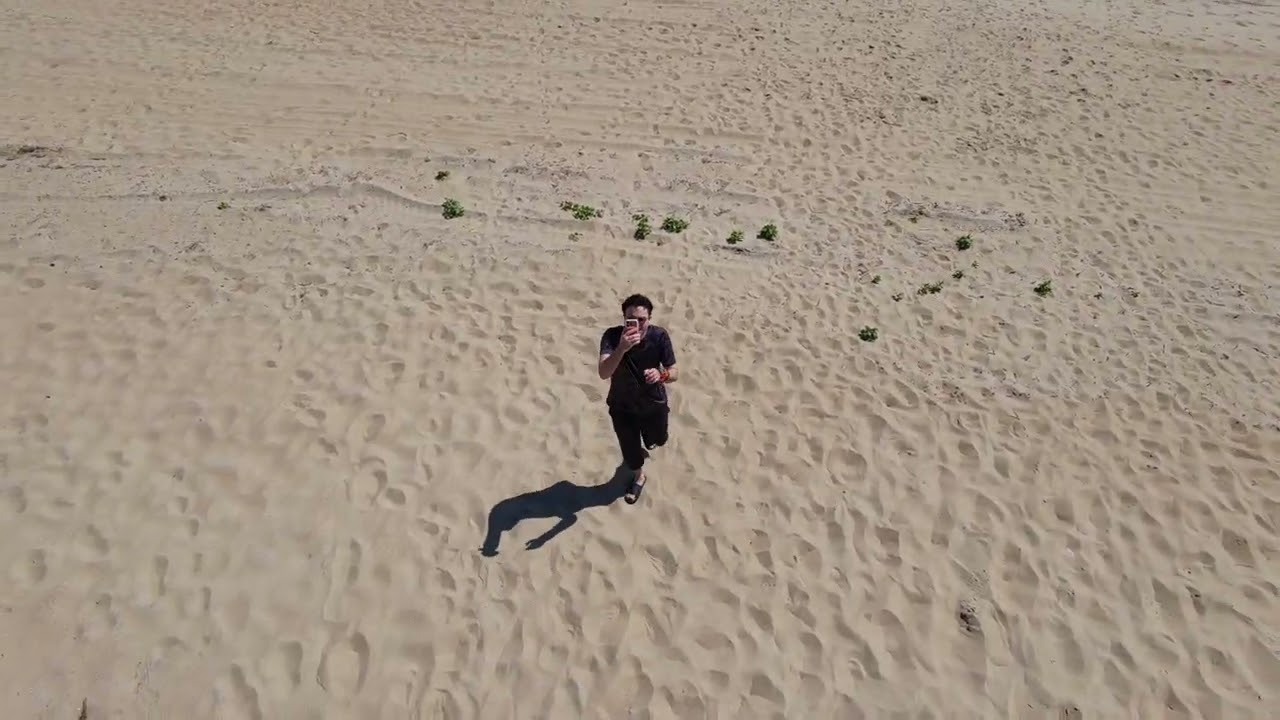
Because the Aqua is primarily designed for wide-open water flight, obstacle avoidance sensors are limited to downward only. It relies on its camera system and the tracking beacon to follow you, but is limited in what it can recognize and avoid in its path. It did a very good job at following me as I ran across the open beach.
Putting it to the test, I attempted to have the drone autonomously follow me as I walked from our beach house down to the sand along a relatively narrow walkway. The Aqua did well until I walked past the gazebo to my left where it quickly collided and fell down. Thankfully, this thing is quite rugged and foam helped absorb its fall, but it proved that this drone is best for wide-open, obstacle-free spaces.
Shorter battery life

The Aqua is rated for up to 23 minutes of flight time. Once I factored in the time it takes to launch, flew out to my desired position, framed my shot, and safely head back with a comfortable battery reserve, I was realistically averaging only 15 to 18 minutes of actual flight time per battery.
While that was plenty of juice for me to get a few solid shots, it feels short because I have been completely spoiled by DJI. If you look at other standard sub-249g drones on the market, like the DJI Mini 4 Pro, I can routinely push past 30 minutes of real-world flight time on a single charge. The Aqua’s shorter endurance is the obvious tax you pay for its waterproofing and the extra aerodynamic drag of those foam pool noodles. The thing is, while you could increased flight time with extra batteries, you'll want to make sure you swap out after drying the drone off thoroughly so that you don't get water in the battery compartment.
HoverAir Aqua review: the bottom line
The HoverAir Aqua is easily one of the most unique, specialized drones on the market and one of the most exciting I've tested in a long time, solving a very specific problem: making aerial photography safe and accessible over water.
That said, if you don't actually need these waterproof capabilities, the higher price tag, the deafening flight noise, and the total lack of directional obstacle avoidance are major tradeoffs you'll need to weigh.
But if your primary goal is to find a drone that can effortlessly survive a splash, take off from a lake, or safely film water activities, there is absolutely nothing else like it. It is a rugged, buoyant, and genuinely grin-inducing piece of tech that brought a massive amount of fun to our family vacation. If you're big into water sports or spend your summers by the beach, the Aqua is worth the plunge.