“The problem of Formula 1 is that on TV, they show 0.5% of what the real race is,” Fabrizio Pilotti, Chief Innovation Officer for Aston Martin F1, tells me. We hear a lot about AI being used by F1 teams, but very rarely notice it — engrossed by the on-track drama and the superhuman feats of overtaking a competitor by millimeters, and changing tyres on a car in under two seconds.
So, if you’re sitting down to watch the British Grand Prix this weekend (I will be with my Dad), I spoke to both Pilotti and Commercial Technology Ambassador, Eric Ernst, about the clearest uses of AI you’ll see at an F1 race weekend. Because as he says: “it would be very hard to find a process on a race weekend that AI hasn’t touched.”
Here’s what I found out during the team’s inaugural AMR Network Technology Forum.
How F1 teams use AI

First, let’s give you some context — AI (and especially agentic AI) is present all over the grid in every single team. And it’s good to understand the two different types of AI and how they interact with each other:
- Machine Learning: This is the kind that can absorb massive amounts of data, find patterns and provide advice.
- Generative AI: This is the bit that can take that data and create something from it — be it creative writing, code for apps, or (more important to F1) make strategic decisions.
And on your average race day, an F1 team can be digesting roughly 50 petabytes of data. Whether it’s on-track information, stats from the 250 sensors on the car, information from your team (and competing team) radios or more, it’s clear having AI to sift through all of that at warp speed gives you a competitive edge.
So for example, machine learning could take a look at lap times during a practice. If you hear a driver’s engineer talk about what corners he could be faster in, there’s a high likelihood AI is crunching the data. “It’s based on statistics and patterns, and the car changes its weight every lap,” Ernst explains.

“It becomes one and a half kilos lighter every lap because of the gasoline [being used]. That changes the car balance, the braking points and the tire degradation. So, every lap is almost a new lap for a driver.”
The machine learning algorithm is helping the engineer see and understand what the car is capable of at every stage of its time on track, and provide accurate real-time feedback.
Generative is not just about creating images

Machine learning for crunching data is to be expected with all the data points of an F1 car, but generative AI is where things get interesting.
Teams have data that can span back decades. Pilotti says, “you can learn at least from the 80s, and maybe even the end of the 70s” when F1 technology stabilized. And it’s this huge influx of past data and real-time info that can help build the strategies of when to pit and gain an advantage.
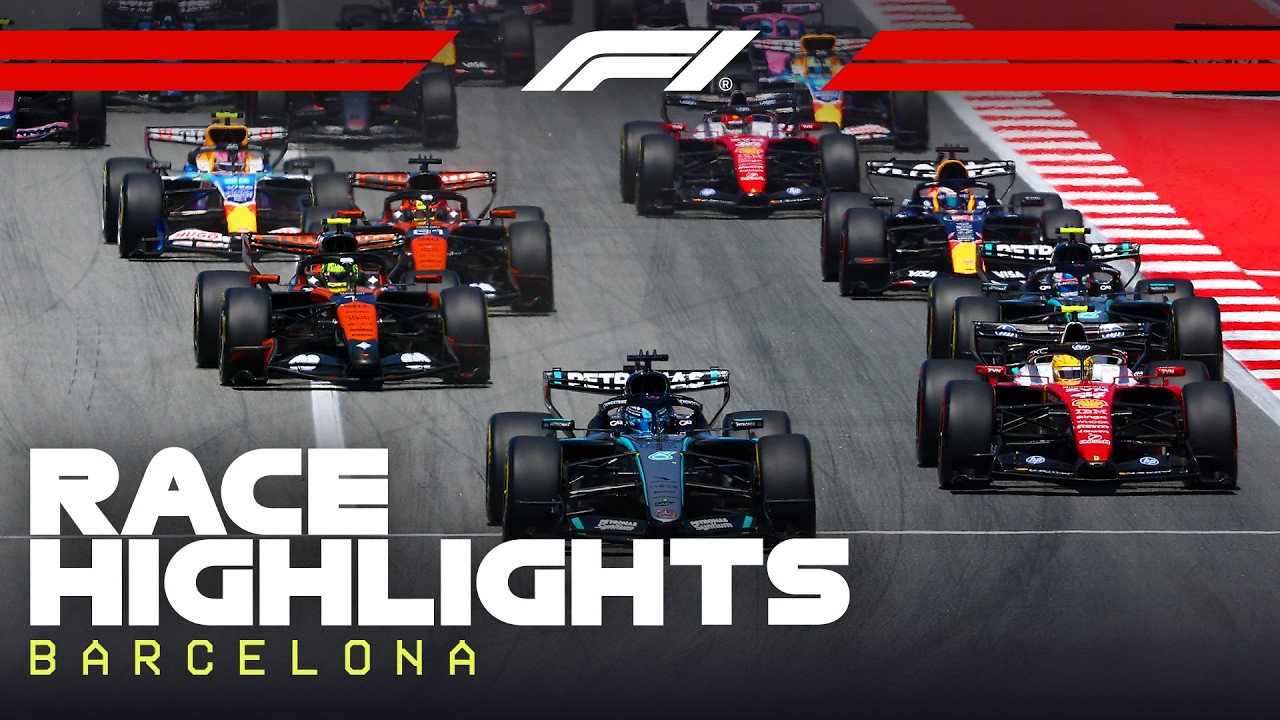
And in Fabrizio’s mind, spotting this play out in real-time comes from looking at strategies that seem out of the ordinary. “Lewis [Hamilton] winning in Barcelona was an AI strategy,” Pilotti says. While everyone was going for a minimal two-stop race to change tires, Hamilton seemed to be in and out of that slower pit lane like nobody’s business (three times to be exact).
“I think an advanced Formula 1 fan would say “okay, that’s unusual”...it was not exactly the normal [human] computation of how you calculate the strategy,” Pilotti adds. And through this new lens, I think back to other races and other decisions that didn’t make sense on paper in the moment, but worked out well in the end.
You need a team for pole position

But one thing both Pilotti and Ernst emphasized was that AI is not a replacement for human experience, and there is always a “human in the loop” on key decisions. Also, as I toured the team’s HQ, it was interesting to see that amongst all the talk of AI, the team’s chief Adrian Newey keeps things rather old school in car design — a massive drawing board next to his desk.
“I think everyone’s a bit different. It’s like the way you set up your desk — how many screens, how do you work?” Ernst explains. “I think there’ll be these standard processes that are just going to be agentic, but we don’t want to replace anyone. Just that people do a part of it.”
“The human is in the loop heavily. Lots of thoughts happen in the brain, and some of them happen on the drawing board,” Pilotti adds. “What happens heavily is from that moment [design and engineering] onward, you have all your simulation tools that heavily rely on sophisticated algorithms including AI.”

That interplay between human and AI for a competitive advantage is a fascinating one to see play out this year, and hopefully with what I’ve found out, you can start to decipher some of the more interesting bits of strategic drama and start to see what may be helping fuel them. Aston Martin relates this to athletes looking for that “magic 10%” to be better than the competition, and that’s what its local AI aims to deliver.
Is Aston Martin competitive at the moment? Well, no. As a Fernando Alonso fan, that’s a bit of a heartbreaker. Part of the tour took me behind-the-scenes in race control — a huge control room that looks like something out of Cape Canaveral — where I saw both Alonso and Lance Stroll eliminated in the first part of Sprint Qualifying.

I got to listen in on the team radio and Stroll had…let’s say some words about the car that I couldn’t possibly publish.
But with this full embrace of AI and Aston Martin’s upcoming B-spec rebuild of the car, it’s the team’s hope to work their way up the grid. It’s a challenging task, but based on the energy in their HQ, they’re well up for it.

Follow Tom's Guide on Google News and add us as a preferred source to get our up-to-date news, analysis, and reviews in your feeds.
More from Tom's Guide
- I’ve been sim racing for 6 years, and then I tried real-life racing — here are 3 things I wish these games taught me
- Amazon’s 4th of July deals are just as good as Prime Day — here’s 42 deals worth shopping this weekend
- I drove the BMW i5 and BMW 550e for a week — and it’s the EV vs. PHEV matchup I’ve been waiting for