Google is rolling out “Personal Intelligence,” a new AI system that connects your Gmail, Photos and activity to deliver highly personalized answers — and it’s a big step toward AI that actually understands your life.
I test AI for a living, and I thought I had a pretty good sense of where things were headed. We're seeing smarter answers, faster and sharper, easier-to-use tools. But after exploring Google's new Personal Intelligence powered by Gemini, I realized something: We're not just getting better AI, we're getting AI that is getting better at knowing us.
And that’s a much bigger shift (and potentially more creepy) than it sounds. Essentially, Google’s Personal Intelligence changes the "starting from scratch" issue.
Instead of relying only on what you type, it can connect across your apps — like Gmail and Google Photos — to automatically understand your past activity and preferences.
So instead of asking: “What pants should I wear to my interview?"
You’re effectively asking: “What goes with the exact pair of pants I bought last week?”
And the AI already knows the answer. The part that made me stop and think is that particular feature, which feels useful for so many reasons.
Here's a deeper dive into what Google's Personal Intelligence can do.
Personal Intelligence features explained

I'll start with an example directly from Google. The company says, thanks to Gemini, it can help troubleshoot tech issues even if you don’t remember the product name — because it can pull from your purchase history and guide you through fixes tailored to your exact device.
If you ask me, that is going beyond just smarter AI to an integrated assistant that helps streamline productivity.
And it's useful in so many other ways, like travel. If you’re stuck in an airport with a short layover, it can recommend food based on what you like, where your gate is or even how much time you actually have. The AI is so personal that it can help you make decisions faster and with more intention.
This is where AI starts to feel different and goes beyond convenience. Google's Personal Intelligence shifts from reactive to intuitive.
Personal Intelligence can:
- Build itineraries based on your past trips
- Suggest activities based on your interests
- Surface ideas you didn’t explicitly ask for
What Personal Intelligence means for your privacy

The moment AI starts connecting to your emails, photos and personal history, one question naturally comes up: How much of my data is this actually using?
Google says Personal Intelligence is designed with control in mind. You have to opt in to connect apps like Gmail or Google Photos, and you can turn those connections off at any time.
The company also says its AI models are not directly trained on your Gmail inbox or Photos library — a key distinction as concerns around AI training data continue to grow.
Instead, Google explains that it uses more limited signals, such as the prompts you type and the responses the system generates, to improve the experience over time.
This type of AI isn't for everyone. For some, it will feel incredibly convenient — like finally having an assistant that just gets it. For others, it may feel like a step too far.
Outlook
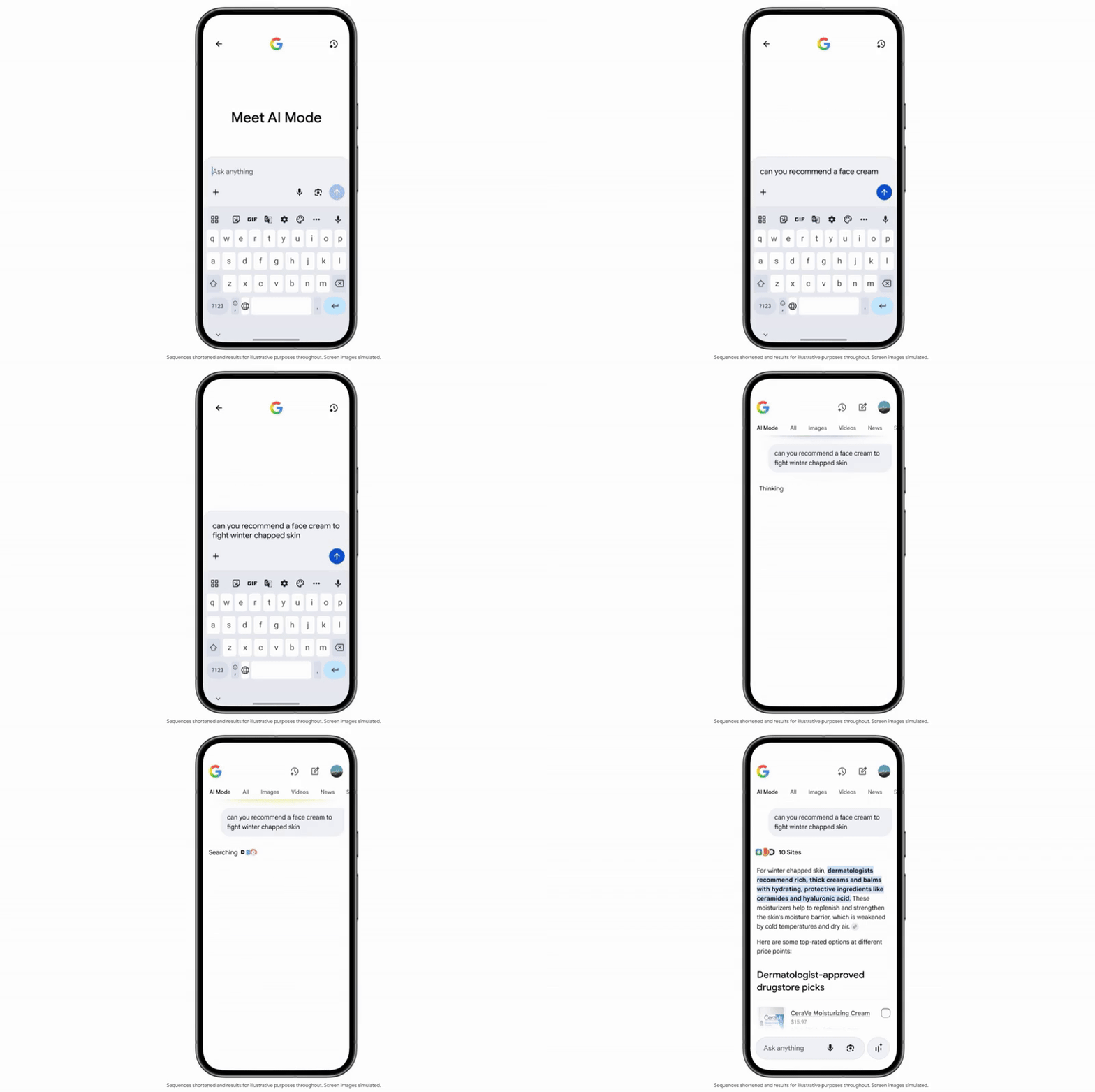
After seeing success with Pro and Ultra users, Google is now making Personal Intelligence available to everyone in the U.S. through AI Mode in Search, with a rollout starting across the Gemini app and Gemini in Chrome.
This new feature is not restricted to paid users — Google is making it available to free-tier users as it expands. For now, the feature is tied to personal Google accounts, meaning it won’t work with Workspace accounts for business, school or enterprise use.
And if Google continues to expand it as it has with other AI features, it likely won’t remain limited to the U.S. for long.

Follow Tom's Guide on Google News and add us as a preferred source to get our up-to-date news, analysis, and reviews in your feeds.
More from Tom's Guide