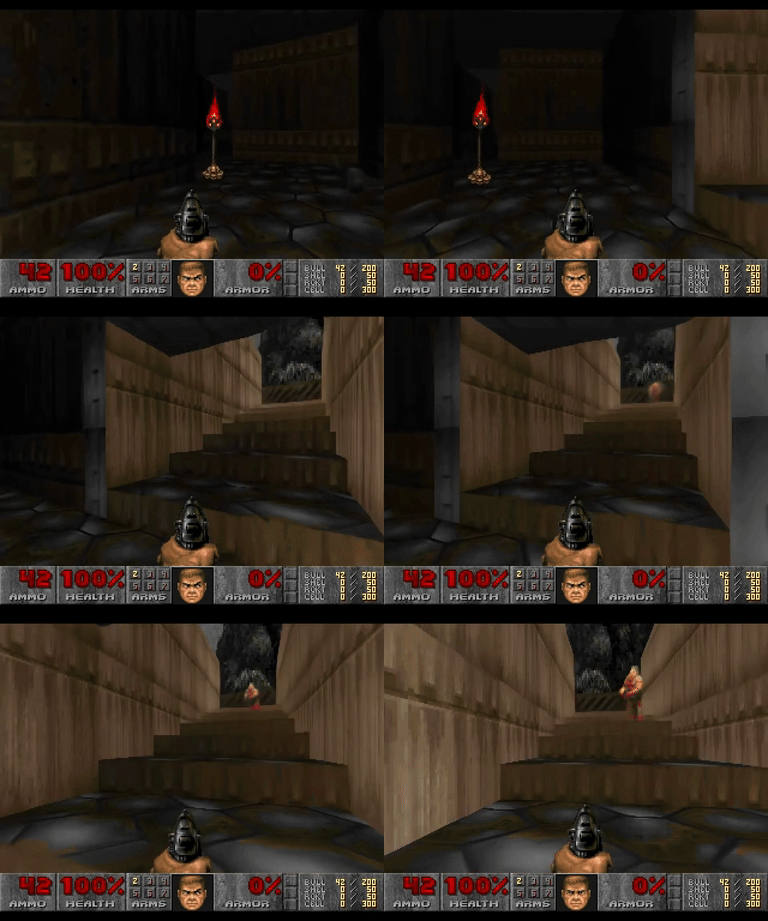
Google researchers used AI to recreate the classic first-person shooter Doom. Videos were made of the gameplay and humans were only slightly better than random chance at recognizing which were real clips and which were generated by AI.
In a recently submitted pre-print paper, the researchers presented GameNGen which they say is the first game engine powered entirely by AI that allows players to interact with the game over long stretches of time at high quality.
Using their AI game engine, the scientists recreated the game Doom at 20 frames per second. The shooter was pretty playable as the AI allowed players to attack enemies, open doors, and it also kept track of their ammo and health levels.
The researchers explained that while it may seem tempting to assume that AI game generation is just very fast AI video generation, there’s more to it than meets the eye. To pull this off they needed special type of models that wouldn’t collapse to meet the demands of generating an interactive space.
This answers an important question about AI games
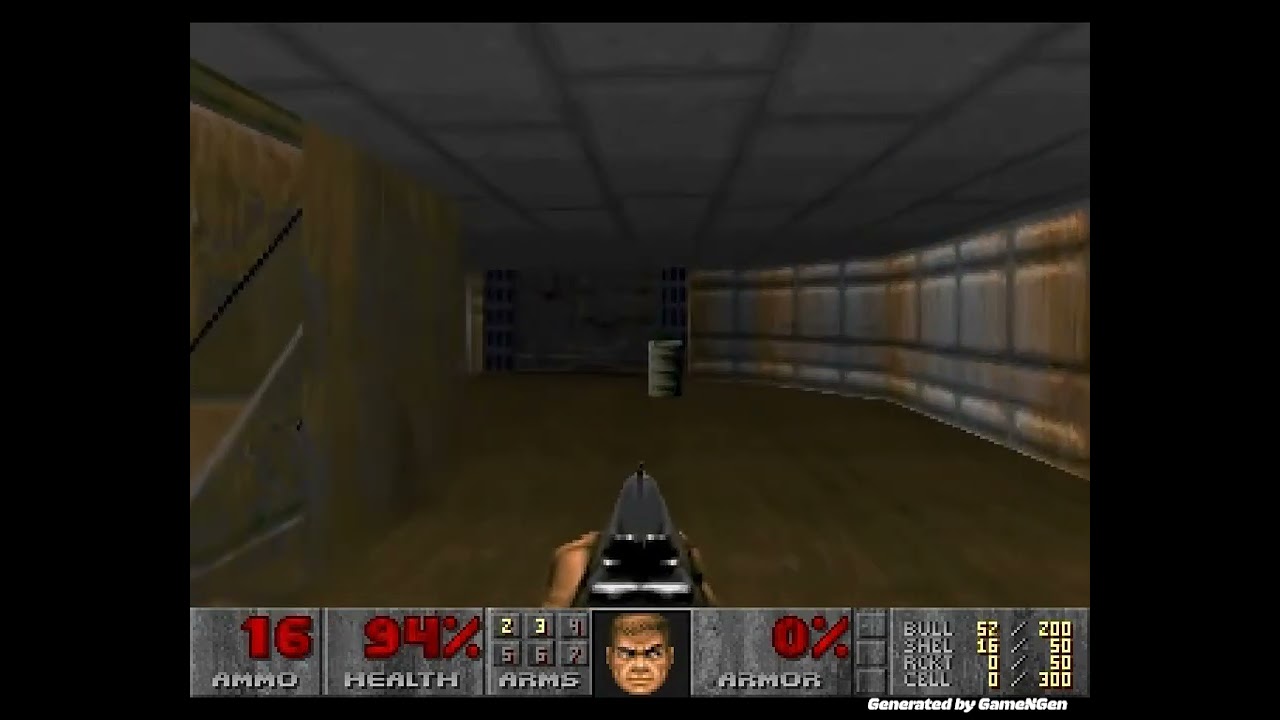
The team said their work answers an important question about the future of games created by AI: Is it even possible? “In this work we demonstrate that the answer is yes,” they wrote.
We’ve already seen a demo by Nvidia of a game environment where players could interact with AI-powered NPCs but human designers created the small world it occupied.
The Google Research team worked with Doom playing on a 320 x 240 resolution — roughly what you see when a YouTube video plays at 240p. The AI game engine was trained on 900 million frames, a task which would be made significantly more taxing if it were to be trained on one of today’s best-looking games like Horizon Forbidden West.
What this means
But, as the researchers said, their work proves that in principle, creating an on-demand RPG is possible. As the researchers themselves pointed out, their work leads to many interesting questions. A crucial one is how AI games would be created in the first place.
To generate enough data for them to replicate Doom, they had to create AI bots that would record their own gameplay. Using an AI game generator like GameNGen means the models need to be trained on something.
In other words, if you’re already thinking of setting up your own AI-game studio, know that to generate an AI game you need gameplay data. However, generating this data requires an existing game. If you do manage to crack this chicken-and-egg situation, then you’ve stumbled on a game-changing (and game-creating) plan.
More from Tom's Guide
- Nvidia G-Assist is the game-changing AI assistant I didn’t know I needed — here’s what it does
- 7 ChatGPT prompts to play word games with the AI
- As a PC gamer I’ve been taking AI for granted for way too long — that stops now