Hundreds of supermarkets in France were hit by a cyberattack this week that sent refrigerator temperatures soaring to 122°F, destroying food and reportedly sparking fires. Now, an AI researcher is warning that this could be a preview of something much worse.
Andreas Stuhlmüller, cofounder and CEO of the AI research company Elicit, says it's plausible that within the next year, AI-powered cyberrattacks could target the power grid, financial systems, internet infrastructure or water supplies.
He's not just sounding the alarm. He's recommending that people prepare to get through two weeks of major disruptions, including keeping cash on hand, storing drinking water and investing in backup power and internet access.
That's a startling recommendation, especially considering that some of the equipment he suggests could cost thousands of dollars. But after watching hackers remotely disable refrigeration systems across hundreds of stores, his warning raises a question worth examining: How vulnerable are the essential services we depend on every day?
What happened in France
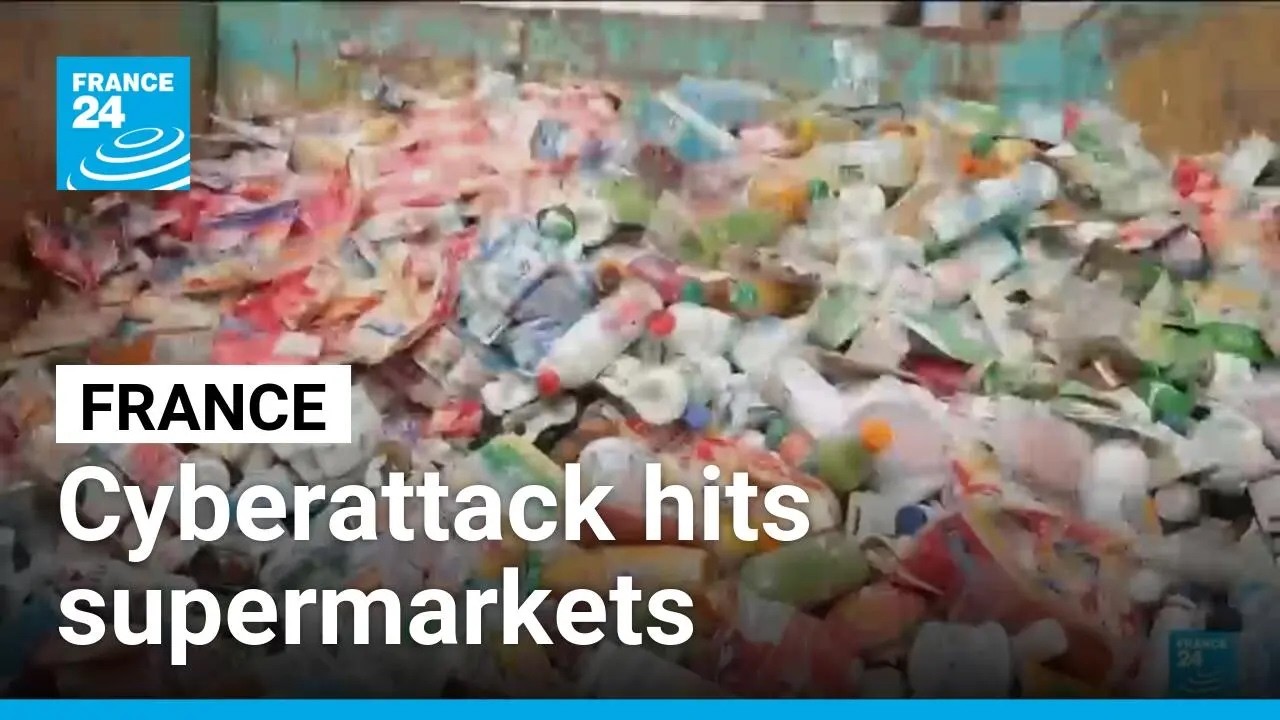
The cyberattack that struck French supermarkets overnight on October 11 and 12 affected hundreds of locations belonging to major chains, including Carrefour, Intermarché, Monoprix and Coopérative U.
Hackers reportedly exploited vulnerabilities in internet-connected refrigeration controllers, remotely manipulating defrost cycles and causing temperatures inside some units to climb as high as 122°F.
The results were immediate. Refrigerated and frozen food spoiled, equipment was damaged and some stores reported fires. French authorities launched an investigation into the attacks, which demonstrated how a security weakness in seemingly ordinary commercial equipment could cause widespread physical damage.
There's currently no confirmed evidence that AI was involved in the French supermarket attack. However, that's part of what makes Stuhlmüller's warning worth examining. Attackers were able to cause significant disruption using vulnerabilities in equipment that many people probably never realized was connected to the internet.
Why AI could make cyberattacks worse
I think it's plausible that within a year we'll see AI-based cyberattacks on the power grid, financial system, internet infra, or water. Things like the French supermarket cyberattack but worse. As basic prep I would recommend: Cash: Get a few weeks of spending in cash Internet: Get a Starlink Mini so that you have Internet if local fiber or cell is down (~$150 plus $10/month in standby mode) Power, minimal: Enough to run Starlink Mini and phones (~$1,250) Daily need: about 1 kWh (Starlink Mini 0.7, phones and laptops 0.2; can limit runtime) Battery: 1 kWh LiFePO4, e.g. EcoFlow DELTA 3 Plus Solar: 1x400W folding panel, which refills about 1 kWh on a sunny day Power, better: Enough to run a fridge, Starlink Mini and phones (~$5,000) Daily need: about 2.5 kWh (fridge 1.5, Starlink Mini 0.7, phones and laptops 0.2) Battery: 4 kWh LiFePO4, e.g. EcoFlow DELTA Pro 3 Solar: 3x400W folding panels, which refill about 3 kWh/day in sun Generator: ~2,500W dual-fuel inverter generator; refills battery in a few hours even if weather is bad; get a few 20 lb propane tanks Water: 14+ gal of water per person for two weeks Food: 2+ weeks of shelf-stable food Comms: Hand-crank NOAA emergency radioOctober 13, 2026
Cyberattacks against critical infrastructure aren't new. The concern is that now AI systems are becoming more capable to the point that they could make certain attacks faster, cheaper and easier to scale.
AI tools can already assist with analyzing software, identifying vulnerabilities and automating parts of cybersecurity research. Those same capabilities could potentially help malicious actors find weaknesses across large numbers of connected systems.
An attacker would probably not need to develop an entirely new type of cyberattack. AI could help speed up the search for poorly secured equipment, analyze unfamiliar software and assist with adapting existing techniques.
The threat isn't limited to refrigerators, either. Electricity, water treatment, banking and communications all depend on digital systems, although their architectures, security controls and exposure to attackers differ considerably.
The Cybersecurity and Infrastructure Security Agency (CISA) has previously warned about state-sponsored attackers compromising telecommunications networks and other important infrastructure.
Still, Stuhlmüller's one-year timeframe is a prediction, not an established forecast. There is no evidence that an AI-driven attack capable of simultaneously disabling these services is imminent, and compromising one type of internet-connected controller doesn't mean attackers could easily take over an electrical grid or water utility.
The emergency supplies he recommends

Stuhlmüller's advice is unusually specific. Rather than simply encouraging people to buy emergency supplies, he outlines two levels of backup power, satellite internet and enough basic necessities to get through two weeks.
Keep cash available. He recommends having enough physical cash to cover several weeks of expenses in case banking systems, ATMs or electronic payments become unavailable. The amount will depend on household spending, and there's no need to assume every cyberattack would cause a banking outage.
Consider backup internet access. He suggests a Starlink Mini satellite internet system as an alternative if local broadband or cellular networks go down. He estimates a setup costing around $150 with a $10 monthly standby option, although hardware and service pricing should be verified before buying. Satellite internet also requires power, a suitable view of the sky and an operational satellite network.
Have a way to charge essential devices. His lower-cost backup power setup includes a 1kWh lithium iron phosphate battery and a 400W folding solar panel, with an estimated total cost of $1,250. The goal is to keep phones, laptops and satellite internet equipment operating during a power outage.
Prepare for a longer outage. His more extensive setup, estimated at $5,000, adds a larger battery, three solar panels and a dual-fuel generator. This would potentially support a refrigerator as well as communications equipment, although actual runtime would depend on electricity consumption, weather and battery capacity.
Portable generators must never be operated inside a home or garage. FEMA advises keeping them outdoors at least 20 feet from doors, windows and other building openings because of the risk of deadly carbon monoxide poisoning.
Store water and nonperishable food. Stuhlmüller recommends at least 14 gallons of water per person and enough shelf-stable food for two weeks. For a family of four, that means storing at least 56 gallons of water.
Keep an emergency radio. A hand-crank NOAA weather radio could provide important information when phones, cellular networks or home internet connections aren't working. NOAA broadcasts are useful for weather and other emergency alerts, though radio reception and alert coverage vary by location.
Should you actually prepare for an AI cyberattack?

There's a difference between taking a credible warning seriously and assuming a catastrophic cyberattack is around the corner.
Stuhlmüller hasn't presented evidence that AI-powered attacks on power, banking, internet and water systems will happen within the next 12 months. And there are significant technical barriers to attacking heavily protected infrastructure, even as AI systems become more capable.
His preparedness advice, however, isn't exclusively useful for cyberattacks. Severe storms, flooding, prolonged blackouts and other emergencies can interrupt many of the same services.
The federal government's Ready.gov emergency preparedness guidance recommends keeping water, nonperishable food, flashlights, batteries and a battery-powered or hand-crank radio among other basic supplies.
You also don't need to spend $5,000 on backup equipment to start preparing. A charged power bank, some stored water, medications, flashlights, a small amount of cash and a few days of food are far more realistic starting points for most households.
Bottom line
The French supermarket attack offers a troubling example of how vulnerable connected infrastructure can be. Whether AI makes similar incidents substantially more common over the next year remains uncertain.
But preparing for a disruption doesn't require believing the worst-case prediction. It means making sure that if the power, internet or payment systems suddenly stop working, your household has a plan.
Follow Tom's Guide on Google News and add us as a preferred source to get our up-to-date news, analysis, and reviews in your feeds. Subscribe to Tom's Guide on YouTube and follow us on TikTok.

More from Tom's Guide