Nintendo Wins in Wii Patent Lawsuit

By Kevin Parrish, published on March 18, 2009 at 12:20 PM
Source: Tom's Guide US | Keywords: , , ,
Syndication: Add to your Google homepage Add to My Yahoo!

Looks as though Nintendo has emerged from the court halls, victorious in battle, its prized Wii technology slung over its shoulder, now safe and sound.

If there's one company that seems invulnerable to the effects of a troubled economy, it's Nintendo. Despite consumer penny pinching and industry layoffs, happy customers are lapping up DS handhelds and Wii consoles left and right as if conservers were handing over dollar bills by the shovels, adding to the ever-increasing mound of money building under the golden Nintendo throne. Even today, the coveted developer/publisher is shining brighter than a shimmering Shine as Mario and the gang trot out of the U.S. courts.

According to the company, a U.S. District Court judge summarily dismissed the patent-infringement lawsuit sparked by Fenner Investments Ltd. The lawsuit alleged that Nintendo inappropriately infringed on a 1998 patent (U.S. Patent No. 6,297,751) filed by Fenner. The patent supposedly covers a low-voltage joystick port interface that converts an analog joystick input into digital form easily read by machines. The lawsuit said that the Wii and GameCube controllers infringed on the patent.

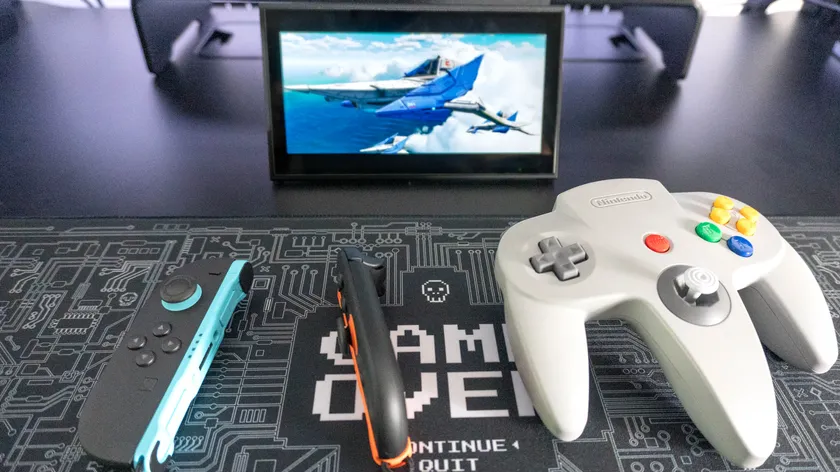
However, given that Nintendo offered gamepads with analog sticks dating back to the Nintendo 64 console in 1996, the lawsuit seemed rather ludicrous. Apparently, Judge Leonard Davis of the U.S. District Court in Tyler, Texas felt the same way, dismissing the case on Monday. He ruled that there was no need for a jury trial. Mama mia!

“We are very pleased with the court’s decision,” said Rick Flamm, Nintendo of America’s Senior Vice President, Legal & General Counsel. “Nintendo has a long history of developing innovative products while respecting the intellectual property rights of others. We also vigorously defend patent lawsuits when we firmly believe that we have not infringed another party’s patent, despite the risks that this policy entails. I would like to express our sincere appreciation for the tireless efforts of our legal team, which represented us so well.”

Along with Nintendo, Fenner Investments also filed lawsuits against Sony and Microsoft regarding the same patent infringement. However, based on Monday's ruling, it's probably a given that those lawsuits will either be dropped or dismissed as well.

Comments | Print | Send to a friend
Content also available in : Nintendo Wins in Wii Patent Lawsuit

Sponsored links

Comments

captaincharisma 03/18/2009 6:37 PM
Hide
-1+

if i were the judge i would sue these patent trolling losers out of existence. not that Nintendo needs the money just got to send a message to the other patent tolling companies out there

Anonymous 03/18/2009 6:46 PM
Hide
-5+

Actual product developer:1
Patent troll:0

hellwig 03/18/2009 7:33 PM
Hide
-3+

captaincharisma :
if i were the judge i would sue these patent trolling losers out of existence. not that Nintendo needs the money just got to send a message to the other patent tolling companies out there


I agree that any company that tries to enforce an invalid patent should have to at least pay restitution for any damages caused by their patent and any efforts taken to defend that patent. It would make a lot of companies think twice before they patent things they didn't create, or were so obvious that no one else ever thought to patent it before.

I mean, seriously, an A/D converter for controllers? How does this differ in any form from a regular A/D converter? Modifying technology doesn't just mean using different words to describe it.

spongebob 03/18/2009 7:49 PM
Hide
-1+

@Hellwig - welcome to the ludicrous world of intellectual property. The main thing in this case wasn't som much the A/D converter, but the way an A/D converter is used to solve a specific problem is IP.

jhansonxi 03/18/2009 11:10 PM
Hide
-1+

spongebob :
The main thing in this case wasn't som much the A/D converter, but the way an A/D converter is used to solve a specific problem is IP.

Only if it is non-obvious. Even if Nintendo didn't have prior art it's likely the patent wouldn't have survived a court challenge.

Dmerc 03/19/2009 12:45 PM
Hide
-0+

In the article it mentions that the N64 controller in 1996 used the technology. Can someone patent something that has already been in use for 2 years?

SirCrono 03/19/2009 1:14 PM
Hide
-2+

I'm wondering how many more of this cases does americans need before realizing that their legal system is stupid...

trinix 03/19/2009 1:15 PM
Hide
-1+

I always wonder, does this current patent system protect IP or destroy potential products.

It's not uncommon for a company to think about something and than try to sell it. And if seen some a lot worse pass over the internet. From really basic handling of things that I'd say why would any judge award that patent to begin with.

Patents should protect the interest of inventors, but it shouldn't feed the greed of some people who can't think of good inventions and just add some basics together and claims a patent that hits both oceans, preventing other people from inventing, the cruise line that has to run between the ocean.

I've said it before and I still believe in it. The system needs a rework. It's preventing good inventions and filling the pockets of greedy companies, who want to get a dime out of everything they can claim as their own.

spongebob 03/19/2009 5:31 PM
Hide
-1+

jhansonxi :
Only if it is non-obvious.

Yes, and they're supposed to be new as well, but that didn't stop the plaintif in this case from obtaining a patent. Whether or not something is obvious depends on who you're asking, and given some of the patents I've heard about recently, I have to wonder who they are consulting on this point, my goldfish?

blackened144 03/19/2009 8:19 PM
Hide
-0+

SirCrono :
I'm wondering how many more of this cases does americans need before realizing that their legal system is stupid...


What we really need is a "loser pays" system. This should cut down on most frivolous lawsuits.

Comments are closed on this page.

Sponsored links