Low-impact doesn't mean fewer benefits; it means your joints undergo less stress while you build strength and muscle. For many, the knees are an all too familiar problem area, but that doesn't mean you can't build strong legs and glutes; it also doesn't mean you have to stop yoga altogether.
This short five-move yoga routine for strong knees keeps things low-impact on your joints while strengthening your lower body. It has been designed by yoga instructor and wellness expert Jack Bryant, and is perfect for adding a short, mindful burst of yoga into your day.
You don't need weights, but one of the best yoga mats is recommended, and that's all. You could do it from anywhere, including joining Bryant by rolling out your mat outdoors. It's suitable for beginners, and below I show you exactly how to follow it, plus the benefits.
Five yoga poses for knee strength from a yoga instructor
It's never too late to build resistance training into your program, and that can come in many forms. Yoga is renowned for improving mobility and flexibility and strengthening your body using your body weight. It helps move the body into the parasympathetic nervous system, which is good for reducing stress and anxiety and boosting relaxation.
It's unlikely to overload the muscles in a way that will build a lot of strength and muscle (I still recommend lifting weights several times a week), but it can definitely help beginners improve functional strength without weights.
Later in life, you'll be thankful for strong bones, muscles and ligaments that help you maintain an active lifestyle, and yoga contributes toward that.
If you experience pain at any time, stop and rest. If you're working with an injury or health condition, I recommend seeking advice from your physician or a yoga instructor before starting these exercises.
- Chair Pose (Utkatasana): Stand tall with your feet together. Bend your knees. Lower your hips as if sitting in a chair. Keep your weight in your heels. Arms up by your ears. Shoulders away from the ears. Hold for five breaths. Why? Chair is a bit like a modified overhead squat and can improve thoracic mobility while strengthening your core and lower body. Try to zip your navel in and tuck your pelvis under so that you don't stick your butt out.
- Warrior II (Virabhadrasana II): Step your feet wide apart with one foot facing forward. The back foot is parallel to the back of your mat. Bend your front knee over your ankle. Keep your back leg straight. Reach your arms out wide at shoulder height and hold for five breaths. Switch sides. Why? Warrior II looks a little like a lunge, although your back foot is planted and turned slightly out. Your front knee should stack over your ankle and your thigh should be parallel to the ground, if you can. This is a true strengthener, so relax your shoulders away from your ears and remember to breathe through the trembles.
- Bridge Pose (Setu Bandhasana): Lie on your back with your knees bent. Place your feet flat on the floor. Check that you can just touch your heels with your middle fingers. Lift your hips toward the sky. Squeeze your glutes and inner thighs. Press your feet into the floor. Hold for five breaths. Why? Bridge is a posterior chain strengthener, meaning it targets your lower back, glutes and hamstrings while extending your hips and engaging your core. Try to create a straight line from knees to shoulders and avoid dropping your hips.
- High Lunge (Ashta Chandrasana): Step your right foot forward. Bend your right front knee. Keep your back heel lifted. Engage your thighs and reach your arms up. Hold for five breaths, then switch sides. You can lower the back knee for more support. Why? The overhead arm position will engage more of your upper body; try to wrap your arms inward, palms facing each other. Again, aim to lower your thigh parallel to the ground and breathe.
- Tree Pose (Vrksasana): Stand on your left foot. Place your right foot on your left inner calf or thigh, or bring your toes to your mat and heel to your ankle. Avoid pressing your foot directly on your knee joint. Bring your hands together at your chest. Balance for five breaths, then switch sides. Why? Tree pose is a great balancing exercise that strengthens the stabilizer muscles in your lower body surrounding your hips, knees and ankles. Don't worry about the wobbles; the more you practice and center yourself, the more balance you'll build.
Why these 5 yoga exercises?
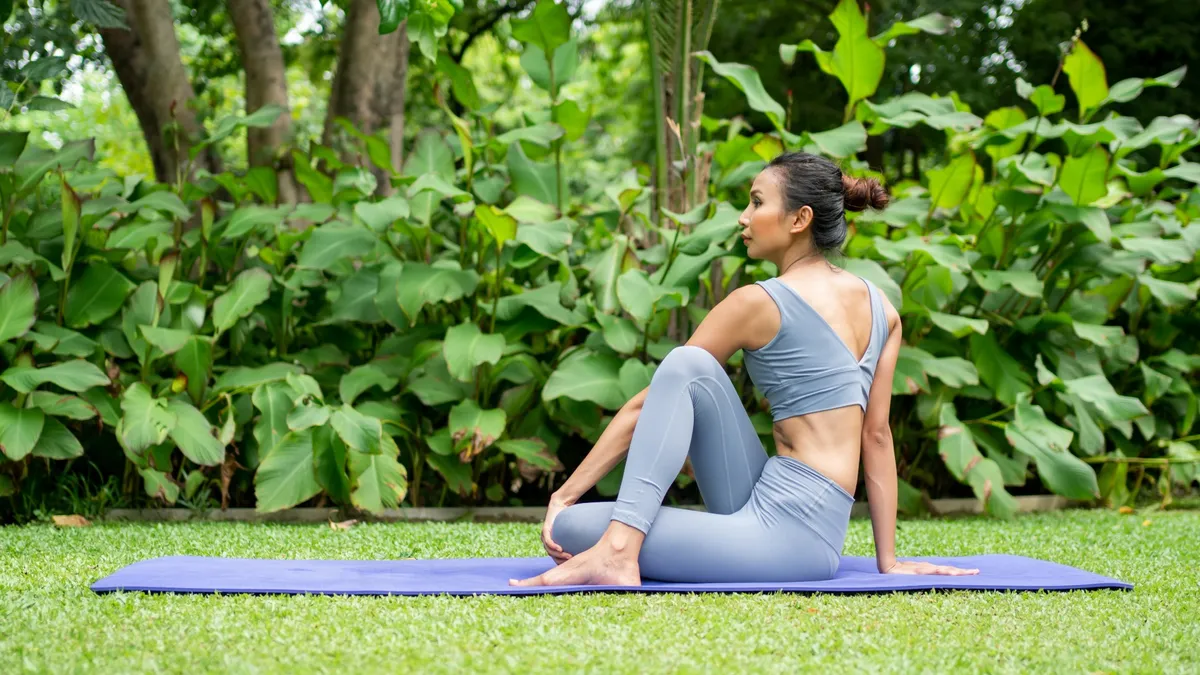
Start with a stable surface, including opting for a thinner mat for better foot-ground connection. For balance exercises, having a wall or chair nearby is useful, but try without first. The best way to improve your balance is to test it.
Balance work is great for building strong knees and ankles, and it will also improve your focus; find a point that doesn't move that you can gaze at, and play around with your foot placement and arm position.
Chair pose is a deep narrow squat that targets your legs, activates your core, tests posture and boosts stamina. Tuck your pelvis under a little so you don't stick your butt out and place stress on your lower back.
Bridge pose activates your glutes and stretches your hips, which is great if you sit for long periods. Squeeze your glutes at the top and draw your knees forward, pressing through your feet and keeping your chin tucked.
Warrior II builds lower-body strength, opens your hips, and stretches your groin and shoulders. It's also great for building stamina, balance and stability. High lunge (crescent lunge) is a standing pose that improves balance and stretches your hip flexors. It also builds core stability and opens the upper body if you raise your arms overhead.
For someone new to exercise, build up slowly and spend a few breaths on each move per side.
Follow Tom's Guide fitness on Instagram for more workouts, routines, tips, and tricks.

Follow Tom's Guide on Google News and add us as a preferred source to get our up-to-date news, analysis, and reviews in your feeds. Alternatively, you can read our content on the Tom's Guide app available now for iOS and Android. Subscribe to Tom's Guide on YouTube and follow us on TikTok.
More from Tom's Guide
- I teach people how to be more mobile: 3 low-impact back and shoulder moves that build stability and strength after 40
- According to a personal trainer, this exercise is 100 times more effective than crunches. I tried it and was humbled
- I teach people over 50 to be mobile: 3 low-impact moves that build more stability than a 30-minute walk