If you're looking for ways to add variety to your workouts, one underrated tool you can use is changing your tempo within reps, so you do part of the move slow or fast, or even pause for a beat.
Using a strict tempo can increase the benefits of a move, and also keep your mind focused on the rep and maximize your time under tension.
Below you’ll find more info on tempo training and its benefits, plus two tips from personal trainer Kyle Knapp you can use to incorporate it into your workouts.
What is tempo training?

Tempo training involves setting a target speed for each part of a rep. Each rep is broken into four parts, which are: lowering the weight (the eccentric phase), the pause at the bottom, lifting the weight (the concentric phase), and the pause at the top of the rep.
If you follow a strict tempo workout it will have instructions like 2010 to dictate the tempo.
For example you could do a squat where you take two seconds to lower, pause for a second at the bottom, then take one second to push up and don’t pause at the top.
If you follow a strict tempo workout it will have instructions like 2010 to dictate the tempo — in that case you’d be lowering for two seconds, not pausing at the bottom, rising for one second and not pausing at the top.
You can make tempo training simpler by just focusing on speed rather than exact seconds. For example, lowering slowly during a squat, then driving back up to standing quickly.
What are the benefits of tempo training?
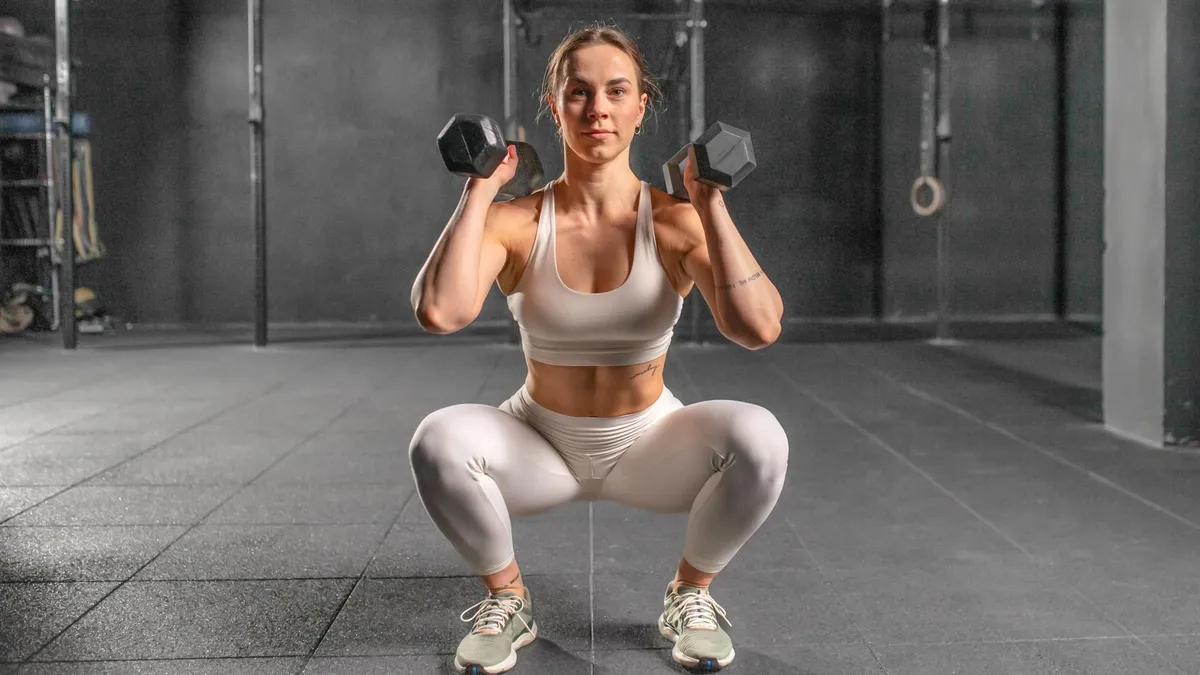
Tempo training can help you build muscle and strength and increase the time under tension for certain muscles, and also makes you focus more on form and engaging the right muscles throughout an exercise.
It’s a good way to stop yourself from rushing through reps and just focusing on the lifting part of an exercise, with the lowering portion of a move also key to increasing strength and power.
Like any training technique using tempo won’t magically transform your workouts overnight, but it’s certainly a useful tool to consider, especially if, like me, you tend to speed through reps just trying to finish workouts.
Watch Kyle Knapp’s Tempo Training Tips
These three tempo training tips Kyle Knapp shared on Instagram are well worth looking at as a great place to start.
Instead of using strict times for each part every move in a workout you can try incorporating tempo by using the three approaches shared by Knapp for some of the exercises or sets you do.
Knapp explains each approach in his post, along with the benefits and his advice on which exercises you can try them with.
The first tempo method he suggests is squeeze every three, where you perform three reps as normal then pause to squeeze the muscle targeted at the end of the third rep before releasing slowly.
The second method is fast-slow, where you do one rep fast and one rep slow, which forces you to move with control and work the target muscles in a different way in the space of two reps.
Lastly, Knapp suggests changing the tempo up for a half rep, doing one full rep at normal speed then a half rep slowly.
This means the slow part of the move will switch between the eccentric and concentric part of an exercise each time, highlighting your strength and control in each.
Next time you train give one of the above, or some other kind of tempo training, a go. At the very least it will help you focus more during workouts and keep your reps honest.
More from Tom's Guide
- I hate up-down planks — so I did 20 reps a day for 2 weeks anyway and this is what happened to my core
- Skip the gym — build full body strength at home with 1 dumbbell and 5 moves
- 5 most effective kettlebell exercises personal trainers use themselves — and how they build strength and muscle