



Introduction
One of the first things you'll encounter when buying a Nikon DSLR or Nikkor lens is the distinction between FX and DX models. In short: FX-format gear costs more, tends to deliver higher quality images and captures wider-angle photos. That's mainly because FX sensors are 136 percent larger than DX sensors.

It's not surprising that a bigger chip could cost more and provide better quality. But what's this business of wider angles? Here's how it works and what it means for the lenses you buy.
If you already know about how it works, you can skip down to our Nikon lens crop factor conversion chart (FX vs. DX).
How sensor size determines zoom
FX cameras have what's known as a full-frame sensor—the same size as so-called 35-millimeter film used in analog SLRs. How 35mm film got its name is a story for another day. From here on, all the measurements we use will refer to lenses.

To save money and bulk, most DSLRs use a sensor smaller than a full frame, which Nikon calls DX. In a camera with a full-frame (aka FX) sensor, the lens projects the full width of what it captures onto the sensor. But it can project only the center portion of what it captures onto a smaller DX sensor. It's as if you took the full frame image and cropped off the edges, thereby zooming in to the narrower portion in the center of the image.
The zoom you get in going from a big FX sensor to a smaller DX sensor is called the crop factor. It's simply the diagonal measure of the FX sensor (43.3mm) divided by the diagonal of the DX (28.8mm) sensor, which comes out to 1.50. Switching from an FX to a DX camera is like zooming in 50 percent more.
Crop factor and lenses
So what does that mean for lenses? The amount of zoom a lens provides depends on the focal length—a measure, in millimeters, from a key portion of the lens to the sensor. The longer the focal length, the more zoom you get. For a starting point, a 50mm lens on an FX camera approximates the way the world looks to your own eyes. Go down to 35mm focal length, and you get a wider view than your eyes can see. Go to 20mm, even wider. Go up to 200mm, and you're zoomed in so that things look much closer than in real life—ideal for capturing wildlife without scaring it away.

If you put the same lenses on a DX camera, with the smaller sensor that produces a 1.5 crop factor, your 35mm lens now works like a 52.5mm lens (35mm x 1.5 crop factor). On a DX camera, this is the lens that approximates how you see the world. Meanwhile, that 20mm lens is now acting as if it were 30mm. No matter the lens, you will never get as wide an angle with a DX camera as with an FX, but you will get more zoom. That 200mm lens from your FX camera is now like a 300mm lens.
What lenses should I buy?
Your first decision is whether it's worthwhile to pay for a pro-grade FX camera and the pricier lenses that go with it. FX camera bodies start at around $2,000 for the D750 and go up fast from there, ending at $6,500 for the D5. Cameras with the smaller DX sensors start around $500 for the D3400.
To save customers money, Nikon makes a line of Nikkor DX lenses for the smaller DX cameras. Remember, much of what a full-size lens captures doesn't make it to the smaller DX sensor. So why pay for more lens than your camera can use?
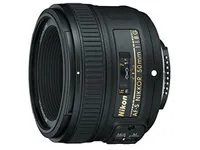
It might be worthwhile to spring for FX lenses if you think there's a good chance you will upgrade from DX to FX in the future. FX lenses tend to be more expensive—often much more expensive (including some of the examples we provided above). Take 35mm lenses, for example. The DX-format AF-S DX Nikkor 35mm F1.8G lens has a list price of $200. The cheapest FX format lens is the $530 AF-S Nikkor 35mm f/1.8G ED, and FX models go up to $1,700 for the AF-S Nikkor 35mm f/1.4G.
But there are some good, reasonably priced FX lenses you can start with on your DX camera, such as the AF-S FX Nikkor 50mm f/1.8G selling for just over $200.
(Just remember that with the crop factor of a DX camera, that lens acts like a slight telephoto, 75mm lens.) Another steal is the mouthful 70-300mm f/4.5-5.6G ED IF AF-S VR Nikkor Zoom Lens, which lists for $500. On your DX camera, it's like a supertelephoto 105-450mm lens.
If you buy a collection of DX lenses and then want to upgrade to an FX camera, you won't have to start from scratch. You can usually put a small DX lens on a large FX camera, but the image will only fill the center portion of the sensor. You won't get a wider angle, and won't use all the pixels you paid for in the new camera.

