
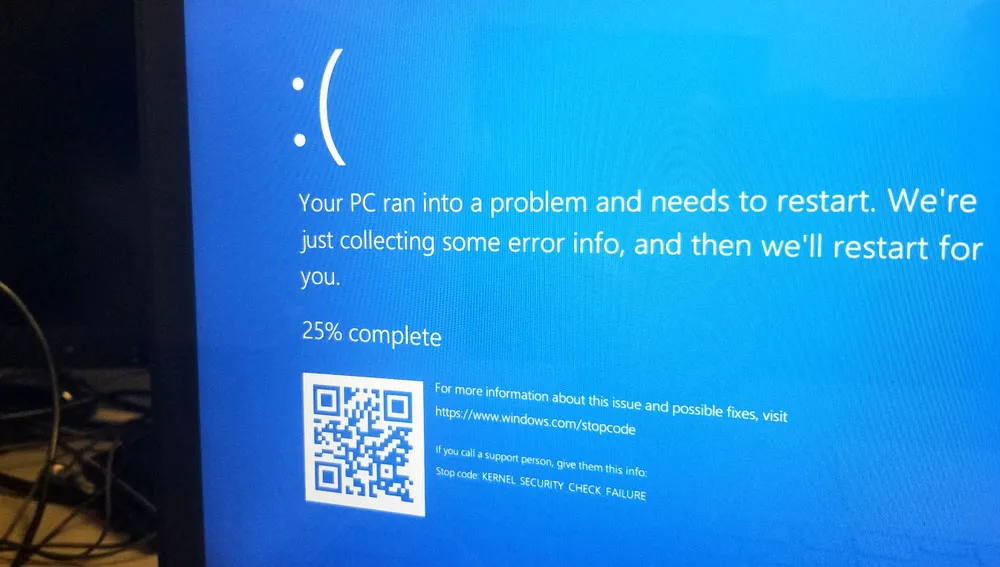
Windows 11 update is bringing back the infamous blue screen of death
Microsoft is bringing back the infamous BSOD to Windows 11
Here at Tom’s Guide our expert editors are committed to bringing you the best news, reviews and guides to help you stay informed and ahead of the curve!
You are now subscribed
Your newsletter sign-up was successful
Want to add more newsletters?
Daily (Mon-Sun)
Tom's Guide Daily
Sign up to get the latest updates on all of your favorite content! From cutting-edge tech news and the hottest streaming buzz to unbeatable deals on the best products and in-depth reviews, we’ve got you covered.
Weekly on Thursday
Tom's AI Guide
Be AI savvy with your weekly newsletter summing up all the biggest AI news you need to know. Plus, analysis from our AI editor and tips on how to use the latest AI tools!
Weekly on Friday
Tom's iGuide
Unlock the vast world of Apple news straight to your inbox. With coverage on everything from exciting product launches to essential software updates, this is your go-to source for the latest updates on all the best Apple content.
Weekly on Monday
Tom's Streaming Guide
Our weekly newsletter is expertly crafted to immerse you in the world of streaming. Stay updated on the latest releases and our top recommendations across your favorite streaming platforms.
Join the club
Get full access to premium articles, exclusive features and a growing list of member rewards.
The distressing, yet iconic, blue screen of death, aka BSOD, seen in Windows operating systems for years is set to make a comeback in Windows 11.
For Microsoft’s latest OS, the company switched to a black major crash screen rather than blue. It was a minor change, but one that seemed to shake off an infamous feature that has become synonymous with Windows, albeit in a less than positive way.
Windows Central noticed that Microsoft is bringing back the blue crash screen in the latest Windows 11 update, set to drop very soon.
"We changed the screen color to blue when a device stops working or a stop error occurs as in previous versions of Windows," Microsoft's latest patch notes for the incoming Windows 11 updated explained. That’s as much detail as Microsoft provided, so this move to go back to blue is open to speculation.
An argument can be made that sticking with the BSOD is familiar and alert users to a significant crash. It could also be argued that using a black screen of death could mess with one's mental muscle memory.
And the original BSOD was first introduced in Windows 3.0 as a way to inform IT professionals that Windows had suffered a kernel error and provide information for tech support to pour over. As such, a non-technical Windows user could see the BSOD as a clear indicator that the system crash may be serious enough to seek help from IT or more tech-minded people. .
The latest Windows 11 update is also bringing in a suite of other fixes and tweaks, from notification errors to File Explorer problems.
Get instant access to breaking news, the hottest reviews, great deals and helpful tips.
As it stands, Widows 11 is decent, but has a long way to go before its quirks get ironed out. But if you're keen to get on the new Microsoft OS bandwagon, then check out our selection for the best Windows 11-ready laptops.

Roland Moore-Colyer a Managing Editor at Tom’s Guide with a focus on news, features and opinion articles. He often writes about gaming, phones, laptops and other bits of hardware; he’s also got an interest in cars. When not at his desk Roland can be found wandering around London, often with a look of curiosity on his face.
