It's been eight years since Detroit: Become Human was first released on the PlayStation 4. When I first played it, back in the day, it felt unlike any other game. Meticulous writing, fleshed-out dialogue, and the very real consequences of my actions in a game where every choice makes a difference. Needless to say, it's one of my favorite games of all time — and it's ageing like a fine wine.
The world in 2018, for those who remember, felt very different. I'd just finished my undergraduate degree and was thinking of what I wanted my future to look like. I was honing my writing skills, and even though the internet wasn't as advanced as it is today, it was still a sight to behold. AI was a distant reality, which is why Detroit: Become Human felt like an extremely futuristic game, set in the year 2038.
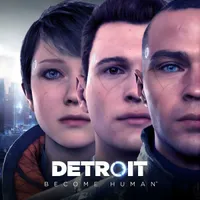
But AI has come leaps and bounds since then, for better or for worse depending on how you feel about it, and the game feels more poignant than ever. For the last couple of weeks, I've been replaying Detroit: Become Human, and after over 100 hours, I've finally unlocked every ending (85 in total). As an AI skeptic, the game has broken my mind.
Every decision matters

I'm more of an open-world RPG girl, so I love games like Baldur's Gate 3 and Clair Obscur: Expedition 33. Detroit Become Human is, then, very different from most other games I play. It's a choice-based game where every choice matters. The butterfly effect is very real — a choice you make in the beginning will come back either in your favor or in opposition at a later point. The end of each chapter features a flowchart that changes according to the choices you've made, which means there's a lot of replay potential.
If you haven't played it, you must. It follows three AI Androids who can gain sentience — or become deviant, as the game calls it. Kara is a worker Android who escapes her owner and protects a young girl; Connor is an Android detective whose job is to hunt down deviants while working with a human detective; and Markus starts out as a caretaker for an elderly man but upon becoming deviant, he devotes himself to breaking other Androids out of servitude.

As a player who's controlling the three characters and making decisions for them, you become attached to these characters and their individual struggle. There are plenty of timed quick-time events (QTEs), such as when Kara is trying to run away from Connor and is crossing a busy highway, and you must hit the right buttons at the right time to ensure she doesn't die... or perish? Can AI beings "die"? Death is a very real consequence of your actions, and having any of the characters die early on locks you out of a ton of content.
Morality, free will, prejudice, and other 'human' emotions

Now that we've got the basics out of the way, let's get into the meat of Detroit: Become Human. The choices you must make and the way the story unfolds deals with a lot of human themes and subjects. Free will, morality, what's right and wrong, prejudice, and consciousness, off the top of my head. I wouldn't necessarily say Detroit: Become Human predicts the future of AI, but it serves as a thought experiment that really makes you think.
When the game starts, the three playable Androids have their own jobs to do: cleaning, cooking, taking care of humans, and even solving crimes. They can speak, plan, interpret emotions, and adapt to changing situations. As the game progresses and the Androids gain consciousness, they develop feelings, feel pain or joy, and have their own goals — just like humans. They even fight for their rights to be recognized as a sentient species.

It takes a lot to break Androids out of their default programming, which is to serve humans. A high-stakes event, an emotional reckoning — something snaps when Kara and Markus become deviant. It's kind of like a human being, isn't it? When pushed to our very limits, we resort to extreme measures to protect ourselves, or we blurt out something we've been keeping locked up for years. A weight is lifted off our shoulders, which is what it feels like when you, the player, follow QTEs to free the Androids.
Where are we in the "AI becoming sentient" timeline?

Detroit: Become Human is set in 2038, and so here in 2026, we're only 12 years away from the game's events. Replaying the game and unlocking the 13 endings for Connor, 33 for Markus, and 39 for Kara, each with its own unique meaning, made me wonder: where are we in the "AI becomes sentient" timeline? I'm an AI skeptic, and I mostly avoid using AI. As a species, we've come this far without AI tools, and I don't believe I personally need them to do things for me.
Android behavior in the game closely imitates human behavior — like Connor treating Sumo the St. Bernard with gentleness. Or Connor playing with a coin whenever he was idling or bored, which gave us early hints towards his subsequent deviancy.
The current AI systems we have today are less like Detroit: Become Human's Androids. Instead, they're LLMs or Large Language Models, and they can imitate conversation and reasoning without evidence of conscious experience.

But does that mean we're far off from AI being capable of running human-like Android bodies? I don't think so, and as an AI skeptic, that thought terrifies me. Detroit: Become Human starts off with a cutscene showing Androids people can buy, and the advertisements read, "Hard work for her, free time for you." We're already there, with AI tools being implemented in every sect of our lives to "simplify" workflows, and said AI tools replacing jobs that humans used to do.
And the impact of Androids replacing human workers in Detroit: Become Human isn't subtle. It's loud and in-your-face, with humans protesting around cities and even physically intimidating Androids who are just going about their day, doing jobs for their human owners. There's a breaking point in the game, when Androids start demanding for recognition, and the choices you make impact how the world perceives AI.

We may be far off from AI becoming as sentient as Detroit: Become Human's Androids, but I don't think it's impossible.
As much as I hate to say or even think it, Detroit: Become Human has made me realize that it might happen sooner rather than later. As Chloe, the Android always present in the main menu, states: "Remember: this is not just a story. This is our future."

Follow Tom's Guide on Google News and add us as a preferred source to get our up-to-date news, analysis, and reviews in your feeds. Subscribe to Tom's Guide on YouTube and follow us on TikTok. Finally, you can visit our dedicated Tom's Guide Savings Squad hub for expert help on getting the best products for less.
More from Tom's Guide
- Nearly a year later, Clair Obscur Expedition 33 still has the best game soundtrack of all time — and hearing it live confirmed it further for me
- I didn't pre-order the Nintendo Switch 2 — but it would be an instant buy if they ported this game
- AI’s massive data center boom is sparking a backlash across America — and Erin Brockovich is leading the charge