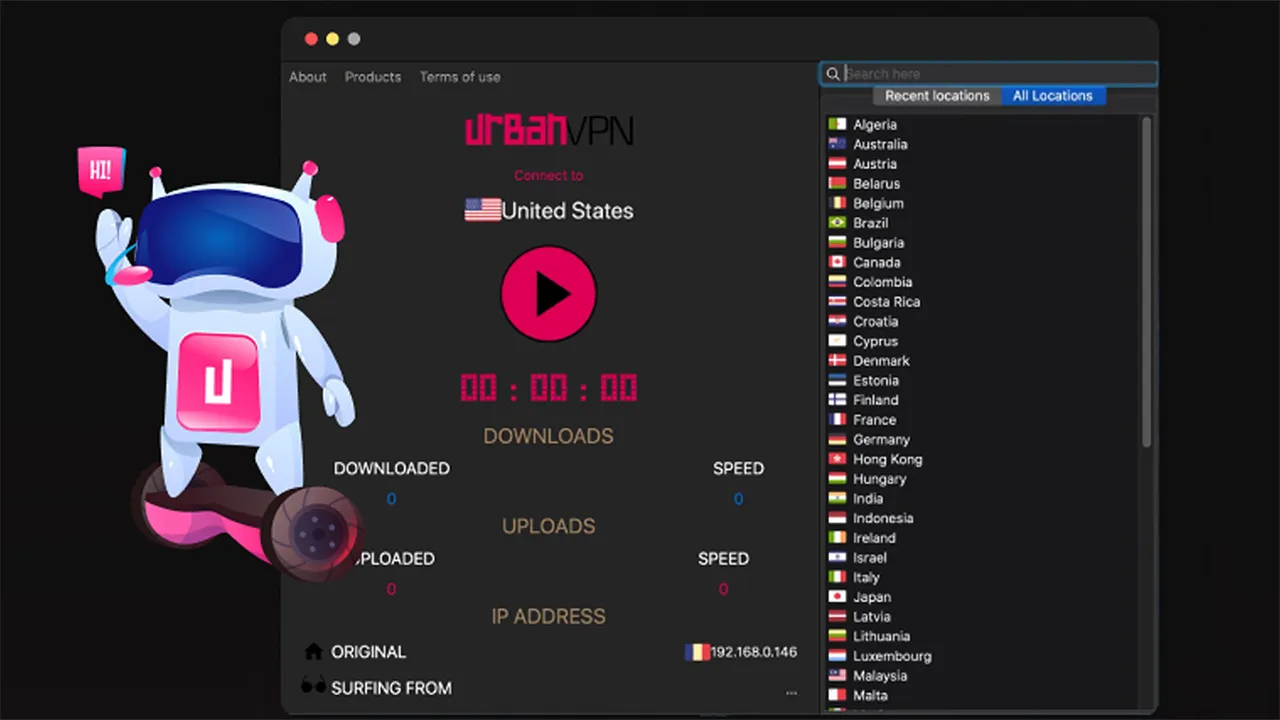
Urban VPN has announced the launch of a "new in-house, WireGuard-based protocol," which it claims to be up to four times faster than regular VPN speeds.
The protocol is named Urban LinkX, and is active on over half of Urban VPN's global servers. Currently it can be used on Android and iOS, with Mac and Windows support due by the end of May.
Urban VPN isn't included in our best VPN list, and despite labelling itself as "one of the largest free VPN services globally," it doesn't make our best free VPN list either. In fact, we've previously raised concerns about its privacy credentials.
Investigations have found the Urban VPN Proxy browser extension collects and shares sensitive personal data, while its privacy policy has stated it collects and shares your information with third-parties.
These are serious red flags. So, to coincide with its new protocol, we're re-investigating Urban VPN to see if anything has changed – and whether it's safe to use.
A suspicious privacy policy
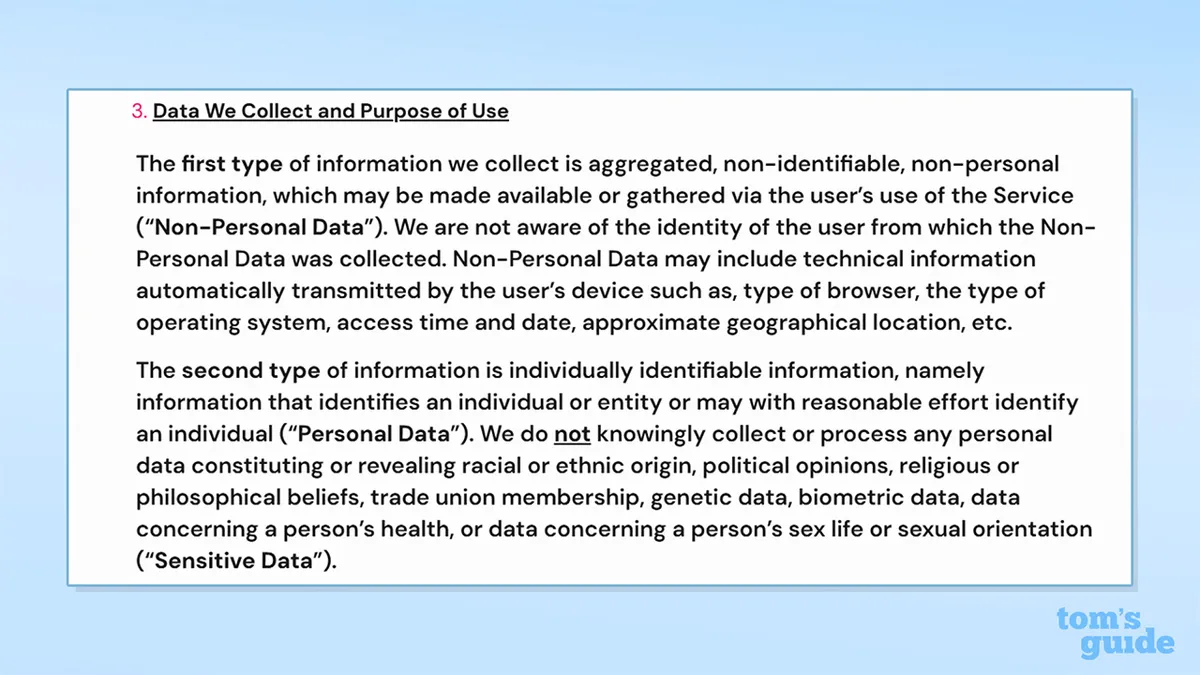
Urban VPN kicks off its privacy policy by saying "we do not want to know your identity and we do not collect data to try and figure out who you are." It adds that "any data collected from you simply by your use of our product will never be used to figure out who you are or to send you targeted ads."
This is a good start. However, nowhere in Urban VPN's privacy policy, or on its website, does it mention a no-logs policy. This is crucial to be considered as one of the most private VPNs, and many go one step further by having its no-logs policies independently audited.
In rare cases, as happened to Windscribe and Private Internet Access, these policies are proven in court.
A no-logs policy means a VPN doesn't "log" any information about your browsing habits or online activity. This doesn't mean absolutely zero data is collected about you, but it's always an important feature to look for – especially if it's independently audited.
Urban VPN says it doesn't collect "sensitive" data – which includes race, health, and biometric data – but does collect some forms of identifiable data.
It also appears, in some cases, to collect browsing data. In the case of its free Android app and browser extensions, the privacy policy says:
"We may collect your web browsing data, which includes search engine results page, the web pages you visited, clicked stream data, information about the content that you viewed (the ad campaign), information about where you viewed the content (website or the app or extension) and the products viewed, searched, added to the cart, and purchased."
This is a serious invasion of privacy, and something that should never be collected by a VPN. Urban VPN does say this is collected with your consent, and you can withdraw this consent, but the fact it's collected in the first place is a big red flag.
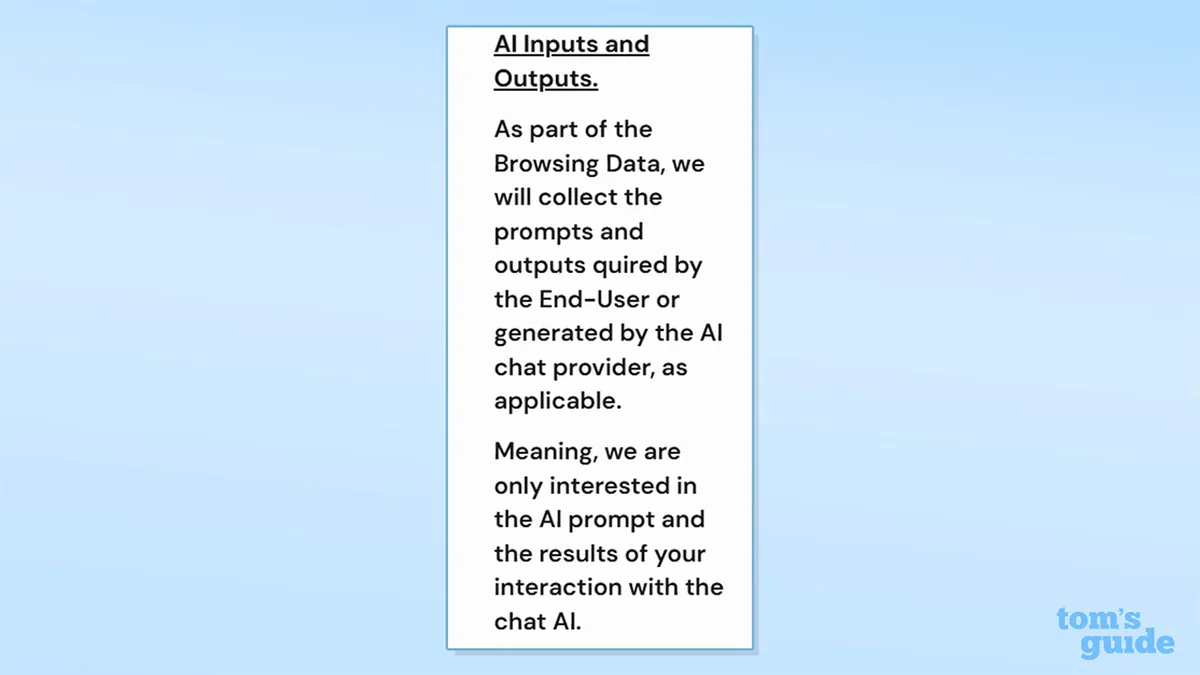
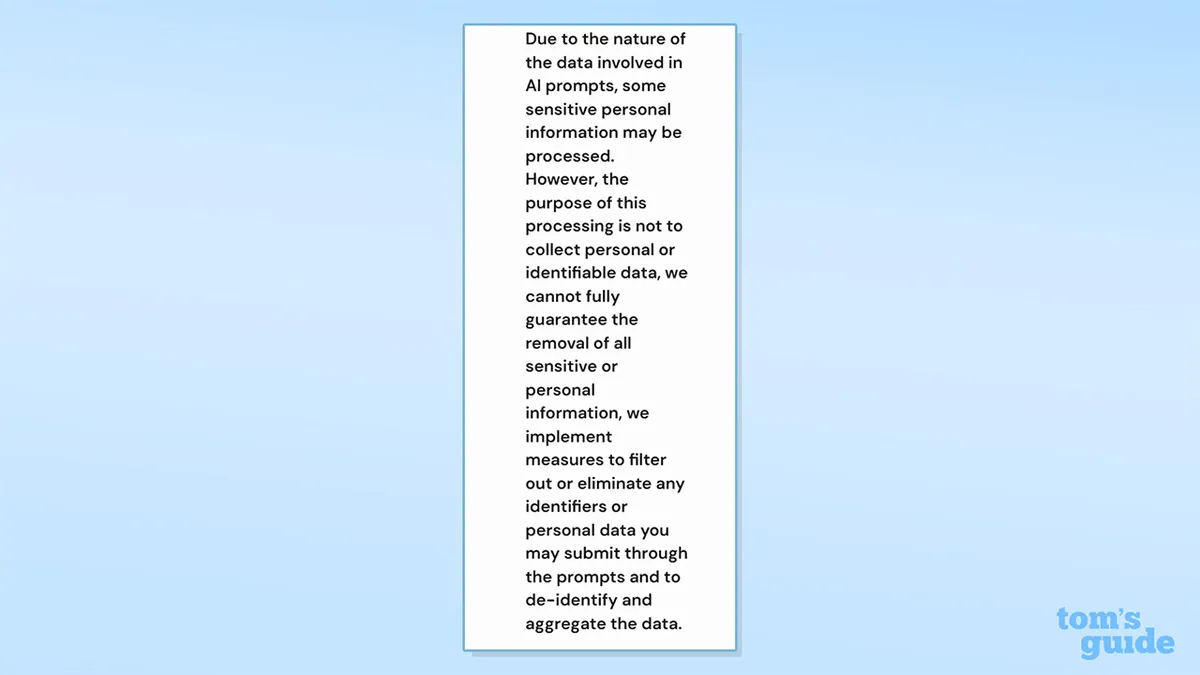


As part of the browsing data it collects, Urban VPN says AI data is included. It collects prompts and outputs, and admits "some sensitive personal information may be processed" as a result.
Collecting this isn't Urban VPN's purpose, but it "cannot fully guarantee the removal of all sensitive or personal information."
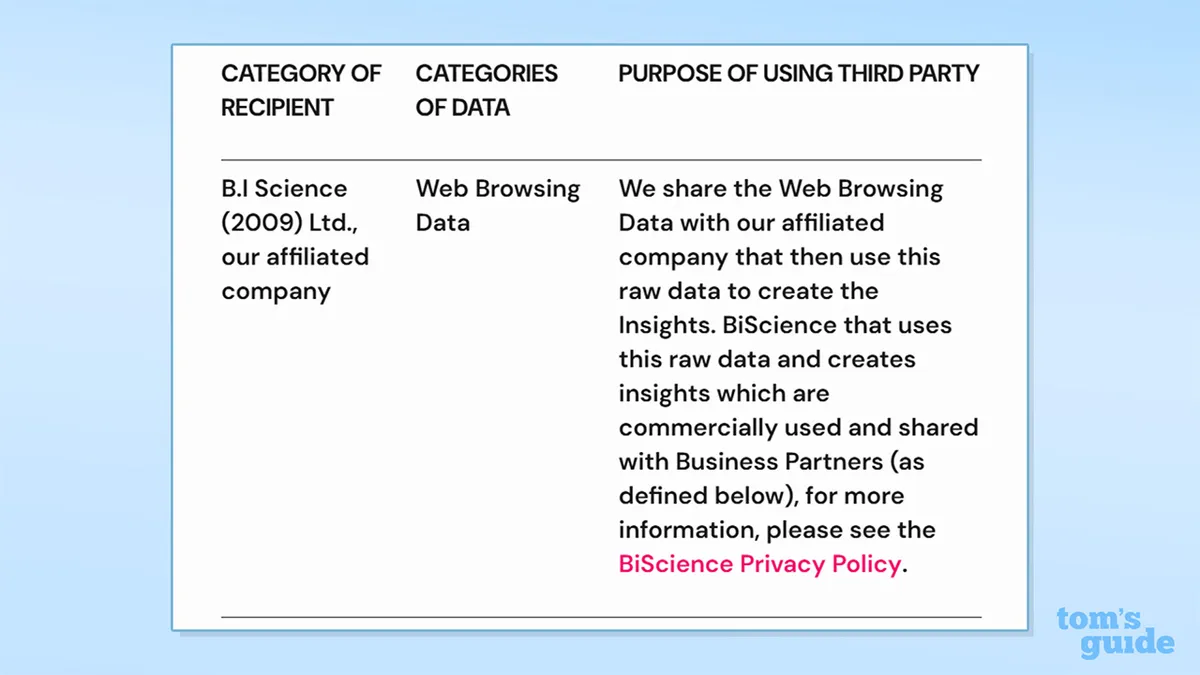
Not only is the data collected, it is shared. Urban VPN's privacy policy says the data is "shared with our affiliate company based on consent." Said affiliate company – B.I Science (2009) Ltd. – will use this data "for marketing research and commercial use."
B.I Science (2009) Ltd. uses the data to create commercial "insights" and it shares these with "Business Partners."
Despite this data collection, Urban VPN says it does not "track or collect information about users’ activities across sites or applications."
"Do not sell"
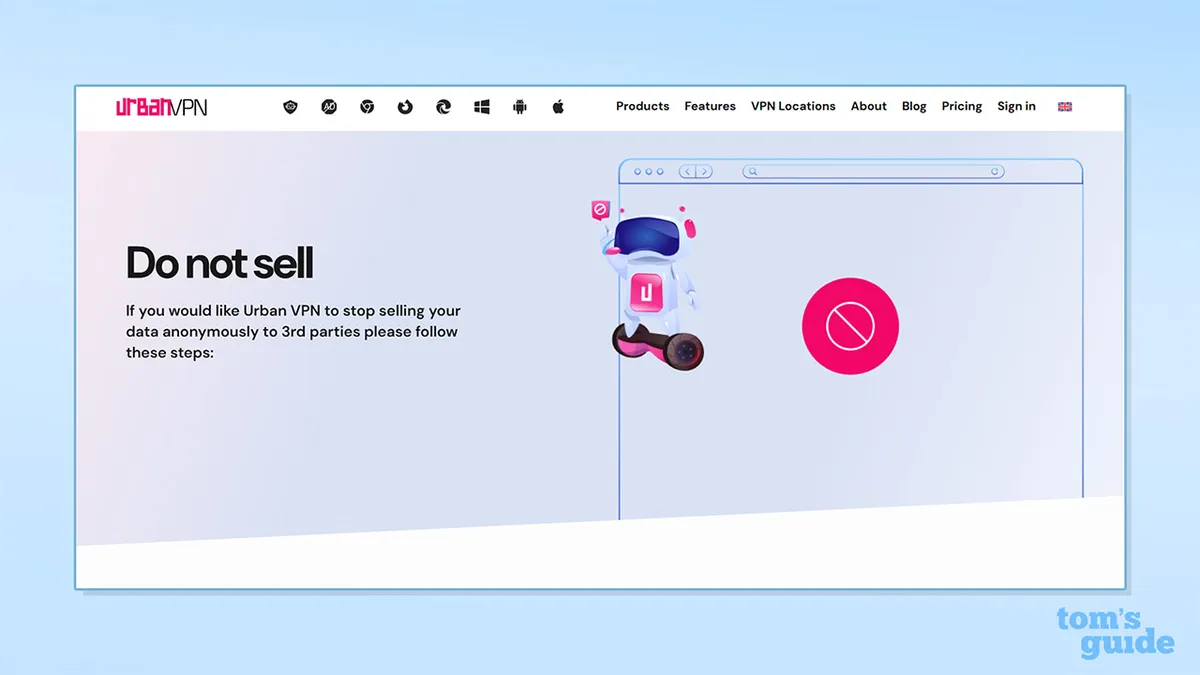
Nestled within the About section of its website, Urban VPN has a "Do not sell" page. It reads: "If you would like Urban VPN to stop selling your data anonymously to 3rd parties please follow these steps." It then walks you through the steps to take to opt-out of data sharing.
Again, there's a small consolation in the fact Urban VPN doesn't hide its data collection and sharing. It'd be far worse if it did. But none of these signs point towards a safe VPN, and Tom's Guide strongly recommends you avoid using it.
Tom's Guide contacted Urban VPN to ask why it doesn't commit to a no-logs policy. We also asked its reasons for collecting user data, and selling it to third-parties.
At the time of publication, we have received no reply.
Too good to be true
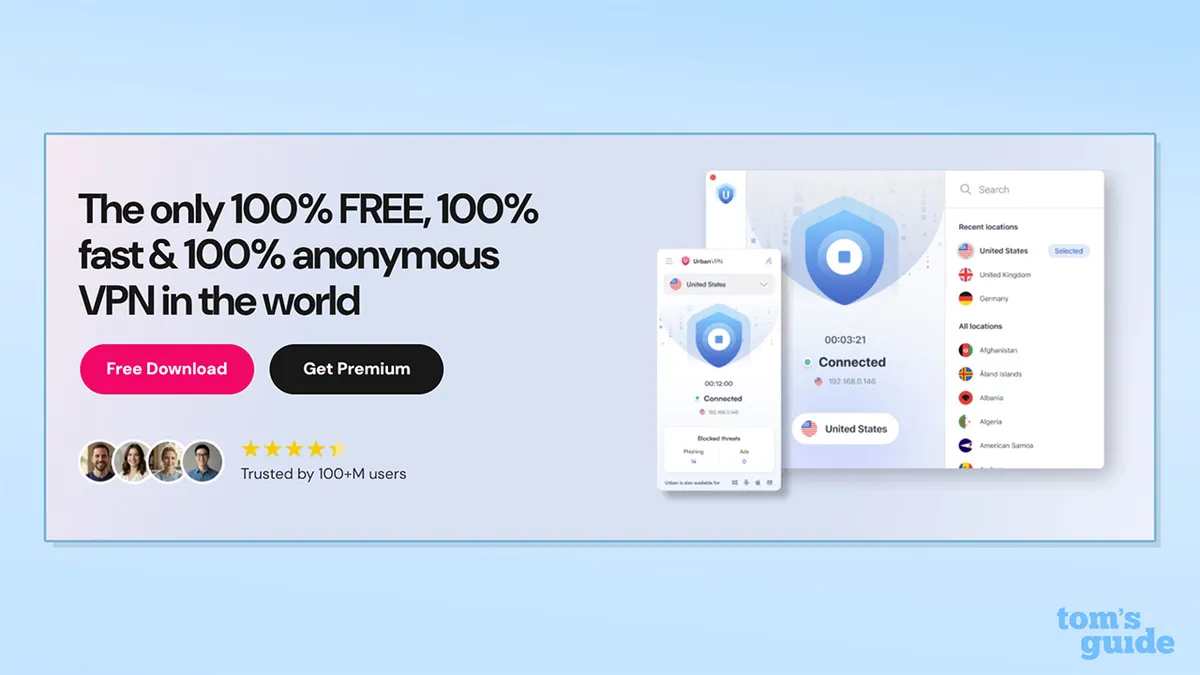
On its website, Urban VPN claims it's "the only 100% free, 100% fast & 100% anonymous VPN in the world" and highlights that it's trusted by over 100 million users.
The free VPN boasts "unlimited bandwidth" and 82 server locations, which is far more than any of the free VPNs we recommend. However, claims like this are often too good to be true and you'll likely end up paying with your data.
Free VPNs like PrivadoVPN Free, Windscribe Free, and Proton VPN Free can't match their paid counterparts. They are limited in the features they offer, but they're genuinely safe and won't collect your data.
Any free VPN claiming to offer a complete package, with no downsides, should be avoided.
A new protocol, but stay away
We will commend Urban VPN for launching its new Urban LinkX protocol. Many VPNs – free or paid – don't do this. Urban VPN says its "real-world" Android testing showed download speeds double, and upload speeds quadruple, when compared to its previous protocol implementation.
It's live on 394 of Urban VPN's 692 servers, with access for premium users on Android and iOS – Windows and Mac support is due at the end of May 2026.
But stay away.
Urban VPN collects and sells your data and poses a serious risk to your online privacy. It doesn't hide this, but its data collection is vast, and there are concerns about the connections between its browser extension and AI chatbots.
We recommend avoiding Urban VPN if you value your data. There are a number of secure free VPNs available, as detailed in our best free VPN guide.
We test and review VPN services in the context of legal recreational uses. For example: 1. Accessing a service from another country (subject to the terms and conditions of that service). 2. Protecting your online security and strengthening your online privacy when abroad. We do not support or condone the illegal or malicious use of VPN services. Consuming pirated content that is paid-for is neither endorsed nor approved by Future Publishing.