When choosing one of the best cheap phones in Australia, it's important to focus on the features that matter most to you. While budget devices may not include all the premium features of flagship models, many affordable options still offer a solid and reliable smartphone experience.
An affordable handset can still offer all the essential features we expect from today's best phones, like making calls, sending texts, browsing the web, taking photos and even playing games. However, the price difference often reflects how well it performs these tasks.
Budget phones have improved significantly in recent years, but everyone values different things. That means there are still compromises — you won’t always get the fastest chips, super‑smooth 120Hz screens, or cameras with long‑range zoom.

Even so, today’s affordable phones can do far more than you might expect. Below you’ll find a list of the best cheap phones currently available in Australia for 2026.
Whether you're looking for an Android or iOS device, every smartphone on this list is priced under AU$850, which is less than half of what you'd pay for a current flagship phone in 2026. Read on to find out why we've chosen these particular models.
The best cheap phones you can buy today
Why you can trust Tom's Guide Our writers and editors spend hours analyzing and reviewing products, services, and apps to help find what's best for you. Find out more about how we test, analyze, and rate.
Best cheap phone overall


When the Google Pixel 10a was first announced, I have to admit I wasn’t impressed. My initial reaction was that Google had really phoned this one in, no pun intended.
That was mainly due to the fact that it barely offers any hardware upgrades over the Pixel 9a, outside of slightly faster charging and a rear design that's even flatter than it already was. And I still can’t wrap my head around Google’s decision to stick with the same Tensor G4 chipset from the Pixel 9 series instead of inheriting the Pixel 10’s Tensor G5.
Still, those worries quickly faded once I started using it, and I realised that despite being nearly identical to last year’s model, the Pixel 10a still feels like incredible value at its AU$849 price point.
Admittedly, you can now pick up the Pixel 9a for around AU$50 cheaper, though that feels like a small price to pay for its successor's new features. For starters, the Pixel 10a has added satellite‑based emergency SOS capability, along with a few AI-centric camera upgrades, such as Macro Focus and Camera Coach.
A few features are missing, like Pixel Screenshots and PixelSnap, which didn’t carry over from the regular Pixel 10 series, but all the key stuff, like Gemini Live, Circle to Search, Ask Photos, Magic Editor and Magic Eraser are still here.
The Pixel 10a’s 6.3-inch display might be slightly dimmer than the Pixel 9a’s, but it still brighter than every other phone in its price range. Plus, just like the standard Pixel 10, it now features an adaptive refresh rate that can shift between 60Hz and 120Hz based on what’s happening on screen. Its display is also better protected than its predecessor, having upgraded from Gorilla Glass 3 to Gorilla Glass 7i.
Sure, it's probably not worth upgrading if you already own the Pixel 9a, but if you're looking for an affordable way into Google's ecosystem, the Pixel 10a is your best bet.
Read our full Google Pixel 10a review.
Runner Up


The Samsung Galaxy A57 stands out for its expansive 6.7-inch AMOLED display, flagship-grade materials and impressive battery endurance, despite being a budget phone. This combination makes it appealing for anyone who prioritises reliability over outright performance.
The Galaxy A57 excels in its integration with Samsung's ecosystem, including some (but not all) of the latest Galaxy AI features. Tools like live translation and AI photo editing are available, providing a taste of Samsung’s flagship-level software experience at a more accessible price point. However, the Agentic AI features from the Galaxy S26 series are absent here.
On the camera front, the A57 features a triple-lens setup: a 50MP main sensor, a 12MP ultrawide, and a 5MP macro lens. Setting the disappointing macro aside, the A57's cameras deliver versatility for everyday shooting, keeping pace with what most buyers expect in the mid-range Samsung line-up. That said, there's a significant step down from the S26 in terms of low-light photography and shutter speed.
Stacked against the Pixel 10a, the A57’s larger screen and superior battery life are clear advantages. It lags behind Google's mid-ranger in AI-powered photography, peak display brightness and raw processing power, so performance-focused users may notice the difference in demanding apps or outdoor use.
Available from AU$599 at some Aussie retailers, the Galaxy A57 is perfect for Samsung fans and budget-conscious buyers who prioritise a large display, dependable battery life, and a familiar camera setup. If you’re looking to sample flagship-level software and can live with some compromises in camera and performance, it’s definitely worth considering.
Read our full Samsung Galaxy A57 review.
Best cheap phone design

Who says that you have to sacrifice looks for a cheaper price? The Nothing Phone 3a still delivers the stylish translucent look and helpful Glyph interface as its other siblings, but packages in more features.
My colleague, Philip Michaels, praises its bright and crisp 6.7-inch AMOLED display, which offers an adaptive refresh rate up to 120Hz, as well as how long this phone lasted on our battery test.
With a price of AU$599, it packs a gorgeous design and some big improvements around its camera system, which now includes a dedicated telephoto camera with 3x optical zoom. Best of all, you can often find it cheaper than its RRP.
Read our full Nothing Phone 3a review.
Still worthy

Samsung's affordable A-series handsets have a lot more competition than they used to, but they arguably can't be beaten from a value standpoint.
Sure, Google's Pixel 9a is more advanced, particularly when it comes to AI features, but the Galaxy A56 looks and feels more premium, boasting a stunning 6.7-inch display with adaptive 120Hz refresh rate and slim bezels.
The Galaxy A56 features an impressive triple-camera system, highlighted by a powerful 50MP main sensor and complemented by a 12MP ultra-wide sensor and 2MP macro sensor. That's remarkable for a phone that can be found for under AU$500 these days.
Read our full Samsung Galaxy A56 review.
Best cheap iPhone
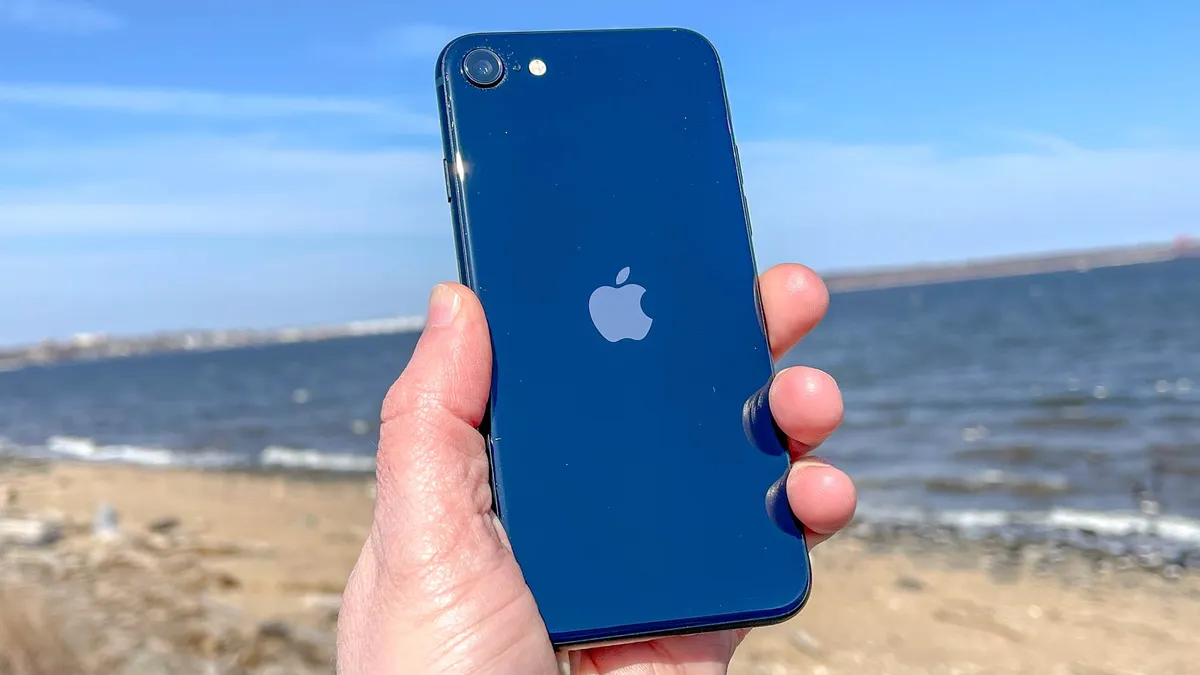
The iPhone SE (2022) takes cheap phones to the next level of performance by including Apple's powerful A15 Bionic chip. This is the same processor found in the iPhone 13, which is still quite powerful.
This chip also gives the new iPhone SE (2022) a number of photography powers that the previous model lacked, including Smart HDR 4, Magic Fusion for better detail and Photographic Styles. In fact, in some scenarios the iPhone SE takes better pics than the Google Pixel 6a, as you can see in our Pixel 6a vs. iPhone SE (2022) face-off. Unfortunately, Apple didn't include Night mode for low-light situations.
Admittedly, it's a little long in the tooth these days, sporting a four-year-old design, but it has a uniquely small 4.1-inch display, which some will find very appealing. Despite some trade-offs, the iPhone SE (2022) is still the best cheap iPhone around for people who like small phones.
Read our full iPhone SE (2022) review.
Most unique cheap phone

Available exclusively via Officeworks in Australia, the Nothing Phone (3a) Lite is a compelling budget-friendly option, making the brand's distinctive transparent aesthetic and unique monochrome OS accessible at just AU$439 — approximately AU$160 less than the standard Nothing Phone (3a).
The (3a) Lite maintains several key visual advantages despite its significantly reduced cost. It features a high-quality 6.77-inch AMOLED display with a 120Hz refresh rate, offering a premium experience for media viewing and scrolling. Although it utilises the MediaTek Dimensity 7300 Pro chipset — a step down from the standard model's Snapdragon 7s Gen 3 — it still delivers snappy daily performance and excellent all-day battery life, powered by a large 5,000 mAh cell.
That said, this is a budget phone, and it’s impossible to overlook a few compromises with this device. For instance, it uses a good bit of lightweight plastic, which makes the build feel a little hollow and less premium than the standard (3a) model. Also, the cool, complex light strips from older models are gone, replaced by a simpler, single-LED Glyph light. Still, if you're into the Nothing look and its standout features, like the Glyph light and Essential Space, this is a fantastic, cheaper way to jump into the brand.
What to look for in the best cheap phones
After you've found a phone at the right price for your budget — that's why you're considering one of the best cheap phones in the first place, after all — consider what features one of these devices has to offer and which ones you're sacrificing for a lower price tag. Battery life, the number and types of cameras, display refresh rate and the type of chipset powering the phone are all ways that cheap phones can distinguish themselves.
In some cases, you'll be able to compare phones to more expensive options to help crystalize what compromises you're making for a lower-cost model.
Generally, one area in which phone makers cut back for budget models is materials. They'll use plastic for the phone's case instead of metal and glass. Cheaper phones may also turn to LCD panels instead of OLED screens, though that's becoming less frequent among some of the best cheap phones running Android.
One other area to consider is software updates and support. We've seen cheaper Android phones either ship with older versions of Android or promise very few upgrades to future versions. Samsung has one of the better upgrade policies with its Galaxy A lineup, and the iPhone remains a standout for usually supporting five years of iOS updates.
How we test the best cheap phones
We evaluate budget-priced phones the same way we do flagships. We perform real-world testing and synthetic benchmarks over several days to evaluate it's performance and value. This includes our own battery test, which involves continuous web surfing over cellular at 150 nits of screen brightness. The devices that make our best phone battery life list tend to last over 11 hours.
In terms of performance, we use Geekbench 5 to measure overall speed and compare versus phones in the same price range. And the same thing goes for GFXBench for graphics testing. We also perform our own video editing/transcoding testing using the Adobe Premiere Rush app to gauge real-world speed.
For evaluating cameras on cheap phones, we will take multiple photos in different conditions and will use other affordably priced phones in the same scenarios in order to make side-by-side comparisons.
For more information, check out our how we test page for Tom's Guide.