The recent uptick in AI becoming a central part of company workflows has caused professionals to panic as they now fear a future where this tech will replace them.
And while it’s disheartening to hear about mass layoffs from major companies due to AI automation/implementation, it’s shocking to find out AI is the reason behind several company heads stepping down recently.
Longstanding CEOs who have been with their companies through times of great change are now being met with an uptick in AI that has convinced them to relinquish their roles to someone better suited to handle the implementation of this constantly evolving technology.
AI isn't just replacing tasks; it's replacing CEOs. From Walmart to Coca-Cola, tech’s biggest leaders are stepping down as the "AI Succession" begins.
Three companies in particular stand out among this recent trend: Walmart, Coca-Cola, and Adobe. Here is what led Walmart CEO Douglas McMillon, Coca-Cola CEO James Quincey and Adobe CEO Shantanu Narayen to step away from their roles and how their decisions to do so were influenced by AI.
Riding AI’s next wave
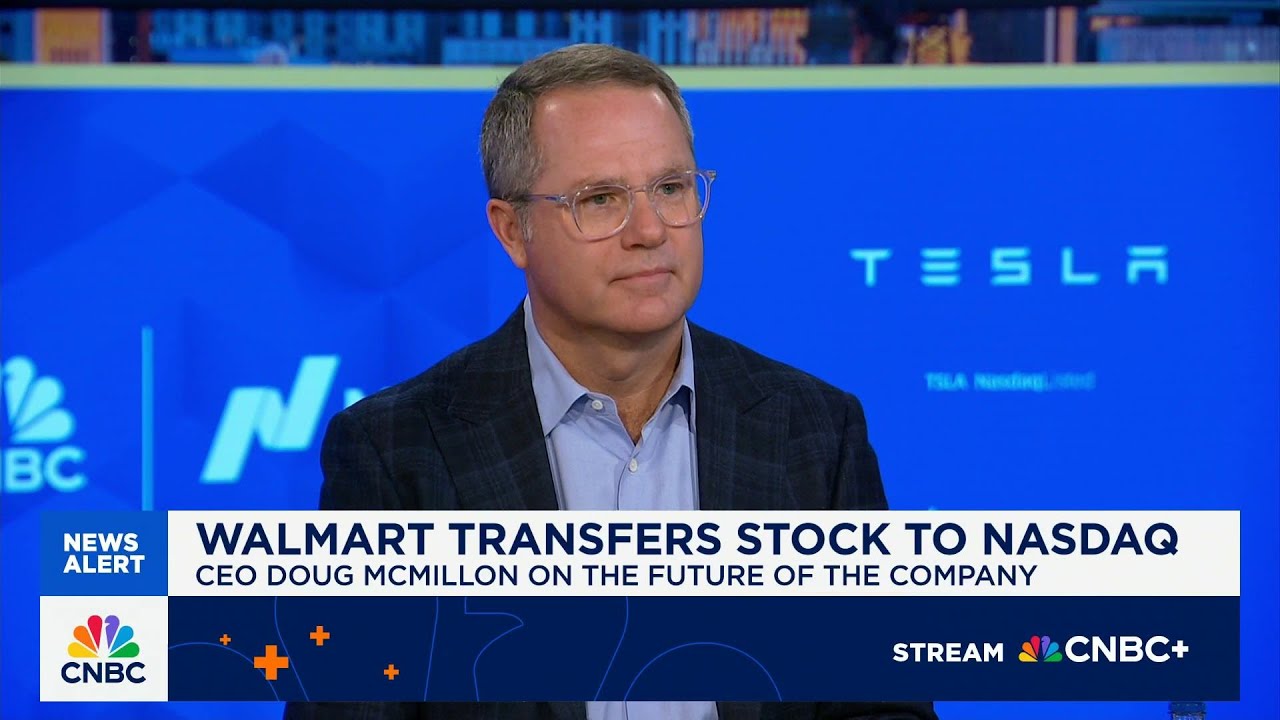
During an interview with CNBC’s Squawk Box, former Walmart CEO Douglas McMillon explained the reason behind his recent departure. After holding the role since 2014, he decided to hand over the reins to John Furner, who left his position as head of Walmart U.S. to step up to the CEO role. Furner has been the CEO of Walmart since February 1.
McMillon spoke about the major transformations brought about by AI and how it was time for someone new to confront them for his company. “With what’s happening with AI, I could start this next big set of transformations with AI, but I couldn’t finish,” McMillon said to CNBC. “About a year ago, I really started feeling like this next run, you could see what agentic commerce was going to look like, the vision for AI shopping, and I started thinking about everything that needs to happen over the next few years, and it really caused me to think that now was the right time [to step down].”
Outgoing Coca-Cola CEO James Quincy also made a recent appearance on CNBC’s Squawk Box and delved into his reasoning for stepping down at the end of this month and passing the torch to COO Henrique Braun.
“In a pre-AI, a pre-gen-AI mode, we made a lot of progress,” he stated. “But now there’s a huge new shift coming along.” Quincy supports his company’s foray into major technological advancements and supports putting someone in place who is well-equipped to handle those massive changes. “My job is also to think who’s the best team to put on the field to get the next wave done,” Quincey stated. “And I concluded that, actually, it was time to put someone else on the field for the next wave of growth.” Quincy has held the role of CEO of Coca-Cola since 2017.
Shaping the next era of creativity

Other companies, like Adobe, are looking ahead to a future where the company can compete with generative AI software through its own AI products, such as Firefly. In a memo to the rest of the company, former Adobe CEO Shantanu Narayen recognized the rising presence of AI and how Adobe will rise to the occasion to stay in tune with its evolution.
“The next era of creativity is being written right now — shaped by AI, by new workflows and by entirely new forms of expression, “ he said. “Adobe has never waited for the future to arrive. We’ve anticipated it. We’ve built it. And we’ve led it. What gives me the greatest confidence isn’t just our technology — it’s our people. Your ingenuity, resilience and commitment to customers are what will define this moment.”
Narayen has been CEO of Adobe since 2007, but recently announced his plans to leave the position in a move that some say is due to investor uncertainty over the company’s ability to compete in a creative software sector filled with AI.
The takeaway
Walmart has already implemented AI tools to assist with real-time translation and task management, while Coca-Cola has — mostly unsuccessfully — used them to generate ads. Meanwhile, Adobe has created Firefly, a suite of generative AI models used for creating images and videos. With these three companies and surely more to come, it’s interesting to consider how AI will have a major impact on the companies we interact with on a daily basis.
AI may be a constant from here on out, but at least we’re here to guide you along the way and better prepare you for the best ways to leverage it for your own professional & personal benefit. Improving yourself in whatever field you’ve chosen and adapting to the ever-evolving AI tools that may be seeping their way into your profession may seem daunting, but thankfully, we’ll be here to call out and hopefully help you adapt to those changes as they come.

Follow Tom's Guide on Google News and add us as a preferred source to get our up-to-date news, analysis, and reviews in your feeds.
More from Tom’s Guide
- If AI feels overwhelming, you’re not alone — here’s the simple way to start
- AI might not take your job — but it could quietly shrink what your paycheck is worth
- 7 AI prompts that will help you write a better resume in under five minutes