A massive jury trial against Meta is beginning today that could change the face of social media forever with a potential financial death penalty of $1.4 trillion on the line.
When a tech giant is put on trial, the public is usually conditioned to expect a lengthy battle that ends in a quiet settlement, written off as just the cost of doing business. But this is entirely different.
That’s because after the lawsuit was filed by 30 U.S. states in 2023, including California and New York, governments are finally taking action in saying the “attention economy” is a public hazard for children.
It’s not just an accusation of bad content policy, it is a direct assault on how Meta and social media as a whole works. Beyond that eye-watering figure, the states are demanding fundamental changes to how Instagram and Facebook operate — including killing the like button and infinite scroll.
Should Meta lose, this would be a massive tectonic shift. I’ve sifted through the entire case document to break down the accusations, the demands, the evidence and what this will actually mean for you.
The hit list (what is actually changing)
I’ll go into the specifics of the case itself in a little bit, but outside of that gigantic price tag, what would actually vanish from Meta’s apps if the company loses?
- Death of infinite scroll & autoplay: The states are demanding an end to the endless feed and autoplaying of content. These features are explicitly designed to maximize screen time, and losing them breaks the TikTok-style doomscroll in a fundamental way.
- The end of the like button: Another key dopamine hit that keeps teens hooked to their screens is the like count. The lawsuit is targeting this too — demanding an end to social validation metrics.
- No more algorithmic manipulation: The states want to see change to Meta’s “dopamine-manipulating recommendation algorithms.” This could mean a return to your standard chronological timelines by default.
- Notification lockdown: No more frequent push notifications designed to pull young people back into apps. You’ll see these pop up to stop young people from disengaging with a social platform.
- Killing stories & filters: The states want an end to disappearing or “ephemeral” posts like Instagram Stories. On top of that, they’re demanding the removal of image filters that alter a user’s physical appearance in pictures.
However, there is one broader, scarier implication for everyone, not just teenagers.
The death of the “Finsta”

The lawsuit isn’t just about tweaking algorithms; it’s demanding structural changes to how accounts are created. The states are demanding strict parental verification for teenagers and limits on multiple account creation.
For teens, this effectively kills the “Finsta” — a fake or secondary Instagram account used to hide from parents or public scrutiny), and to enforce this, platforms will need to know exactly who is holding the phone. That would spell the end of casual online anonymity.
The smoking gun — could Meta lose this case?

Obviously, I’m not going to claim myself to be some expert legal mind here. But I’ve been a tech journalist for over 15 years and witnessed a bunch of lawsuits, and some of the data points, internal admissions and quotes in this document seem pretty eye-opening.
The COPPA Scandals:
For over seven years (until December 2019), Instagram had no age gate at all. When Meta finally added one, the drop-down menu defaulted automatically to a date making the user exactly 13 years old — effectively showing kids the exact date to bypass the restriction.
Internal research cited in the filing revealed that 40% of children aged 9 to 12 use Instagram daily, and 45% use Facebook daily. This leads to the accusation that Meta viewed children aged 10 to 12 as a “valuable but untapped audience” that dedicated internal teams analyzed to target.
The founding confession
Sean Parker himself said that the thought process behind building Facebook and Instagram was all about “how do we consume as much of your time and conscious attention as possible?”
He called it a “social-validation feedback loop” that exploits “a vulnerability in human psychology,” which its creators all understood “consciously.”
“I don’t want to hear it” about underage users
This is what Head of Instagram Adam Mosseri apparently said when he was confronted with evidence that child star JoJo Siwa had been active on Instagram since age 8.
On top of that, Meta’s former director of site integrity Arturo Bejar testified that Zuckerberg knew about “harms that teenagers are experiencing in its product,” but are “choosing not to engage about it.”
Meta’s own internal numbers
The company ran a “Teen Mental Health Deep Dive” private survey that found:
- 1 in 5 teens felt worse about themselves after using Instagram
- 24% reported feeling “not good enough because of the app”
- 67% felt forced to “create a perfect image online”
- Over half admitted to struggling with severe FOMO (Fear of Missing Out)
- 14% of young users admitted to having thoughts of wanting to “hurt [or] kill themselves”
Cynical product design and internal teams
The lawsuit pulls back the curtain on how Meta internally viewed user engagement — with the company reportedly operating an engineering group called the “Rabbithole team.” Their mission was clear: optimizing “preference amplification,” which is fancy wording for figuring out how to push users deeper down algorithmic rabbit holes.
Even when Meta rolled out “time management” tools like the Daily Limit to appease public critics, the lawsuit alleges they were designed to fail. Originally, the daily limit was 10 minutes, but once public scrutiny died down after the 2021 whistleblower leaks, Meta quietly raised that minimum to 30 minutes.
But perhaps most damning of all is that as early as 2017, Facebook’s own former VP for user growth publicly admitted he had banned his own children from using Facebook. Sometime after that, Meta simply disbanded its internal “Responsible Innovation” team.
Outlook: a corporate death penalty?
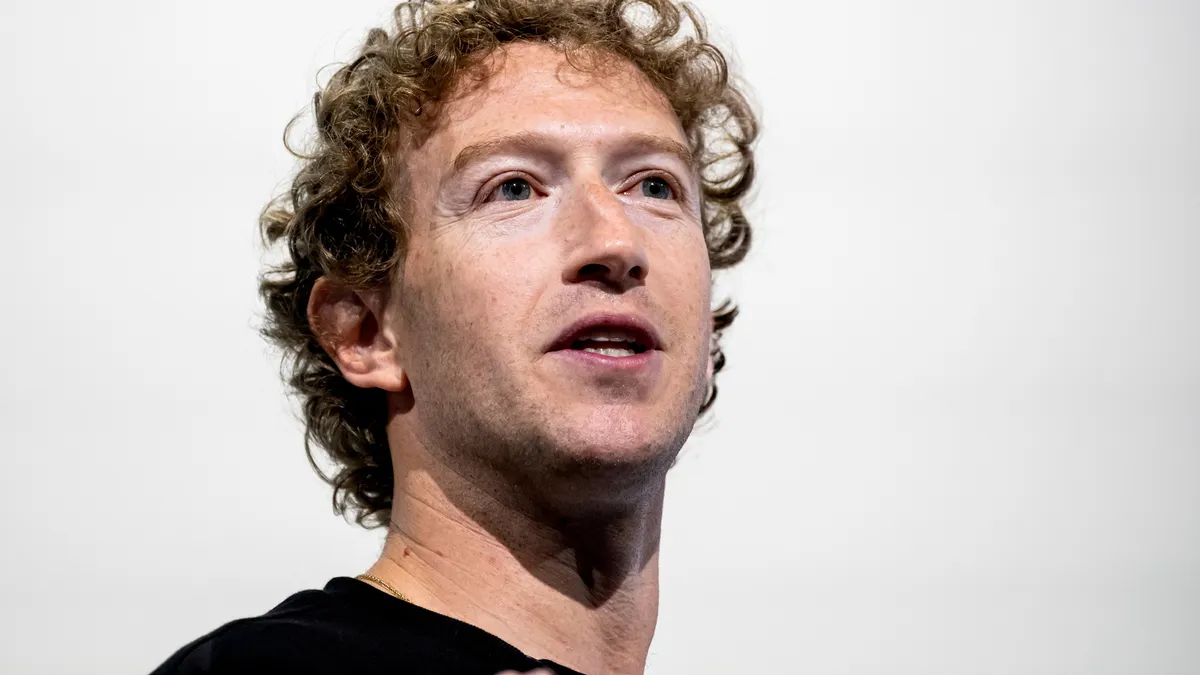
The federal trial officially kicks off today in Oakland, California, with California, Colorado, Kentucky and New Jersey leading the charge.
But this trial isn’t just about the money. Because this is a consumer protection lawsuit rather than a personal injury case, the states are asking the judge to order sweeping changes to the platforms.
If Meta loses, we aren’t just looking at a massive fine. We are looking at court-mandated age restrictions, the deletion of algorithmic feeds for minors, and the permanent removal of the infinite scroll.
Win or lose, the curtain has been pulled back. The “attention economy” as we know it is officially on trial.

Follow Tom's Guide on Google News and add us as a preferred source to get our up-to-date news, analysis, and reviews in your feeds.
More from Tom's Guide