

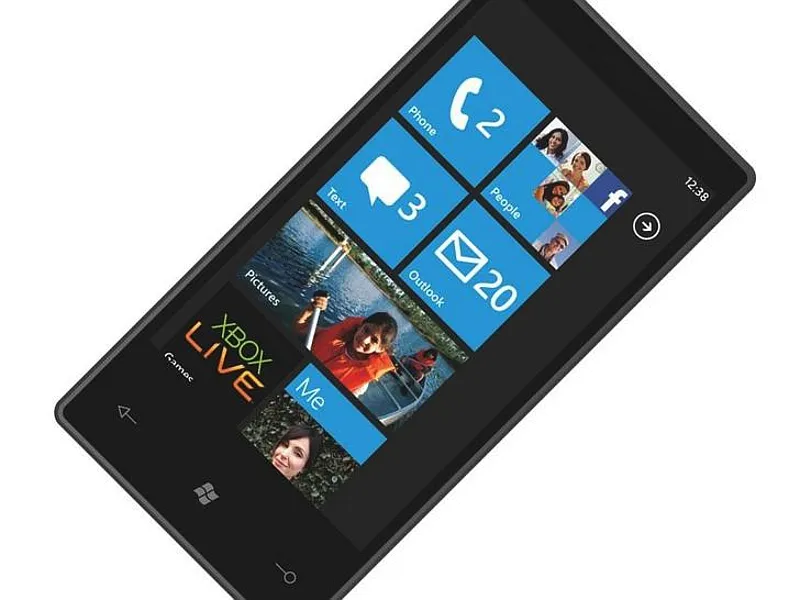
Sounds like current and upcoming Windows Phone 7.x devices won't receive an upgrade to Windows Phone 8 "Apollo."
Consumers who currently own Windows Phone 7 devices may not see an upgrade past 7.x, as there's indication that Microsoft won't distribute a Windows Phone 8 upgrade to past, present and future 7.x devices. The revelation arrived during Mobile World Congress this week thanks to Terry Myerson, the Corporate Vice President of Windows Phone, while speaking to the financial analyst community.
According to ZDNet, a participant in the meeting asked Myerson whether there will be forward or backward capability between Windows Phone 7.x and Windows Phone 8 (codenamed Apollo). But rather than confirm or deny that existing Windows Phones are compatible with the Apollo release later this year, Myerson danced around the question and talked about app compatibility.
"We haven’t announced Windows Phone 8, but in terms of I can show you our goal to all Windows Phone 7 applications will run on Windows Phone 8," Myerson said. "Application compatibility is always something, where there’s always stuff on the fringe…. The spirit is our goal that all Windows Phone applications today run on our next release."
Additional sources claim that Apollo won't be pushed to existing Windows Phone users. The decision may be based on carriers and/or Microsoft itself. If that is indeed the case, consumers who purchase a Windows Phone 7.x device just before Apollo’s release won't receive any new features save for what apps bring to the table. They'll also be locked out of the unified experienced that Windows 8 promises for multiple devices.
"Statistically speaking, no Android phone gets upgraded," Myerson said during the meeting. "None. Ever. They have big bugs that don't even get patched. That's what we're seeing statistically out there. In the case of Apple, they ship OS updates to hardware that makes it unusable. It's a great hardware sales tool, as far as I can tell. Install an OS that makes your hardware unusably slow so you feel compelled to go back to the store and buy a new piece of hardware."
He added that consumer expectations of updates can be a "landmine," and that Microsoft plans to be clear about what consumers can expect in that particular area. He then took another shot at Apple, saying the company has created a "great hardware upgrade incentive system." Yet to some degree, Microsoft is seemingly doing the same thing, forcing Windows Phone 7.x owners to purchase a new Windows Phone 8 device if they want to enjoy the full multi-screen One-OS-To-Rule-Them-All experience.
"The most familiar UI for people worldwide will be Metro very soon," he said. "And that's great for the phone business."

tomorow news will be " No HD7 updates at all "
Let me translate all that marketing PR babble for you:
"No. WP7 phones are not going to get upgraded to WP8 (it's technically unfeasible, but there's no point explaining this in detail to your typical dumb consumer of electornic gadgets). Still, please do not stop purchasing WP7 phones. We need to grow our 'third ecosystem' and improve our measly single digit % market share."
You are welcome.
I love the WP7 interface so much more than that of my iPhone. I only use the WP7 as a dev phone and extra toy to play around with on Wifi because I am in the middle of my contract on Verizon and I'm NOT going to switch to AT&T, but come time to buy a new phone I sure hope there is a good WP8 phone on Verizon!
Oh, and I thought of a new name for Windows 8: Windows WTF!
Hope this is not true.
"Statistically speaking, no Android phone gets upgraded," Myerson said during the meeting. "None. Ever. They have big bugs that don't even get patched. That's what we're seeing statistically out there"
This must be the most stupid comment I have ever seen.
I mean, my first android phone, the Acer Liquid, got a couple of updates from 1.6 up to 2.2 (and probably 2.3, but that point I had bought another phone).
No android phones? None ever?
It is the opposite, most android phones gets updates and it's much more often than once a year compared to the iphone, for most phones.
And with very little bugs at this point when I'm using Gingerbread on a Samsung Galaxy S2.
It's just absolute total lies from that slimy microsoft guy!
nobody still knows, MS sure doesn't want to lose customers, especially that their WP still has a low market share
""Yet to some degree, Microsoft is seemingly doing the same thing, forcing Windows Phone 7.x owners to purchase a new Windows Phone 8 device if they want to enjoy the full multi-screen One-OS-To-Rule-Them-All experience."
nobody still knows, MS sure doesn't want to lose customers, especially that their WP still has a low market share
.."
Indeed, we have only basic outlines of what Win8 will be like, but slamming Microsoft, when Android and iOS do it with EVERY OS upgrade is extremely riddiculous!
You are misunderstanding the majority of the smartphone-buying public, this is why he is being quoted in a Tom's guide article and your views are left to the comments section.
Just because certain manufacturers and networks push out updates on their kit, does not mean that everyone applies them. For example I had a Business Development Manager for a big business-to-business mobile phone distributor ask me recently what the notification icon on his Blackberry Bold 9900 was for - the one that announced an over the air software update is available.
The point that I believe Terry Myerson is making is that an OTA software update does not constitute an 'upgrade' of the phone itself because the hardware remains unchanged.
Much like if you migrated an older business machine with 512MB of RAM from Windows XP to Windows 7 would result in a very poor end user experience, slapping new OS software on to legacy hardware can often create problems that do not warrant the term 'upgrade'.
This is the reason, for example, that HTC have been hesitant in the past to release certain OS updates for certain phones - because they actually understand that putting operating systems with enhanced functionality and more demanding UI etc on to older kit can actually be highly detrimental to the end user experience.
The one thing that I think has tarnished Myerson's comments is the Apple reference. I'm no Apple fanboy (I use Windows PCs exclusively) but my girlfriend is an Apple nut, and before we got her an iPhone 4S her iPhone 3GS was running quite happily with iOS 5. Apple have actually done a pretty good job there...
I don't think that's what's he meant. If he meant hardware upgrade...hell NO PHONE EVER GETS UPGRADED. Please name me one phone which has been upgraded HARDWARE WISE (Ram, CPU, GPU)???? It's pretty clear he meant software upgrade, which is totally BS because Androids are getting upgrades pretty frequently and the ICS has been confirmed for many top of the line phones and almost on all the Samsung Galaxy tab range.
So much for his "statistic".
How many of those updates to ICS for phones and tablets have been actually released?
I think there are some freshly released hardware since last October that is shipping with Android 4. But how many of the pre ICS-release date shipped phones and tablets are actually been provided with an applicable ICS update?
Furthermore, I have a friend who upgraded their Android from 2.2 to 3.0, some HTC or whatever.
Also, correct me if I'm wrong, but aren't WP6.x phones upgradeable to WP7?
I choose windows only because they are upgradable and stay current and effective.
Upgrades are necessary and important.
Windows Mobile 6.x and Windows Phone 7.x are two different OS's. Saying one upgrades to the other is like saying Android 2.3 upgrades to iOS5.
- If you bought a Windows Phone today, you'd still essentially have 6 - 9 months of it essentially running the latest OS, with access to over 60,000 applications. And the OS itself rocks big time.
- When Windows Phone 8 comes out, app makers aren't going to immediately move away from Windows Phone 7.5 apps, especially with the current installation base rapidly growing. The whole Windows 8 interoperability thing will take time to build momentum, as everyone isn't just going to leap from Windows 7 to Windows 8. Even after Windows Phone 8 comes out, I'd expect the majority of apps being made to be 7.5 compatible, at least for 6 months to a year. After that, one can upgrade to a later and better model for a fairly low early-upgrade fee.
- Microsoft not guaranteeing every phone will be upgradeable doesn't mean none will. I honestly don't think the Lumia 900 or the Titan II will be left out to dry.