Tom's Guide Verdict
The Adidas Adizero Evo SL ATR is a great idea that has been executed well. The standard Evo SL was my favorite running shoe of 2025 thanks to its lightweight design and versatile ride, and the Evo SL ATR maintains most of the speed and spring of that shoe while adding a water-repellent upper and improving the grip to make it better suited to winter runs in inclement weather.
Pros
- +
Responsive midsole foam
- +
Good grip on wet roads
- +
Easy-to-clean water repellent upper
Cons
- -
Not as light and bouncy as standard Evo SL
- -
Not as much grip as true all-terrain shoe
- -
Do you need a winter running shoe?
Why you can trust Tom's Guide Our writers and editors spend hours analyzing and reviewing products, services, and apps to help find what's best for you. Find out more about how we test, analyze, and rate.
The standard model of the Adidas Adizero Evo SL is one of the best running shoes you can get, and a shoe I regularly use myself when I’m not testing new sneakers.
That means I was excited to try out the Adidas Adizero Evo SL ATR, which is a winterized version of the Evo SL with a new upper and outsole.
It’s a better option for regular training in the winter than the standard Evo SL, and delivers a similarly fun and versatile ride while being easier to clean and gripping better on wet pavements, though the Evo SL ATR is still not really a trail shoe.
I’m not sure everyone needs a dedicated winter daily trainer — many normal running shoes offer great grip on slippery pavements — but if you do want to get one, I’d make it the Adidas Evo SL ATR.
Adidas Adizero Evo SL ATR review: price and availability

The Adidas Evo SL ATR launched in December 2025 and costs $160 in the U.S. and £140 in the U.K., making it $10/£10 more expensive than the standard Evo SL. It’s yet to go on sale on the Adidas website in the U.S., but is available to buy now in the UK and other countries, including Canada, so it should be available soon.
Adidas Adizero Evo SL ATR review: design and fit

The Adidas Evo SL ATR is currently available in three colors, including an all-black shoe and the light grey model I tested. I have the same size as with the standard Evo SL and found the ATR version a little more roomy in the toe-box — I’d stick to your normal running shoe size though.
Owing to the thicker upper and outsole on the shoe, it’s a bit heavier than the standard Evo SL. The Evo SL ATR weighs 9.4oz in my US men’s size 9.5, whereas the Evo SL is 7.9oz in the same size.
It’s still a lightweight shoe given the generous stack of foam in its midsole. Adidas hasn’t given the exact specs for the Evo SL ATR, but it is similar in height to the standard Evo SL at 39mm at the heel and 33mm at the forefoot.
Upper

The Evo SL ATR has a water-repellent woven ripstop mesh upper with a thin rubber toe cap covering the front of the shoe. It also has reflective elements and a pull-tab on the back.
I found that the upper was surprisingly effective in keeping water at bay when splashing through the occasional puddle, but it isn’t as good on this front as fully waterproof running shoes.
One thing that is great about the material used is that it’s easy to wipe clean, whereas the softer mesh on the standard Evo SL stains quickly. I found that even on runs where the Evo SL ATR got muddy, a quick splash through a puddle would clean the upper off well.
Midsole

The Evo SL ATR has the same midsole as the standard model of the shoe and uses Adidas’s Lightstrike Pro foam, which is both comfortable and highly responsive.
While there isn’t a full-length plate in the shoe, there is a small nylon shank around the midfoot to create a stiffer feel, which helps to push you onto your toes when running at faster paces in particular.
Outsole

The Evo SL ATR has more rubber coverage on its outsole than the standard Evo SL and uses Continental rubber with shallow 1.5mm lugs.
It’s not designed for trail-running, though it did grip well for me on light trails, but instead to provide better traction on wet and slushy sidewalks during winter road runs.

As someone who runs outside through the British winter, when the roads are nearly always wet or slightly icy, the outsole has been great for me in providing reliable grip even when running at fast paces.
Adidas Adizero Evo SL ATR review: running performance
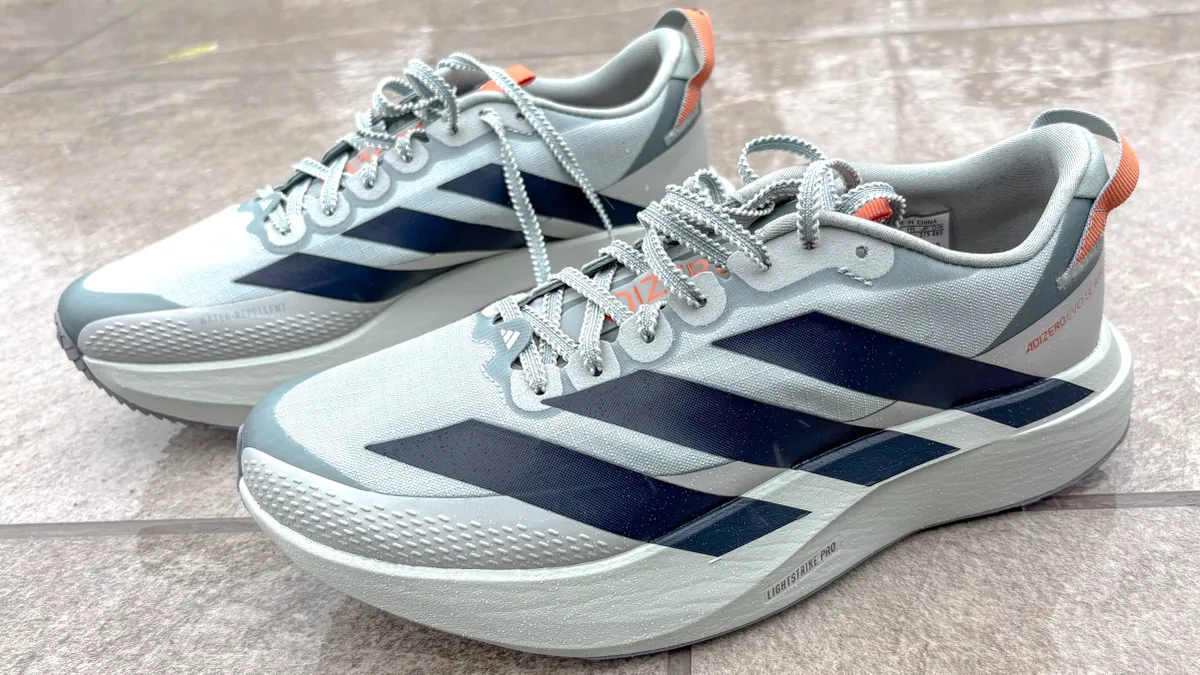
There were two aspects of the Evo SL ATR I was interested in testing on the run. One was how well its winterized elements worked in terms of grip and water repellency, and the second was whether it could match the excellent performance of the standard Evo SL, given these changes.
It impressed me on both fronts. The outsole has gripped reliably well on wet pavements, and I’ve even taken the shoe onto some light trails and gravel paths without worrying about its traction. The upper also fended off light showers and cleans up easily.

The ride is not quite as springy and fast as the standard Evo SL, with the thicker outsole giving the Evo SL ATR a firmer feel, but it’s still a bouncy shoe and a versatile one. It’s comfortable at easy paces, but I also enjoyed going through the gears to tempo pace in the shoe.
I also found that it felt a little more stable than the standard Evo SL, and when cruising through long runs in the Evo SL ATR, it felt supportive and comfortable.
The combination of comfort and speed, along with the extra grip from the outsole, makes it a shoe you can use for any kind of run on most terrains.
It’s not a full trail shoe, and doesn’t grip well in the mud or offer enough protection on rocky trails, but the Evo SL ATR is great for easy or fast runs on winter roads and light trails.
Should you buy the Adidas Adizero Evo SL ATR?

You might well be happy to run through the winter in your standard sneaker, and many road shoes offer great grip without needing a special winterized model — the Puma Velocity Nitro 4 springs to mind here as a shoe that grips well on wet roads.
However, if you love the standard Evo SL and want a version that handles winter running better, the Evo SL ATR lives up to its billing. It’s a fun and versatile daily trainer that gives more peace of mind when you’re heading out onto slippery sidewalks for your run.
I haven't come across a better winterized road running shoe myself, but if you need a true all-terrain or road-to-trail shoe, I’d look at the Hoka Challenger 8. It has a more substantial outsole than the Evo SL ATR, so it can handle trickier trails, while still being comfortable on the road.

Follow Tom's Guide on Google News and add us as a preferred source to get our up-to-date news, analysis, and reviews in your feeds.