




There’s a lot to consider when it comes to choosing the best VPN for you.
The first aspects most users will weigh up are price, speed performance, and unblocking capabilities.
Given that VPNs were originally designed as an online security tool, privacy should be pretty high up on that list, too, and where a VPN is legally based can have implications for exactly how private a company can be given it must abide by the jurisdiction it exists within.
Switzerland has long had a reputation of being a data haven with strong privacy protections in place and an infrastructure that prides itself on the confidentiality of all communications. It's unsurprising, then, that Swiss-based VPNs use this as a shiny gold star throughout their marketing.
But does a Swiss jurisdiction guarantee it's the most suitable and secure VPN provider for you? Let's weigh it up...

Switzerland has strong privacy laws
Under the country's Federal Act on Data Protection, personal data is protected in Switzerland. And other constitutional protections are in place to safeguard confidential, private correspondence via post or telecommunications.
This legislation, alongside its reputation for financial privacy, contributes to Switzerland's reputation of being a privacy-conscious country that prioritizes both the freedom and security of those living there.
It's important to note, though, that this doesn't mean that Swiss-based companies — including VPNs — are immune from legal requests and surveillance in specific circumstances, including serious criminal activity and where national security is at risk.
Switzerland isn't in the Five Eyes, Nine Eyes, 14 Eyes alliances
Another buzzword (or words) in the world of online privacy is the Five Eyes, Nine Eyes, and 14 Eyes alliance. These are often regarded as another feather in Switzerland's privacy cap, namely because the country isn't part of any of them.
Originating after the second world war, five English-speaking countries initially formed the alliance (the U.S., Canada, U.K, Australia, and New Zealand). This became known as the Five Eyes.

Other countries subsequently got in on the act, with the likes of Denmark, France, the Netherlands, Norway, Belgium, Germany, Italy, Spain, and Sweden all making agreements similar agreements. Within these alliances, the countries established agreements to share signal intelligence, encompassing cybersecurity, counterterrorism, counterintelligence, and defense research.
However, as Swiss-based online security giant Proton points out: "This isn’t to say that the Swiss intelligence agency never cooperates with international organizations. However, the Club de Berne intelligence-sharing forum that Switzerland is part of has no binding obligations and plays a purely advisory role."
While a Swiss-based VPN isn't exempt from providing data under certain scenarios, then, many privacy conscious users will find it appealing that their provider is in a jurisdiction that isn't a part of an alliance that could potentially share surveillance data.
Swiss laws aren't synonymous with complete anonymity
Switzerland's privacy laws protect personal data including names, addresses, as well as sensitive information like religion, genetic data, and criminal records.
However, there are instances where any company, Swiss or otherwise, can be requested to hand over information to authorities.
Should a VPN be asked to hand over any data, it can only do so with the data it actually holds. When it comes to the privacy credentials of a VPN, then, the jurisdiction it resides in isn't the most important thing to look out for.
Fundamentally, you want a VPN that has a no-logs policy that details the information of yours it does and doesn't store, with independent audits and transparency reports to support its claims. You'll also want to deep dive into its data-retention practices to understand exactly what information it does keep and for how long.
The bottom line: the most private VPNs can't hand over data it doesn't have, but being a Swiss-based VPN doesn't automatically mean it doesn't retain your data.
Which VPNs are based in Switzerland?
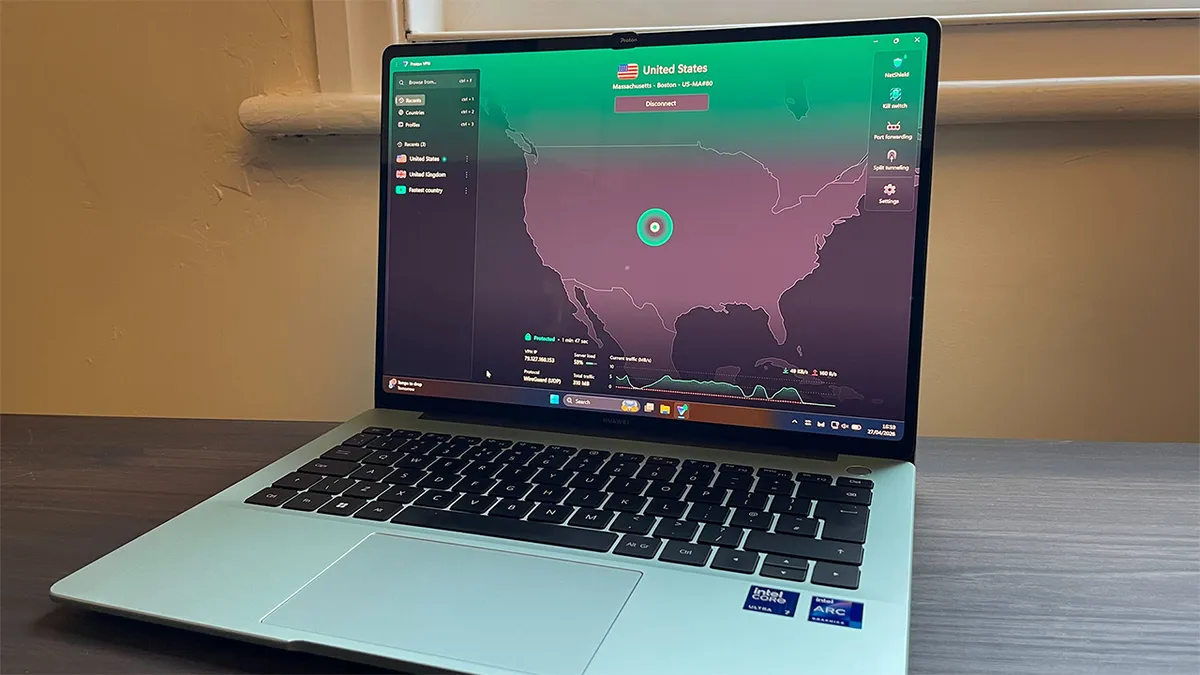
Many VPNs have servers operating in Switzerland, but which providers are actually based there?
Proton VPN is one such company that fits under the latter, stating: "We are based in Switzerland, allowing us to pass the benefits of Swiss data protection on to you."
PrivadoVPN was previously based in Switzerland, though legally moved to Iceland in early 2026.
What to look for in a Swiss VPN — or any VPN, for that matter
Fundamentally, a Swiss-based VPN doesn't guarantee it best VPN status. More goes into the most secure VPNs than simply where they're based.
In other words, being under Swiss jurisdiction doesn't a secure VPN make. You need to ensure it ticks other boxes for better peace of mind when it comes to your privacy.
You should pay close attention to:
- A transparent logs policy: Rather than settling for the "no logs" stamp, a good logging policy will details exactly what the VPN does and doesn't log, and how long it stores any information it does retain. You want one that doesn't store data that can identify you or your online activity.
- Independent audits: Does your VPN put its money where its mouth is? It's all well and good saying you don't log data, but you should check your VPN has been independently audited to prove the validity of such claims.
- Transparency reports: In additional to a no-logs policy, it's worth looking to see if a VPN publishes transparency reports. These are reports of real life instances in which the company has been requested to share data and how it's handled such requests.
- Security features: It seems obvious, but you want a VPN that actually offers a decent set of security features and configurable settings to meet your needs. From industry standard encryption to kill switches and split tunnelling, as well as a range of protocols for different levels of security and performance, including WireGuard, OpenVPN, and IKEv2/IPsec.

Security is obviously a huge priority where most VPN users are concerned. But there are other things you'll want your VPN to be able to do, and do it well.
- Unblocking: From streaming services to social networks and news websites, where blocks are in place whether due to censorship or geo-restrictions, you want a VPN that is actually able to unlock the whole of the web to you. Not all VPNs are made equal, so ensure the one you choose is able to circumvent such blocks.
- Speed performance: When you're connecting to a server, especially those not geographically local to you, your connection could become slower than your usual Wi-Fi connection. You want a VPN that promises optimal performance — start with our list of the fastest VPNs.
Do you need a Swiss-based VPN?
For the particularly privacy conscious and anyone looking to use a VPN for notably sensitive tasks, a Swiss-based VPN will be an appealing choice for its current legal stance on data privacy and privacy in general.
However, its favorable jurisdiction isn't reason enough alone to be considered the best for privacy. Your VPN must combine this with minimal logging, which has been independently verified, as well as strong technical security features.
We test and review VPN services in the context of legal recreational uses. For example: 1. Accessing a service from another country (subject to the terms and conditions of that service). 2. Protecting your online security and strengthening your online privacy when abroad. We do not support or condone the illegal or malicious use of VPN services. Consuming pirated content that is paid-for is neither endorsed nor approved by Future Publishing.

