I’ve been running for over a decade and I’ve tried all kinds of different equipment, nutrition and training routines to help improve my performance. The truth is, we’re lucky to be living in an age where boundaries are being pushed on every front.
The best carbon plate running shoes, combined with high-carb strategies based on advanced gels, have both been instrumental in improving the performance of elites and amateurs alike; if you follow pros across track, road and trail events, you might also have clocked some distinctive running shorts, too.
Rheon Labs tech has been used in shorts made by Adidas, Soar and now Kiprun to boost the benefits that can be obtained from compression, with eye-catching results from athletes using the tech, including Australian sprinter Gout Gout breaking Usain Bolt’s U20 world record for 200m in April this year.
I’ve tested Rheon tech in Soar and Kiprun shorts and tights, including running my fastest marathon, and there’s more on my experience below, but first, here’s the low-down on the tech from James Willmott, product developer at Rheon Labs.
What is Rheon?

Rheon is a strain-rate-sensitive material, which means it’s soft when it’s not needed but stiffens when required. According to Willmott, it’s a bit like custard.
“When you put your finger slowly into custard, it sinks in, but if you impact it very hard, then it stiffens up,” says Willmott.
“The other example is wet sand. If you were to just stand still, you'd sink, but if you run, then you can run along the surface of the wet sand.”
The material was developed by Rheon Labs founder Dr. Dan Plant, who initially looked at using it in protective equipment.
In running shorts, Rheon is used as a film and applied as a pattern, and it stiffens when more impact is put through the muscles covered by the material, such as when your foot lands.
What are the benefits of Rheon tech for running?

Shorts with Rheon tech have been used by elites across track, trail and road events, including Adidas’ elite marathoners and sprinter Gout Gout.
“The material itself essentially controls muscle movement,” says Willmott. “When you look at a sprinter running head-on straight at you, you see their muscles wobbling from side to side. That’s wasted energy, so Rheon helps control that and limit the muscle acceleration.
“Based on those controlling and limiting the muscle vibrations, you get benefits like less fatigue, less muscle damage, and more proprioception — the ability to feel how your muscles are moving.”
Boosting the benefits of compression

These benefits are similar to those gained from wearing compression garments, something I’ve done for many years as a fan of half tights.
Rheon takes those benefits to another level by offering a higher level of compression that would be comfortable to wear in a material that's always stiff.
“To make compression garments that control the muscles even more, you have to just make them tighter and tighter and tighter, so they become more and more uncomfortable to wear,” says Willmott. “You’re trying to squeeze into something which is effectively two sizes too small.
“The benefit of the Rheon material is that at rest, it's not that stiff. You're not adding much compression to a garment. If you just were to slip it on and stand in it, it shouldn't be unbearable to stand in.
“Then precisely when you need the support; when you're engaging the material and your muscles are moving from side to side, that's when it stiffens up and gives you the support.”
The level of muscle control Rheon tech offers has been measured using an accelerometer and it offers roughly 39% more than wearing regular shorts without compression and over 20% more than using compression shorts without Rheon.
What’s it like to run in Rheon shorts?

I’ve tested the Soar Rheon Trail Race Shorts, which come in at a cool $340, and the new Kiprun Rheon Trail Run 900 half tights, which are £39 (around $52).
Both are high-storage half tights, which makes them ideal for long runs and races as you can carry the gels and drinks you need in the pockets around the waist.
I used the Soar shorts when running my fastest marathon at 2:24 for the Loch Ness Marathon, a hilly course with a lot of downhill in the first half. It’s a fast course, if you can manage that downhill without your quads getting wrecked, and I feel like the shorts helped on that front. I also ran my half marathon PR wearing the shorts.
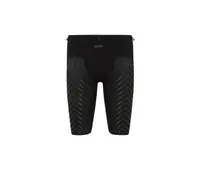
Recently I’ve been using the more affordable Kiprun shorts regularly in training, and while it’s a hard benefit to quantify, they do give me a bit more confidence when maintaining hard efforts, and I like to use them for the first workout of double run days, hopefully keeping my legs fresher for the second session.
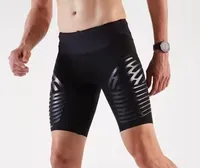
I also used Kiprun’s Rheon tights for a lot of trail running last winter and again felt they benefitted me by limiting the impact during downhills — my DOMS wasn’t so bad the next day.
The shorts aren’t going to be a shortcut to improved performance, but with the price of half tights that use the tech coming down, I do think they’re worth a try for runners seeking to maximize their performance in every way they can.

Follow Tom's Guide on Google News and add us as a preferred source to get our up-to-date news, analysis, and reviews in your feeds.
More from Tom's Guide
- Forget back pain, this low-impact ab workout builds strong abs in just 3 moves
- I’m a weightlifting coach — 5 ‘old-school’ exercises that still build functional strength and muscle all over
- No squats! I just tried this 8-minute chair workout, and it’s perfect for seniors, beginners, and anyone looking to build strength without impact