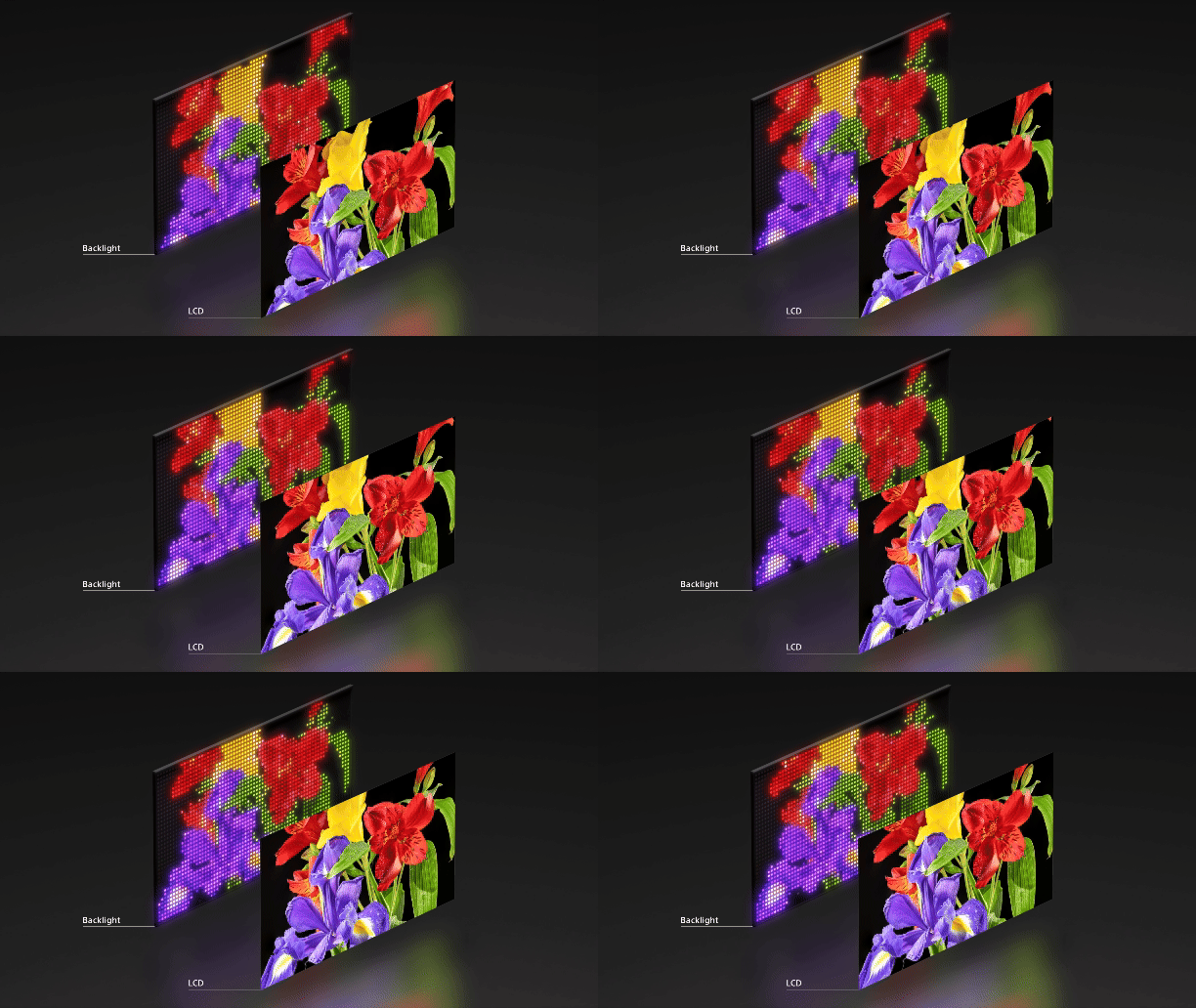
Although Sony has yet to reveal its TV lineup for 2025, the manufacturer is already giving an official glimpse at what to expect in the 2026 product roadmap: RGB Mini-LED.
Joining the likes of Hisense, Sony is betting on colored backlighting being the next evolution of Mini-LED technology. But unlike the Hisense TriChroma LED TV we got to see at CES 2025 earlier this year, Sony is not yet previewing RGB Mini-LED prototypes to the public.
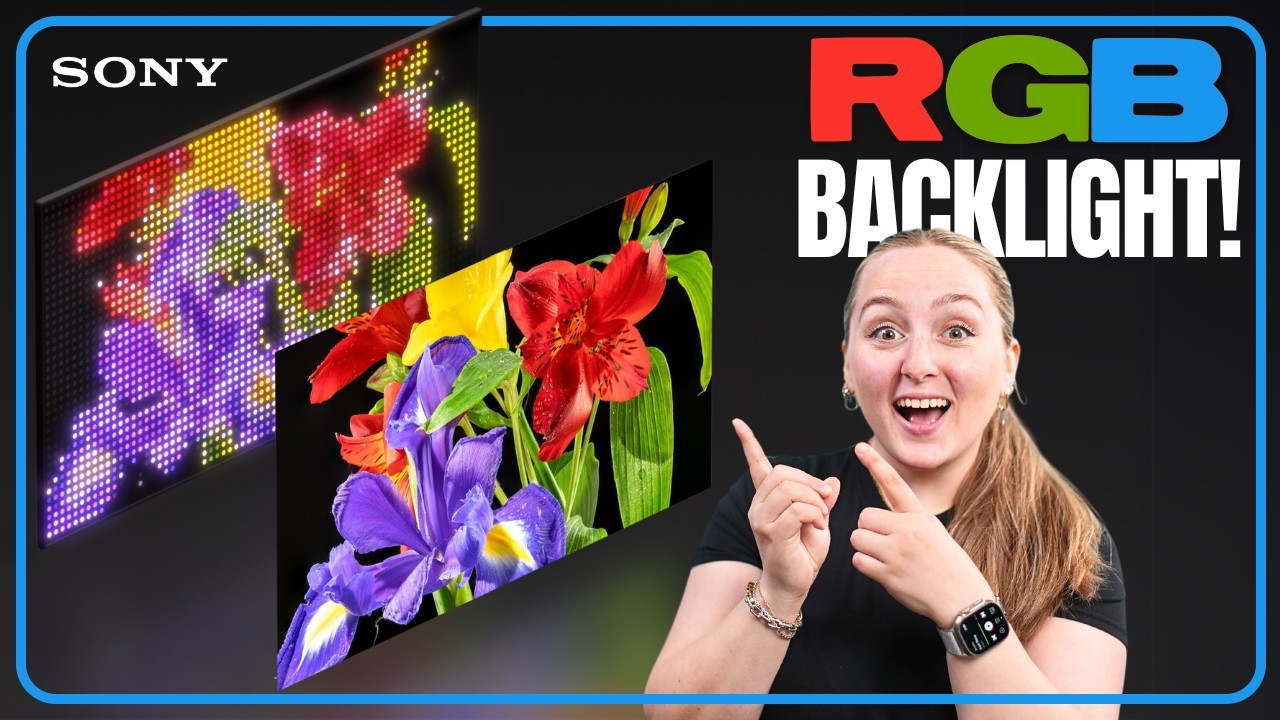
That said, I was one of a handful of AV journalists to receive an early look ahead of the announcement.
Whereas traditional QLED displays rely on a white LED backlight that passes through a quantum dot sheet to produce color, an RGB Mini-LED system takes a different approach — each pixel doesn’t just get brightness, it gets color directly from the backlight itself.
Instead of relying on a single white light source, a backlight using this technology leverages red, green, and blue LEDs within to control colors independently across all the dimming zones. In a perfect world where the LEDs are all controlled properly, this would result in a number of viewing benefits. Think: sharper color peaks, limited blooming, purer reds, and dramatically improved color accuracy and volume.
Having seen both the RGB Mini-LED backlight prototype and OLED side-by-side, I witnessed in real-time how the RGB version keeps colors rich and saturated even in darker areas.
When it comes to color volume specifically, Sony says that the color volume of its RGB Mini-LED backlight prototype as it currently exists is four times larger than that of the Sony Bravia A95L QD-OLED (which is considered by many to be the best OLED TV on the market).
Having seen both the RGB Mini-LED backlight prototype and OLED side-by-side, I witnessed in real-time how the RGB version keeps colors rich and saturated even in darker areas. It also maintained detail in shadows where traditional displays tend to lose it.
Sony even set it up so I could see the prototype switch between using white vs. RGB backlighting and the difference was significant.
The demonstration was especially effective when it came to off-angle viewing and limiting color distortion, which are things that are typically considered benefits of OLED vs. Mini-LED.
But one of the biggest advantages of RGB Mini-LED over OLED? There are no TV screen size limitations. Because this technology isn’t constrained by organic materials, it can scale up to massive displays — more than 100 inches — with no loss in quality. That is, if it's controlled properly.
Sony is claiming that the precision of this backlight is next-level. The prototype I saw has 66-bit backlight control, which is a massive leap compared to the 22-bit control on Sony’s current Bravia 9 Mini-LED TV, which is one of the best TVs on the market overall.
Sony RGB Mini-LED TVs: What to expect
I wasn't allowed to take photos of the demonstration — I would've included them in this article already if that were the case — but Sony did let me capture a separate, miniature version of a RGB Mini-LED panel displaying my initials. It's not as effective as watching such a backlight translating video footage, but at least you can see a little bit of those colored LEDs:

It wouldn't be fair to call what I saw a concept. Sony clearly has been working on this for many years, and I expect we’ll see more to come in 2026. People, maybe more specifically tv enthusiasts, are tracking RGB Mini-LED as one of the next big innovations, so there’s a lot at stake for which manufacturer manages to do it best.
Bottom line, Sony’s RGB Mini-LED isn’t just another incremental upgrade. It’s a completely new way of handling backlight technology that could finally bring OLED-level contrast, viewing angles and color accuracy to massive screens.
More from Tom's Guide