It’s kind of hard to believe that the Google Pixel 11 series is launching. Yes, it’s been 10 years since the introduction of the first Pixel phone, which was the first truly “made by Google” device. (Yes, there were Nexus phones before that, but that was through partners like HTC.)
The original Google Pixel had a 5-inch OLED display, 4GB of RAM and an 8MP camera running Android 7.1 Nougat. But it wasn’t about the specs. It was about making a device that was a differentiated flagship that could go toe-to-toe with the iPhone 7 and Galaxy S7. A true Apple rival that had Google-made hardware and software.
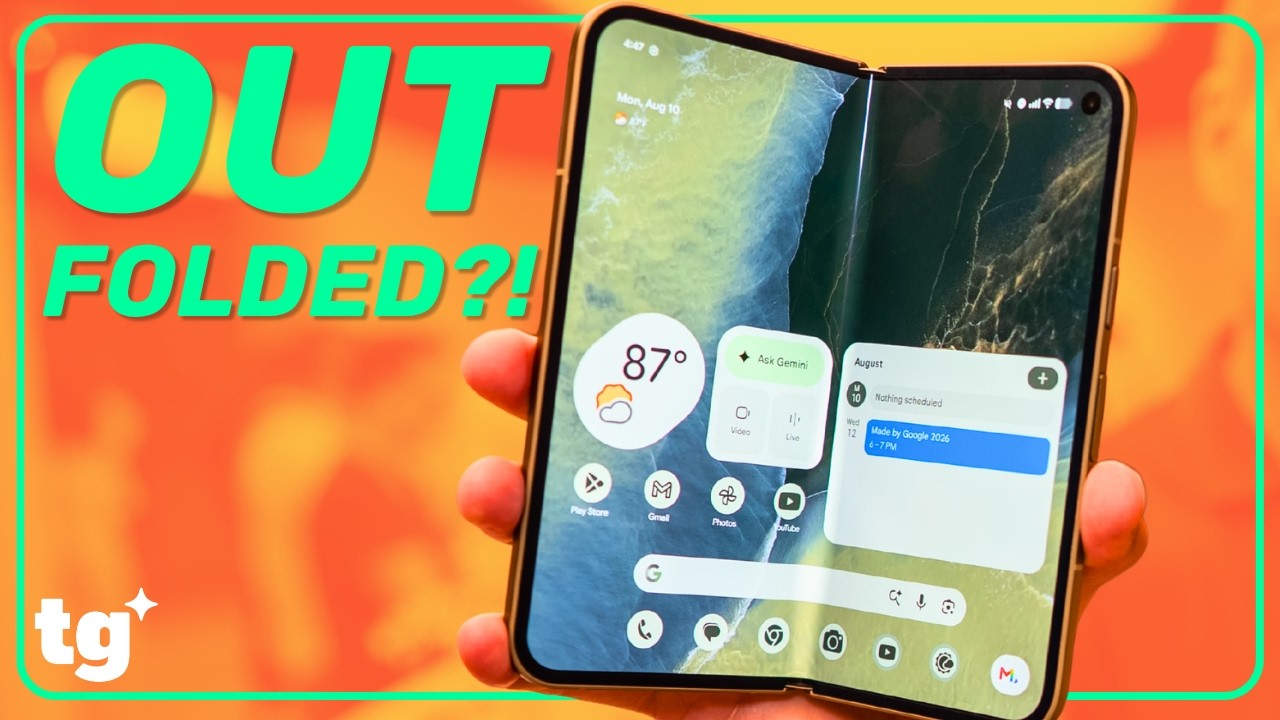
To do that, Google leaned heavily into computational photography before anyone else, elevating image quality via sophisticated processing as opposed to just hardware. And the first Pixel also paved the way for AI as a hallmark feature in phones, with Google Assistant being built directly into the OS.
But now that we’re a decade in, what does Google have to show for its efforts? A fairly low No. 10 in global market share, according to IDC. And with the Apple-Samsung duopoly still going strong in the U.S. and the likes of Xiaomi, Oppo and Vivo dominating in China, does it still make sense for the Pixel to exist?

With the Pixel 11, Pixel 11 Pro and Pixel 11 Pro Fold about to go on sale, I asked three of the smartest mobile analysts why Google is still making phones, and what the company can do to stand out.
Google is No. 4 in the US, so what’s the problem?

On the plus side, Google’s phone sales have been growing. In fact, according to IDC’s Nabile Popal, Google’s worldwide share has grown tenfold from 2016 to 2025. And it entered the top 10 globally for the first time in 2023. And by the end of 2025, its global annual shipments had grown 8x since a decade ago.
It’s even rosier if you look at just the US. Google’s share in the US grew 4x to 4.1% in 2025, from just 1% share in 2020.
Meanwhile, Google is a fairly solid No. 3 in the UK with 7.5% share and an even higher 11% in Japan, where it’s also No. 3.
| Row 0 - Cell 0 | USA |
Japan |
UK |
Brand Rank |
#4 |
#3 |
#3 |
Shipment Share |
4.4% |
11% |
7.5% |
"Pixels are meant to showcase Android software capabilities rather than completely dethrone partner hardware ecosystems."
— Nabile Popal, IDC
The problem is that Google simply isn’t as aggressive as other phone makers when it comes to distribution.
"Google restricts its official hardware sales to roughly 22 countries,” said Popal. “In comparison, industry leaders like Apple and Samsung distribute across well over 120 global territories, mathematically capping Google's volume potential."
That restricted distribution likely isn’t about a lack of resources. We’re talking about a parent company with a market valuation of approximately $4.3 trillion. It’s much more likely a deliberate choice that’s more political in nature. After all, Google’s Android software powers Samsung, Xiaomi and all of the other biggest brands.
"Pixels are meant to showcase Android software capabilities rather than completely dethrone partner hardware ecosystems,” Popal said. “They want to showcase their abilities without alienating their top partners."
Why Pixels phones still exist: Winning the AI war

After Google acquired Motorola Mobility in 2011, speculation grew that Google might favor its own hardware division over its partners. And rumors started to swirl for a time that Samsung might pivot from Android to its own Tizen as the OS of choice.
But while Samsung did show off a prototype Galaxy S4 running Tizen in 2014, it ultimately shelved any plans for ditching Android on phones and pivoted towards using the software on TVs.
So if that threat has passed, why is there still a need for Pixel phones? The short answer: AI.
“Google needs its devices division to act as a Gemini-first counterweight to Apple,” said Avi Greengart, founder and lead analyst for Techsponential. “Building your own hardware ensures that your OS remains in sync with component and form factor trends, and allows Google to release features to market on its timetable, not that of its partners.”
Even before ChatGPT was a household name, Google started to pioneer key AI features that would find their way to other Android phones (and in some cases copied by the iPhone). For example, the Pixel 6 in 2021 introduced Magic Eraser for removing unwanted objects from your phones. This would not have been possible without Google’s own Tensor chip.

The Pixel 7 gave us Photo Unblur and Direct My Call for navigating byzantine phone menus, and the Pixel 9 gave us Gemini Live for the first time for real-time continuous voice interaction.
In short, Google needs to demonstrate that it continues to be at the forefront of AI on phones, especially when its partners have other options. For example, the latest Galaxy S26 series and Fold 8 series supports both Gemini and Perplexity.
“I think Google has found the right formula from a hardware perspective and the value of Gemini is definitely strengthening the offering,” said Carolina Milanesi, president and principal analyst for Creative Strategies. “It is also about owning the core piece of the product portfolio that consumers will own going forward.”
How the Pixel 11 can stand out
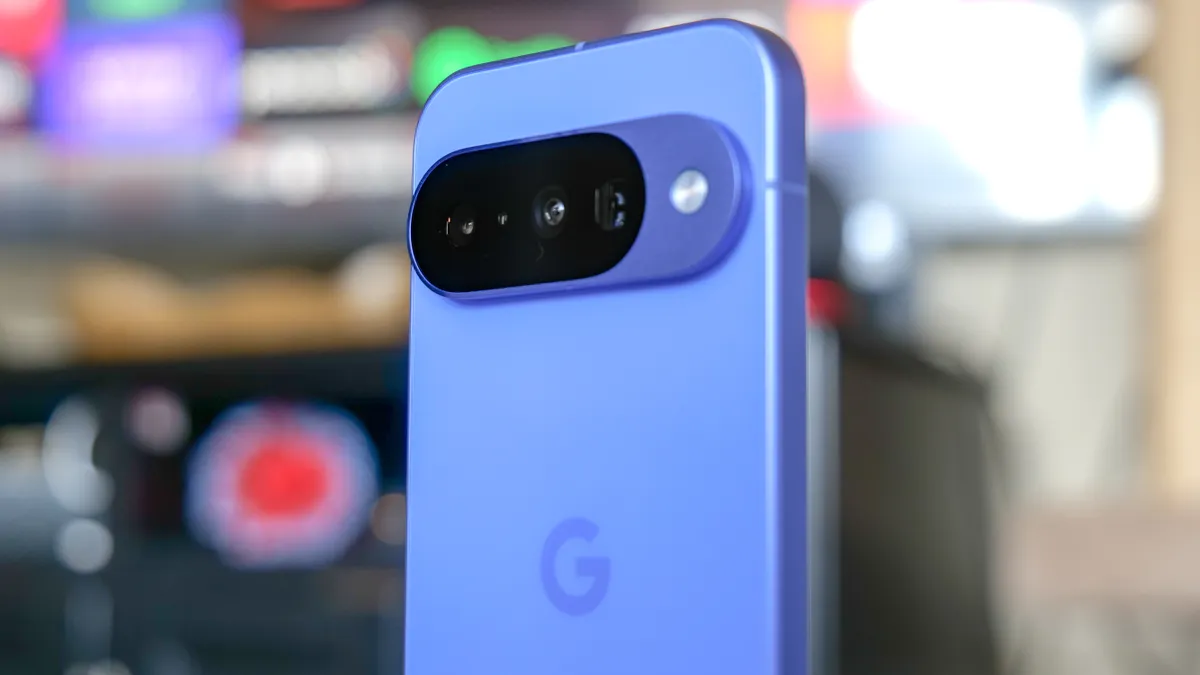
With the Made by Google event coming up on August 12th, Google is launching four new Pixel phones: the Pixel 11, Pixel 11 Pro, Pixel 11 Pro XL and Pixel 11 Pro Fold.
That’s quite a robust lineup for a company that’s still seen as a fairly small player. But Google doesn’t need to beat Apple and Samsung to succeed.
“Pixel gives Google the opportunity to show its full vision for what an AI-native smartphone experience can be,” Greengart said.
The Pixel 11 could very well be an AI powerhouse. It’s powered by a 2nm Tensor G6 chip that will speed up Night Sight processing for low-light photos and other on-device AI tasks. And Google is showing off Gemini Proactive Assistance for proactively surfacing useful information, building on the potential of the previous Magic Cue feature.
"Pixel gives Google the opportunity to show its full vision for what an AI-native smartphone experience can be."
— Avi Greengart, Techsponential
In addition, the Pixel 11 Pro features a new HiLight LED on the back of the phone that lights up in different color patterns when you’re interacting with Gemini when the phone is face down. It will also serve as an ambient call and notification indicator. But I fear this may come off as gimmicky, similar to the temperature sensor on previous Pixels.
Is Google pushing the envelope enough?

While it’s clear that the Pixel 11 series will offer meaningful upgrades, the hardware hasn't evolved that much. And if the rumors prove true, Google is going to be missing the boat on a widescreen, passport-style foldable phone like the Galaxy Z Fold 8 and iPhone Ultra.
Google’s first foldable did indeed have a wide display, but it abandoned that form factor.
“This is going to be the hardest sell this year because of the attention Samsung has gotten with the Z Fold 8 and Apple will have,” Milanesi said. “That market is still small though and even more so for Google, so as long as they go to that form factor next year they will be ok.”
Google’s biggest problem is that it seems stuck between trying to trumpet the idealized version of a pure AI-first Android phone and not trying to irk its partners. After 10 years, Pixel has not quite broken through with the masses, but that could very well be a calculated decision.
“Google has not marketed itself strongly enough to become a household name in phones like Apple or Samsung,” Popal said. “Its industry leading features are only known to niche tech savvy consumers, and if it is to succeed with the Pixel 11 it has to pump up its overall marketing and channel presence.”
The question is whether Google really wants to.