



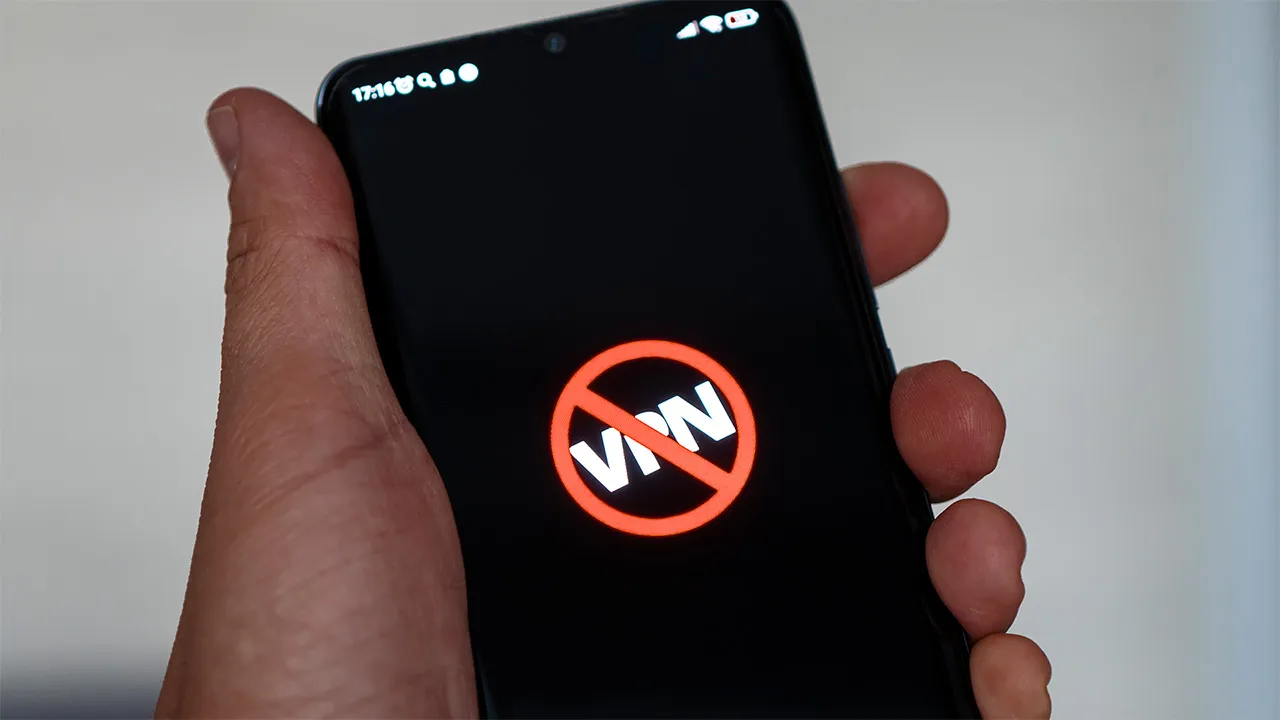
AdGuard's TrustTunnel iOS client has been removed from the Russian App Store following a takedown request by Roskomnadzor, Russia's internet regulator.
Apple notified AdGuard on April 28, 2026, stating the app "includes content that is illegal in Russia" and citing Article 15.1 of the country's law on information technologies, which empowers authorities to restrict access to prohibited services.
The best VPNs have been increasingly under fire in Russia, with devices being scanned and charges on international data traffic introduced.
TrustTunnel is an open-source VPN protocol released by AdGuard in January 2026. Engineered to mimic regular HTTPS traffic and resist deep-packet inspection (DPI), it powers AdGuard VPN and has been made freely available for other developers to build upon.
The removal only affects the Russian App Store. The app remains available globally, and Android users in Russia can still download it via Google Play.
What happened?

According to AdGuard, the takedown request cited Russia's law "On Information, Information Technologies, and Information Protection" – specifically Article 15.1. This regulates access to prohibited content and empowers Roskomnadzor to order the removal of non-compliant services.
Apple's notice also reminded AdGuard that developers are responsible for ensuring their apps comply with local laws in every region where they're distributed.
AdGuard has pushed back on the reasoning, arguing that the TrustTunnel client is a neutral tool that doesn't inherently bypass restrictions.
"On its own, without a server, it is effectively useless," AdGuard said. "It does not bypass restrictions by itself and does not contain any prohibited content. It is a neutral tool that depends entirely on how it is configured."
AdGuard also described how the same client is used across a range of legitimate scenarios, including corporate VPN infrastructure and private secure connections.
Why is Russia removing VPN apps?

The removal is not an isolated incident. In July 2024, dozens of VPN apps were pulled from the Russian App Store in a single wave, including AdGuard VPN itself.
Since then, Roskomnadzor has intensified its campaign, particularly following a 2024 law that effectively criminalises the sharing of information about bypassing internet restrictions. TrustTunnel's code remains publicly available on GitHub, but that hasn't shielded it from enforcement.
The scope of enforcement has since widened. Russian authorities have shifted focus beyond mainstream VPN services to more flexible tools, including custom VPN clients and proxy apps that allow users to connect to private servers or configure their own networks. TrustTunnel, as a lightweight open-source client, has now been caught in that expanding net.
Devices are being scanned, searching for the presence of VPN apps. New rules are reportedly being introduced which will see charges imposed on international internet traffic – essentially a charge on VPN traffic. Despite this, VPNs are still legal in Russia, although they are heavily restricted.
Apple, meanwhile, has continued to comply with Russian government requests without public resistance. The pattern is well established, and AdGuard's experience suggests that even tools with no built-in circumvention capabilities aren't exempt from enforcement action.
Are you affected?

If you're an existing TrustTunnel user in Russia, your app will continue to work for now, but you'll no longer receive updates through the App Store, which may affect stability and compatibility over time.
For new users, or existing users who need to update, you'll need to switch to a non-Russian App Store account. Here's how:
- Open the App Store and tap your profile icon
- Scroll down and tap your Apple ID
- Select Country/Region and follow the prompts to switch to a non-Russian region
- Once switched, search for and download TrustTunnel as normal
Alternatively, the app can be built and installed manually via Apple's developer tools.
Android users in Russia are unaffected and can download the app from Google Play without any issues.
We test and review VPN services in the context of legal recreational uses. For example: 1. Accessing a service from another country (subject to the terms and conditions of that service). 2. Protecting your online security and strengthening your online privacy when abroad. We do not support or condone the illegal or malicious use of VPN services. Consuming pirated content that is paid-for is neither endorsed nor approved by Future Publishing.
