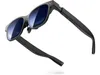
As Meta makes its push for mixed-reality products, it's now introduced its next-gen AR glasses for research — and they come with a new set of features like heart rate monitoring and a contact microphone to distinguish people's voices from your own.
In a blog post, Meta announced Aria Gen 2, a new pair of augmented reality glasses to enable researchers to explore machine perception and AI systems through a human perspective.
Following the first-gen Aria AR glasses, which debuted in 2020, the new device comes with a suite of upgrades and new features.
This includes an RGB camera, eye tracking cameras, spatial microphones and a barometer. There's hand tracking, too, along with a 6DOF SLAM camera that can track positions and orientation in a 3D space.


The Aria Gen 2 come with two new sensors embdded in the nosepad of the glasses: inluding a PPG sensor for measuring heart rate and a contact microphone to "distinguish the wearer’s voice from that of bystanders."
The glasses are being put to use to assist blind and low-vision individuals with indoor navigation. In a video demo, a user walking around a store asks 'help me pick up some apples. The glasses then direct the user to where the apples are placed, using sounds to navigate their surroundings.
The glasses weigh 75 grams (2.6 ounces) and come with improved battery life, lasting around 6 to 8 hours. Plus, they come with open-ear force-canceling speakers for spatial audio features.
"They include a number of advances not found on any other device available today, and access to these breakthrough technologies will enable researchers to push the boundaries of what’s possible," Meta states in the post.
While the AR glasses are aimed at researchers to create open-source tools in wide use across academia and industry, they are being put to use to assist blind and low-vision individuals with indoor navigation, too.
In a video demo, a user walking around a store asks "help me pick up some apples." The glasses then direct the user to where the apples are placed, using sounds to navigate their surroundings.
While these aren't aimed at consumers, they may offer a glimpse of what may be coming down the line, seeing as Meta's first "real" AR glasses are tipped to debut in 2027.
The future of AR glasses is looking up

With the ability to measure heart rate, map surroundings to navigate users around and eye and hand tracking, Meta's Aria Gen 2 may have just given us a glimpse of the features we can expect in AR glasses down the line.
We've already seen what Ray-Ban Meta’s AI updates can offer, including more natural conversations and being able to recall previous objects you've viewed in real life, but the Aria Gen 2 glasses deliver a look at more features that can be included in everyday eyewear.
A heart rate monitor can lead to health-focused features, and onboard spatial audio can be used to guide users to specific destinations (like finding a lost item). The hand and eye tracking can navigate a user interface right on the glasses — like a near-eye display module on the Halliday smart glasses.
Moreover, with battery life lasting up to 8 hours, the Aria Gen 2 show good signs for more consumer-ready AR glasses.
With Android XR set to arrive soon in Samsung's Project Moohan headset, we're already seeing advancements in wearable AR tech. Plus, the Xreal One AR Glasses have set a new standard for what smart glasses can do. However, if Meta implements what we've seen with its new Aria Gen 2 spectacles in upcoming products down the line, it shows how far AR glasses can go.
The Meta Aria Gen 2 are set to be available to academic researchers over the next few months. If you're looking for a pair for yourself, however, check out the best smart glasses to get right now.
More from Tom's Guide
- Meta Orion AR glasses hands-on: The first AR glasses I actually want to wear
- Help improve Tom's Guide — your chance to win a $250 Amazon gift card
- I just tried Ray-Ban Meta’s latest AI updates — my favorite smart glasses just got a whole lot smarter