If you've ever asked Siri AI a follow-up question only to have it seemingly forget what you were talking about, the problem wasn't necessarily that Siri couldn't hear you.
It was that the assistant was built for a very different era of AI.
That's according to Nikola Mrkšić, CEO and co-founder of conversational AI company PolyAI, who previously worked on the technology behind Siri. I asked him why Apple's assistant has historically struggled with the kind of natural, back-and-forth conversation that now feels routine with ChatGPT and Gemini.
His answer comes down to a fundamental difference in how the technology works.
"The old Siri worked off enumerated intents: every path a conversation could take had to be mapped out in advance," Mrkšić tells Tom's Guide. "The moment you deviated from the script, the system got stuck."
That explains a lot about the Siri we've spent the past decade talking to.
Old Siri was essentially following a script

When Siri was built, developers couldn't simply give an AI model a conversation and let it figure out what the user wanted. Instead, engineers had to anticipate what people might ask and build flows capable of handling those requests.
Setting an alarm was one flow. Playing music was another. Sending a text was another. The problem appeared when humans, well, behaved like humans.
Change your mind halfway through a request, refer back to something you said earlier or phrase a question in an unexpected way and suddenly the carefully constructed path could fall apart.
"It looked like the assistant had forgotten what it was doing, but really it was just cornered," Mrkšić said.
One particularly difficult problem was disambiguation. If you asked Siri to contact someone whose name sounded similar to another person in your contacts, engineers had to build systems capable of working out which person you meant. I actually ran into this myself when my daughter was born. Because the spelling of her name is different than the typical spelling and I was asking Siri to share pictures of her with family and friends, I actually had to put her name into my contacts at birth.
Mrkšić described the process as building an "ontology of a conversation": mapping the different directions an interaction might go and trying to make common tasks hold up within that structure.
Rather than engineers trying to predict every possible conversational path, an LLM like ChatGPT or Gemini can consider the conversation itself as context and determine how to respond.
That's why talking to Gemini Live or ChatGPT Voice can feel fundamentally different from talking to the Siri many of us grew accustomed to.
Why Siri couldn't simply be upgraded into ChatGPT

That raises an obvious question: couldn't Apple have simply upgraded the Siri it already had? Not really, according to Mrkšić.
"Not into something like ChatGPT," he said.
Part of the problem was technological. Before modern LLMs, the ability to have genuinely free-flowing conversations simply wasn't there.
But Mrkšić argues there was another limitation: risk.
"Siri never set out to be a ChatGPT-style assistant," he said. "Apple's leadership has always run a low risk appetite, so any Siri response that could be misread as offensive or wrong got treated as a real risk."
The safer option was to tightly define what Siri could do.
Ask it to set an alarm, play a song or add something to your calendar and Apple could reasonably predict what would happen. Give an AI far more freedom to interpret what someone means and suddenly its behavior becomes much harder to control.
That tension hasn't disappeared just because the models have improved.
AI has largely solved Siri's short-term memory problem
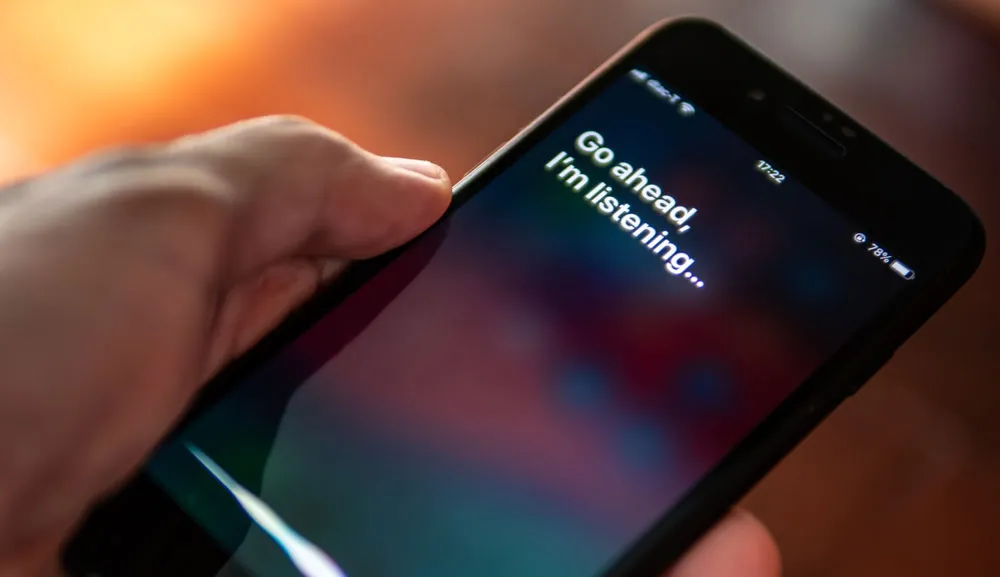
One of the most frustrating things about traditional voice assistants is how easily they lose the thread of a conversation.
Mrkšić says remembering what someone said earlier in the same conversation is "largely solved at the model level." Current models can process enormous amounts of context, giving them far more room than necessary to keep track of an ordinary conversation.
So, if an assistant suddenly appears to forget what you said, the model itself may not always be the problem.
Companies still place rules and structures around models to control what they can do. According to Mrkšić, those constraints can sometimes create the impression that an assistant has lost the conversation when it has actually run into the boundaries placed around it.
There's also a much harder kind of memory to solve: knowing you. An assistant that remembers what you said five minutes ago is useful. An assistant that understands the people in your life, your routines, your emails and the things you're working on could be far more useful.
And that's where Apple faces an interesting trade-off.
Apple's biggest Siri advantage could also be its biggest challenge

Apple potentially has something ChatGPT and other standalone AI apps don't automatically have: deep access to the operating system. Your iPhone contains messages, emails, photos, contacts and other personal information that could provide an AI assistant with the context it needs to understand what you're actually asking.
"In theory, yes," Mrkšić said when I asked whether that gives Siri an advantage. "OS-level access to email, messages, photos, whatever's on your screen, is exactly the context that makes an AI assistant useful, more than any app-based chatbot can get without additional connectors."
The catch is privacy and trust. Apple has spent years positioning privacy as one of the iPhone's defining features. Giving an AI assistant enough personal context to become genuinely useful therefore requires Apple to walk a much narrower line than simply building a chatbot that knows more about you.
Mrkšić argues that Apple's privacy approach has historically limited the amount of user data available to its systems compared with some competitors.
"Voice agents become more useful the more they know about you," he said.
That may ultimately be the real test for Siri: not whether Apple can build an intelligent model, but how much personal context it is willing to let that model use.
Even the way you say something matters

There's another reason talking is harder than typing: humans are messy speakers. We pause. We interrupt ourselves. We change our minds in the middle of sentences.
Imagine saying, "Make the appointment for 2 ... 3 PM."
A human listener can hear the pause and change in your voice and understand that you corrected yourself. A system that converts your speech into text before reasoning over it may only have the transcript to work with.
That can strip away information carried in your tone, timing and delivery. Newer audio-native AI models are designed to reason over audio directly rather than relying entirely on a transcript. Mrkšić points to PolyAI's own Dialog-RSN-1 as an example of that approach.
For an assistant like Siri, understanding those cues could eventually make conversations feel much less like issuing commands to a computer and much more like simply talking.
What Siri still needs to get right
The surprising part of Mrkšić's assessment is that the underlying AI may no longer be the hardest part.
The technology already exists for voice agents to hold long, natural conversations. PolyAI, for example, deploys conversational agents for businesses in industries including banking, hospitality and healthcare.
The bigger question for Apple is what it is willing to let Siri do.
"What's missing is Apple's willingness to loosen its constraints somewhat so that Siri can truly help you get things done," Mrkšić said.
The next generation of voice assistants won't be defined simply by whether they can answer a follow-up question or remember what you said three sentences ago. ChatGPT, Gemini and other modern AI systems have already changed expectations around that. The bigger leap comes when an assistant understands enough about you and has enough access to actually act on what you're saying.
Apple has an enormous advantage because Siri already lives on the devices where much of our digital lives happen. But taking advantage of that position means solving a problem that's as much about trust and product philosophy as it is about AI.
The technology that made the old Siri feel like it was constantly forgetting you is disappearing. Now Apple has to decide how much it wants the new Siri to remember.
Follow Tom's Guide on Google News and add us as a preferred source to get our up-to-date news, analysis, and reviews in your feeds. Subscribe to Tom's Guide on YouTube and follow us on TikTok.

More from Tom's Guide
- Claude Sonnet 5.5 just launched — here's why it's about to become your daily driver
- I asked ChatGPT, Gemini, Claude and Muse to give me new podcasts based on my favorites — these 7 picks got added to my queue for International Podcast Day
- 'Surveillance Tamagotchi': Tom's Guide readers weigh in on Meta's new Muse Charm