PlayStation is officially killing physical discs, and gamers aren’t happy. The company’s social media accounts can’t post anything without being slammed with negative comments, and even websites and influencers who are usually fans of PlayStation are taking them to task. Sony has yet to respond to any of this, which is likely making the situation worse. In short, this whole no-disc situation is a mess.
Sony says that digital now accounts for the vast majority of PlayStation game sales — hitting 85% in the most recent quarter — and it also nets a greater profit from digital purchases than physical, so it’s unlikely the company will reverse this controversial decision. However, if Sony wants to start (re)building trust with its fanbase, there are ways to make an all-digital future more palatable, namely by copying some of what has made Steam successful.
Steam has been a rousing success on PC for many years. Though Valve doesn’t offer physical games, it provides users with plenty of incentives to remain satisfied with their digital purchases and with the platform overall. I don’t expect Sony to completely copy Steam, but it can adopt similar policies if it ends disc production in January 2028.
Here are five practical, realistic adaptations Sony can take to make PSN more player-friendly.
More frequent (and enticing) sales
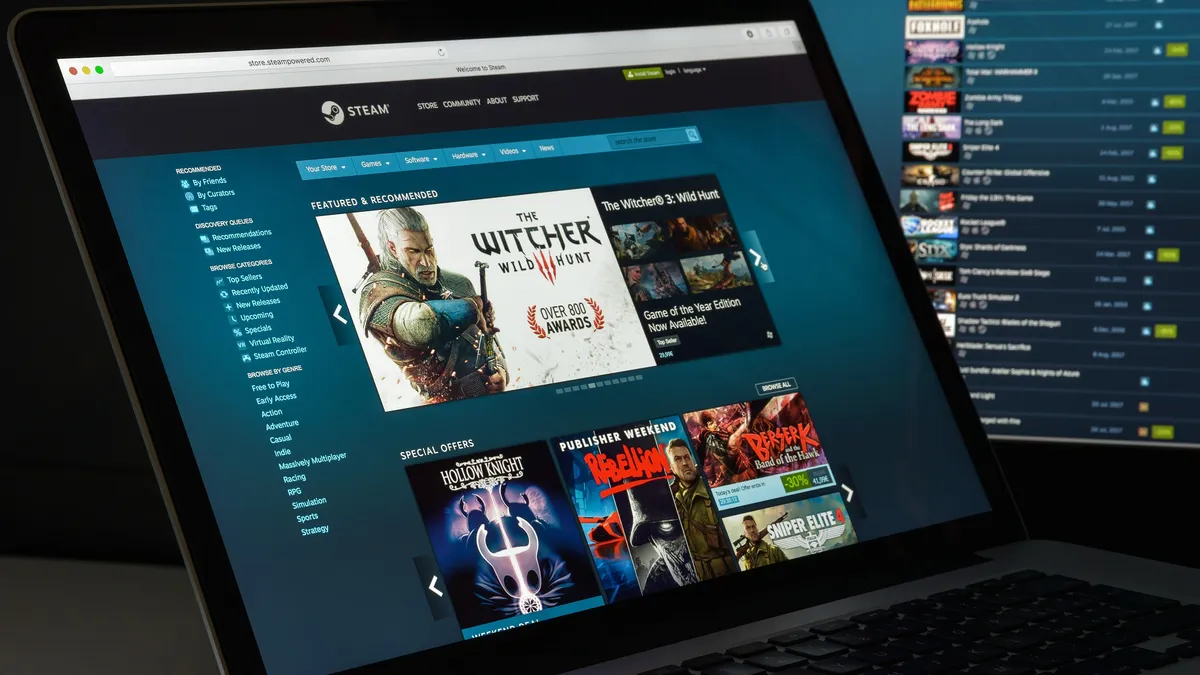
While PC gaming has higher upfront costs than consoles, it has become more affordable over time thanks to frequent Steam sales. Steam keeps its online store thriving with major seasonal sales and near-constant publisher promotions. Games also drop in price faster and more aggressively. This is why Steam users (like me) end up with libraries of hundreds of games. It’s hard to pass up a title when it’s just a few bucks!
The PlayStation Store has its own sales events, such as Days of Play, Black Friday, and other holiday sales, along with weekly deals. However, full-price windows for new games are longer, and we usually only see extreme deep discounts when a game is all but forgotten. I’ve taken advantage of PSN sales and snatched some good titles, but the sales and discounts still don’t match those of Steam.
In an all-digital world, Sony would have complete control over pricing. Using Steam-style volume-driven discounting on the back catalog (and even earlier on mid-tier titles) would encourage more impulse and library-building purchases, rather than people either waiting for huge discounts or skipping entirely.
A true “try before you fully commit” refund policy

Right now, Steam arguably has the best refund policy in gaming. So long as you play a game for less than two hours total, you have 14 days to receive a full refund. This is a fantastic way to avoid purchasing a game that doesn’t click for you. While not technically a game demo, it pretty much serves the same “try before you buy” ethos.
PlayStation also has a 14-day refund policy, but it only applies if you haven’t downloaded a game. Once you start downloading, you no longer qualify for a refund unless the file is corrupt or you make a strong case to customer support that you purchased a game in error. This is frustrating enough now, but it will feel even worse if you can’t refund a digital title priced at $70–$80.
A playtime-based refund window, similar to Steam’s, would go a long way toward increasing purchase confidence without requiring Sony to change its curated store model. It’s actually wild that Sony doesn’t already have a similar policy, but the company should try it now if it plans to go all-in on an all-digital console.
Stronger household/family sharing
Sharing games is one of the main reasons gamers love physical media. While sharing digital content isn’t the same as handing a copy to someone else, Steam has a digital sharing policy that could work well for Sony.
On Steam, up to six family members can share a unified game library. Multiple members can play different games at the same time (you need multiple owned copies of the same game for concurrent play).
PlayStation has sharing features, but they’re more limited.
Console Sharing lets you log in to your account on a friend’s PS5 so they can play your games. Share Play lets you share your screen with a friend online and virtually hand them your controller. Though both of these methods work as advertised, a person cannot simply play games from another account on their own console in a straightforward way.
Expanding sharing options on PlayStation so a household can more easily share a digital library (with reasonable restrictions against abuse) wouldn’t be as seamless as lending someone a physical game, but it would at least offer gamers something comparable.
Better discovery tools

Steam does a fantastic job with its wishlists, price-drop notifications, “players also like,” and other recommendations driven by player data. PlayStation has its own versions of these, but they could be updated to be more useful.
The store’s recent lowest-price-in-30-days indicator is a good step, but Sony can go further with smarter recommendations, clearer sale calendars, and stronger wishlist alerts. That last one really needs work — I feel like wishlist alerts are random at best, if I get them at all.
Improving discovery is an easy way to help players find and buy more games within Sony’s closed ecosystem. If you want people to buy digital games, you need to make it easier for them to find games they would actually like.
Clearer long-term library guarantees and library management

One of the biggest reasons Sony is facing so much heat right now is the lack of clear guarantees about long-term access to the games players buy. Without physical discs, players worry more about access, storage, and account longevity. This is something that Stop Killing Games founder Ross Scott detailed when we interviewed him about Sony's decision to stop manufacturing discs.
Sony can learn from Steam’s emphasis on transparent licensing, robust cloud saves, and better tools for managing large digital libraries. Explicit, public commitments to offline play and long-term download availability would go a long way toward easing the anxiety surrounding digital-only ownership.
This is arguably the most important issue Sony has to address. People (rightly) want some form of ownership of the games they buy, especially when those games are digital. I’m not saying this will please everyone — some folks are certainly ride-or-die physical gamers — but clearer guarantees would ease much of the current anxiety.
Bottom line
I want to be clear that I am not dunking on Sony or PlayStation. The PS5 Pro is my primary gaming platform, after all. But as a PlayStation gamer since the early 2000s (thanks to the Gran Turismo 3 PS2 bundle!), I want to see the company do right by loyal customers like me.
PSN is not inherently broken. Sony already runs a polished, high-production store. However, things need to change when discs disappear. Adopting some of Steam’s more player-friendly policies would not only benefit gamers but also Sony, which would benefit from a more committed user base.
Sony will ultimately do what it believes is in its best interest. That said, prioritizing what customers want, genuinely listening, and addressing concerns would go a long way. Hopefully, Sony does right by its user base and makes an all-digital future on its consoles as acceptable as it is on Steam.

Follow Tom's Guide on Google News and add us as a preferred source to get our up-to-date news, analysis, and reviews in your feeds.
More from Tom's Guide