The biggest news at Computex is official, as Nvidia’s CEO Jensen Huang just announced RTX Spark Super Chip family — the company's first-ever all-in-one laptop silicon that takes on Intel, AMD, and Qualcomm in a big way with a GPU equivalent to an RTX 5070.
Set to release this fall, this is not your ordinary ARM chip. The RTX Spark is packed with CUDA cores, which is sure to make that integrated GPU one helluva gaming monster. Plus, Spark is set to change the way you interact with Windows PCs forever with an AI agentic twist. I will be testing the chip extensively during my time out here at Taipei, and talking to a couple of the engineers behind it.
But for now, I’ve taken a deep dive into the specs tables and found what could be a breakthrough moment similar to when Apple brought the M1 to the world back in 2020.
Nvidia RTX Spark Super Chip specs
Architecture |
TSMC’s 3nm process |
CPU |
Up to 20-core Grace CPU |
GPU |
Blackwell architecture with up to 6,144 CUDA cores |
Memory |
16GB-128GB Unified LPDDR5X with 300GB bandwidth |
I/O support |
USB4 and Thunderbolt |
Power |
Up to 80 watts TDP |
Nvidia RTX Super Chip devices

Nvidia is expecting a huge lineup of systems to launch with RTX spark — with plans to release over 30 laptop models and well over 10 desktop variations, targeting a range of price points.
But as of now, there are a whole lot of devices launching this fall with the RTX Spark Super Chip inside. On the laptop side, we have:
- Asus ProArt P14 and P16
- Dell SPX 16
- HP OmniBook
- Lenovo Yoga Pro 9
- Microsoft Surface Ultra
- MSI Prestige N16
These devices will be as thin as 14 millimeters, and as light as three pounds — a serious upgrade over the chunky Nvidia gaming laptops you're used to.
But they're not stopping at laptops. In an announcement that probably woke up Anthony Spadafora (our mini PCs king) from his nap, RTX Spark will be coming to small form-factor desktops that are "small enough to disappear on a desk."
These will be made by Dell, HP, Lenovo, Asus, MSI, Acer, and Gigabyte.
Explain it with pizza

This is partly inspired by the tasty ‘za I found while typing this, but also shoutout to Nvidia for specifically pointing out that I just “love to explain stuff with pizza.” You asked for it, and now you’re getting it!
In the laptop space, you’ve got various ways of serving pizza.
- The standard meal (an x86 SoC): This is like ordering a plain cheese pizza. It works perfectly fine for everyday eating, but if you want heavy flavor (think intense gaming or AI generation), it lacks all the necessary toppings. Don’t get me wrong, Intel and AMD have been adding some new garnish, but they’re still a little hampered by architectural limitations.
- The combo meal (x86 CPU + dedicated GPU): For that premium flavor, you have to order the standard pizza plus a massive side of premium toppings. Passing these ingredients back and forth across the table does the job, but it takes up way more space (think thicker gaming laptops) and requires a whole lot of power.
- The efficiency slice (Snapdragon X Elite): Qualcomm is already dealing in making efficient single-crust pizza using a similar recipe (Arm architecture). It’s great for saving power, but Nvidia's world-famous secret sauces (CUDA and RTX) can’t be matched.
So in this backdrop, I can only describe the RTX Spark Super chip as a “super pizza.” Instead of ordering a meal with lots of separate sides, this is the all-in-one slice baked onto a single, highly efficient crust. Half of the pizza is that custom CPU, and the other half is loaded with incredibly spicy, high-end toppings in that Blackwell GPU.
But the magic is in the cheese (the memory). Instead of dividing the cheese between the crust and toppings, Spark uses up to 128GB of “unified cheese” that the entire pizza shares instantly at blazing speeds (five times faster than standard PCIe Gen 5). And because it’s baked so efficiently, you can take this super pizza anywhere without it getting cold (all-day battery life).
…am I stretching this analogy? Absolutely. Do I regret it? No (hi Nvidia if you’re reading this).
Going agentic

With this increase in RTX Spark's brute force, Nvidia is working with Microsoft to shift personal computing on Windows from a passive tool to a proactive agent.
This is a one petaflop AI superchip... For context, some quick math I did while sitting in the keynote, the AMD Ryzen AI Max+ 395 can do around 60 Teraflops. This thing is built differently. To go back to the pizza analogy, not only can it make a mean slice, but it can probably feed it to you, too.
It can work across apps on your device — stringing together different tools like any user would to get the job done. For example, an artist can provide a sketch and a mood board, then use Photoshop not only to generate the art locally but also to turn it into a 3D image and animate it into a video. And this is all done without ever needing cloud compute.
Or if you’re a gamer, you can use G-assist to tweak critical settings like monitor optimization, or (if you’re streaming) tell it to operate your lights, mute the mic, and turn on your be right back scene in OBS.
Essentially, it can take complete control of your system — even the mouse and keyboard to navigate as a human user would. Keeping this all secure is Nvidia OpenShell, which brings enhanced security to ensure your model use works locally and privately. It can even mask personal information before ever using a cloud-based AI model to do anything.
For the players

But of course, there are big gaming capabilities here too. This is Nvidia, after all. Team Green says this falls into the same performance class as an RTX 5070 laptop GPU but uses significantly less power to reach that level.
That means you could be playing the likes of Cyberpunk, Doom, or Indiana Jones at 100 FPS at 1440p resolution. And given its ARM, the RTX Super Chip is capable of this level of performance both when plugged and unplugged.
Of course, battery life will vary based on how much you throw at it, but when I asked Nvidia, a tweak of maximum frame rate and graphics settings can optimize this nicely for long gameplay sessions on flights.

Now, what about the emulation part of it? General apps are included in this, too, but gaming has been the big test for Windows on Arm, and that Prism emulation layer used to translate apps written for other CPUs to this new architecture. Well, Nvidia’s thought of that too.
The company is working with a large list of developers to either port games natively to Windows on Arm or ensure they run well through the emulator. And with that hefty GPU, anything that’s particularly taxing on that will have almost no negative effect on performance.
Plus, Nvidia has collaborated with all first- and third-party anti-cheat software providers to ensure competitive multiplayer games launch without a hitch.
Nvidia RTX Spark vs Apple M silicon vs Snapdragon X2 Elite
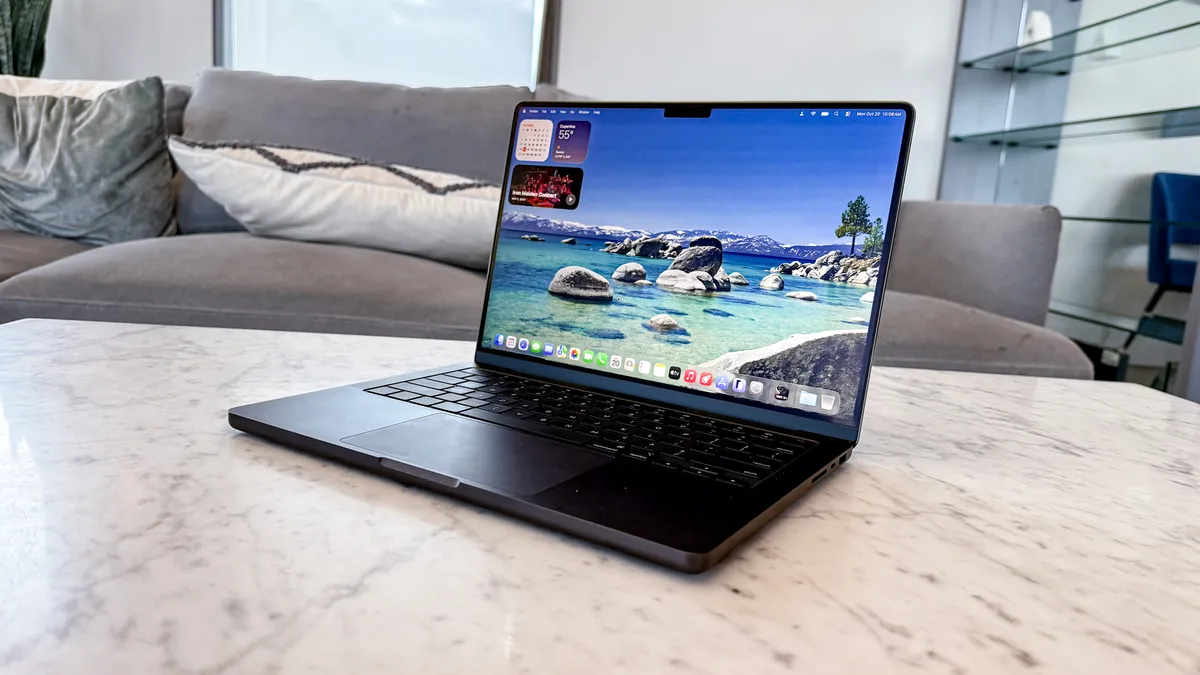
So, since I’m calling this Nvidia’s M1 moment, how does it stack up with Apple laptop silicon? While I’m at it, I'm gonna throw Snapdragon into this comparison too, as they’re all similar-ish in Arm architecture.
But the crucial differences show that it’s not about the tools you have, but rather how you use them. You see, Apple silicon isn’t just about the brute force of the hardware; it’s also about its tight integration with software that extracts that performance. In gaming, for example, the MetalFX layer has enabled MacBook Pros to do some pretty great things, like run Cyberpunk 2077.

And while Snapdragon X2 Elite is level pegging in certain benchmarks, there are still some moments where it can feel like a bit of a blunt instrument against Windows 11 — especially in that GPU department.
But with RTX Spark, this is Nvidia we’re talking about. That integrated GPU supports DLSS 4.5, so you can bet your bottom dollar that the out-of-the-box gaming performance is going to be clearly superior to Apple and Snapdragon.
On top of that, Team Green and Windows are rewriting the rules on local agentic AI, so you’re getting a heap of AI coworkers too, with those CUDA cores for the raw brunt.
Nvidia RTX Spark vs Intel Core Ultra Series 3 vs AMD Ryzen AI 400 series

Why did I put these separate from the face-offs with Snapdragon or M5? Well, it comes down to the different ways these chips compute stuff. Nvidia, Apple and Qualcomm all have Arm architectures, which do things very differently to the x86 chips from Intel and AMD.
That being said, the 30+-year-old x86 architecture does bring some material benefits over ARM — namely, zero app compatibility issues whatsoever. It’s a challenge that Microsoft and Nvidia are overcoming with a separate Arm-specific version of Windows 11, alongside working closely with developers. That could narrow the library you can play!
However, for what it may lack in this area, it absolutely makes up for in a sweeter blend of performance and power efficiency. While x86 is all about multitasking its way to doing things you ask it to (not the best on that battery), ARM tackles one task at a time very quickly. That’s easier on the power while bringing high speeds to the table, too.
Outlook
It’s been a long road since the first time we heard rumblings about this chip. In fact, I even put this in my Computex 2025 predictions! But now it’s here, I think it’s fair to say that RTX Spark is far beyond any expectations I had.
Not only is it a beastly integrated GPU for monstrous performance and impressive power efficiency (especially in gaming), but the software tie-ins fundamentally change how a Windows laptop works with you. This is going to be an interesting few months as we count down to the fall launch.
Now the wait is on for an Nvidia RTX Spark gaming handheld…that would slap so hard!

Follow Tom's Guide on Google News and add us as a preferred source to get our up-to-date news, analysis, and reviews in your feeds. Subscribe to Tom's Guide on YouTube and follow us on TikTok. Finally, you can visit our dedicated Tom's Guide Savings Squad hub for expert help on getting the best products for less.
More from Tom's Guide
- I just tested the MSI Claw 8 EX AI+ — Intel Arc G3 is a breakthrough for handheld gaming, but at what cost?
- Intel Arc G3 is here to shake up handheld gaming, and AMD should be terrified — Acer Predator Atlas 8, a new MSI Claw and more launching soon
- I built a touchscreen MacBook Pro using this snap-on accessory, and I'm baffled why Apple hasn't made its own for years