







I've been using fitness trackers for more than a decade to tracks my steps, heart rate and workouts. My first was the Fitbit One, a small, pebble-shaped cheap fitness tracker that had no notifications, apps or distractions. So it's very full circle that the best cheap fitness tracker now is the screen-less Fitbit Air.
The tracker lives inside a comfortable and nice looking strap that ends up looking more like a wristband than a fitness tracker. But it can do a lot more than my old Fitbit One, with steps, heart rate, blood oxygen, sleep, workouts and temperature tracking.
It's a lot cheaper than many trackers, but to get the most from it, you'd need to take out a recurring Google Health Premium subscription. If you want to keep costs down, then then I recommend the subscription-free Xiaomi Smart Band 10, which has all the fitness tracking essentials for less than $50.
The best cheap fitness trackers you can buy today
Why you can trust Tom's Guide Our writers and editors spend hours analyzing and reviewing products, services, and apps to help find what's best for you. Find out more about how we test, analyze, and rate.
Best cheap fitness tracker overall

It's been a long time since Fitbit launched an affordable fitness tracker, but then Google surprised us all with the screen-less Fitbit Air in the summer of 2026. It's an incredible return to form for the brand as it seems like it finally remembered that not everyone wants a smartwatch; some people just want to track their stats.
That's what the Fitbit Air excels at, and all for less than $100. The last time Fitbit released a wearable at that price was the Inspire 3 in 2022. And although it really reminds me of the Fitbit One I used to wear back in 2013, it's got a lot more going on than that — even if you can't see it on a screen.
It's a fully-equipped fitness tracker that keeps tabs on your steps, sleep, activity, heart rate and blood oxygen levels. So although it looks like the pebble-shaped trackers of old, there's a lot more going on, which helps you build a more rounded picture of your activity and wellbeing throughout the day.
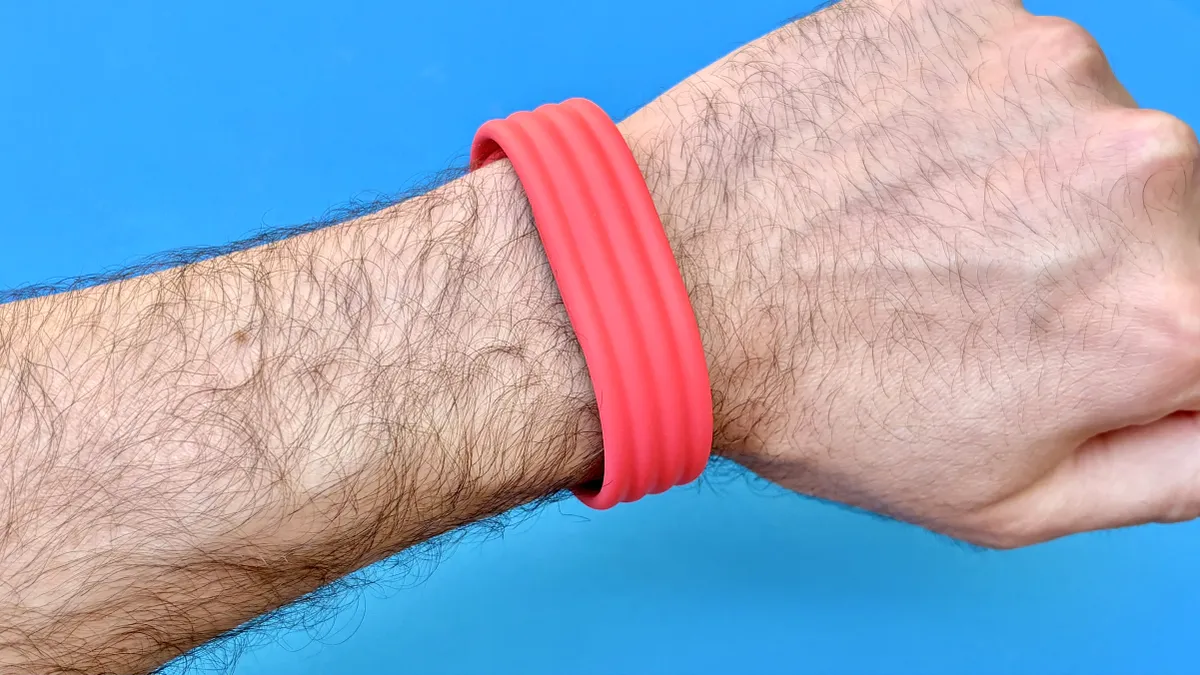
Not that you'd know it is a pebble-like tracker; the strap goes over the top, so to most people, the Fitbit Air just looks like a colorful wristband. We found it very comfortable, so it's one of the better trackers to wear while sleeping — smartwatches or larger trackers are quite difficult to sleep with, which inevitably means taking them off.
We tested the sleep tracking against the Garmin Forerunner 70, which costs twice as much, and found that, although there were some differences, the recordings were very close. The fitness tracking also held up well. Of course, since there's no screen, you have to access the data in the Google Health app.
While it's a much cheaper, subscription-free alternative to the Whoop 5.0, it's main competition is the screen-less Garmin Circa. The Circa is great if you're already in Garmin's ecosystem, but it's twice the price of the Fitbit Air for a similar(ish) experience, so if keeping costs down is your main focus, the Air wins every time.
- Read our full Fitbit Air review
Best cheap fitness tracker under $50

The Xiaomi Smart Band 10 looks like a traditional fitness tracker, with a small rectangular screen running in-line with the strap to keep it slimmer than a watch. It's not quite as discreet as the Fitbit Air, but we enjoyed our time wearing it and it's also half the price of the already affordable Air.
It's surprising, really, that a tracker with a screen can be cheaper than one without, but you're not compromising on features either. It looks quite similar to the Fitbit Inspire 3, but has less Google (which could be a plus, depending on your view of Big Tech).
Impressively, it can track 159 activities from your wrist, and as we were scrolling the list, we noticed the usual things — running, cycling, gym workouts — but also some intriguing options, like card and board games. So it has a bit of personality, but you don't realize how much until you go to sleep.
The tracker analyzes your sleep, and after it's gathered a week of data, you get assigned an animal based on your sleep quality. In our reviewer's case, the animal was a shark. Is it useful? Well, no. But it is a lot of fun, and far more interesting than a bunch of graphs can ever be (though you get those too).
Of course, the reason you buy and wear a tracker is for the data it gathers. We tested the Smart Band 10 alongside the Oura Ring 4 (which is six times the price) and found that the step and activity tracking pretty much aligned. And it was easy to see your daily stats on the tracker's relatively small display.
The smartphone app is uncomplicated and straightforward to navigate, but it does lack some of the actionable insights you get on other trackers, like the Fitbit Air or Oura Ring. But if you want to keep costs down and keep tabs on your daily activities, the Smart Band 10 is an excellent choice.
- Read our full Xiaomi Smart Band 10 review
Best cheap fitness tracker for actionable insights


If you want the distraction-free design of the Fitbit Air but a price closer to the Xiaomi Smart Band 10, the Amazfit Helio Strap is the tracker you need. Although I'm comparing it against the Air here, it came out a while before Google's option as a more affordable dupe of the Whoop 5.0.
But it has two big advantages of either of those; it's a lot cheaper and you don't need a subscription to access any of the features or insights. So while Amazfit might not be a household name in the same way as Fitbit or Whoop, you get a lot for your money and save on recurring fees too.
We were impressed at how comfortable and adjustable the default strap is. Every time it felt too tight, you just loosen the hook and loop strap to whatever feels best. Plus, this makes it easier to sleep with. We tried it overnight and were impressed with how detailed the tracking was.
Impressively, the app also has two features normally reserved for expensive trackers; a recovery 'Biocharge' score and PAI, a measure of your week's activity which comes with actionable advice on how to boost your fitness. And you get to use these without any subscriptions or additional fees.
Since the Helio Strap doesn't have a display, it uses automatic workout tracking based on what it thinks you're doing. Generally, this is a useful feature, but we found that it was quite unreliable on the Helio Strap. So while testing, we switched to manually starting workouts on the phone app instead.
Given what you get with the Helio Strap, this isn't a deal-breaker. But unlike the Xiaomi Smart Band 10, you don't have the option to manually start tracking from your wrist, so it does mean you need your phone handy to get the most accurate workout recordings.
- Read our full Amazfit Helio Strap review
How we test the best cheap fitness trackers
For every fitness tracker we review, we look at three main areas; design, comfort and software. But before any of that, we unbox the tracker, and look at how easy it is to set up and whether you can easily change the straps to one that's more stylish, or better suited for sweaty workouts.
A lot of the best cheap fitness trackers don't have a display, but for those that do, we tap away at it to see how responsive it is and look at it in different conditions, like in dark rooms or sunny spots, to see how easy it is to see it, even when it's bright around you (which is important for outdoor activities).
If there are on-screen menus, we play around to see how easy these are to navigate. This is important anyway, but especially if you're mid-workout. So we also fiddle with options when we're running or have sweaty hands to see how the display handles real-life situations.
All fitness trackers will give you things like step count and heart rate, but we check whether these values are accurate. We manually count steps with an analog pedometer and wear one (or several) trackers concurrently to see what each records during the same activity.
Most of the time, you'll check your data on the tracker's companion app, so we install that and explore customizations, figure out where all the data goes and see what additional insights are on offer. After all, you can't analyze trends on your wrist, so you want to be sure it's easy to do on your phone.
How to choose the best cheap fitness tracker
Before you shortlist cheap fitness trackers, it's important to think about what you actually want from it. In the past decade, some fitness trackers have grown from small wrist-worn step trackers to smartwatch-like devices. But you don't want to pay for features you're not going to use.
If you're choosing between the best fitness trackers and these cheaper ones, the main difference is not in the hardware, but in how the software analyzes your data. So if you're after actionable insights, then you'll want to pick something like the Fitbit Air or maybe one of the best smart rings.
And when I say actionable insights, I mostly mean AI-backed recommendations based on your data. So the tracker can look at how you slept, how much activity you've done lately, and give you some guidance on how to approach the day.
It can be useful, but it's good to consider whether that's something you actually want and that'd be helpful for you. Generally, you'll spend more for this type of analysis (and some features might be paywalled behind an extra subscription) so be sure it's what you really need.
Because various forms of fitness tracker have been around for more than a decade now, the tech that powers them has got a lot cheaper. So if you're not that interested in AI insights, you can pick up something pretty affordable like the Xiaomi Smart Band 10 and still get a lot of quality data from it.

