The most beautiful, established gardens have a secret: they're not constantly being redesigned and replanted. They're built on self-seeding flowers that appear year after year in slightly different spots, creating that effortless, romantic look of a garden that's been perfected over decades.
Because these plants choose exactly where they want to grow, they naturally fill the awkward gaps in your flowerbeds with zero extra effort. It’s the ultimate shortcut to a dense, layered garden for anyone who would rather relax in their yard than work in it.
Here are 9 self-seeding flowers that will happily do all the hard work for you, year after year.
How self-seeding flowers work
Self-seeding flowers drop viable seeds that germinate when conditions are right. Seeds only survive where they land if conditions suit them, so healthy plants naturally appear in ideal locations. You don't have to plan it or figure out spacing — nature handles the selection.
The only maintenance is pulling seedlings from inconvenient spots. Otherwise, your garden gets fuller and more established each year with no additional planting effort. Over time, you'll have plants established throughout borders and beds that grow entirely on their own.
This is efficient gardening. Plant once, maintain minimally, and let the plants handle their own reproduction and spread. The result is a garden that improves year after year.
9 self-seeding flowers that come back every year for free
1. Columbine (Aquilegia vulgaris)

If you want a reliable spring bloomer that fills gaps naturally, columbine is your answer. This classic cottage garden plant seeds itself so readily you'll barely have to maintain it.
Bell-shaped flowers in white, pink, purple, and bicolor combinations bloom above lacy foliage. Reaches 2-3 feet tall and self-seeds into gaps in borders and pathways reliably.
Each generation of seedlings produces slightly different colors thanks to cross-pollination, so you get variety without planning it. Hardy in USDA zones 3-9 and adapts to most soil types, though it prefers moist soil and dappled shade.
Maintenance is minimal once established. You'll only need to pull seedlings from inconvenient spots occasionally.
2. Black-eyed Susan (Rudbeckia hirta)

Want bright summer color that comes back year after year? Plant Black-eyed Susan once and let it handle the rest.
Bright yellow daisy-like flowers with brown-black centers bloom all summer and reach 12-39 inches tall depending on variety. Drought-tolerant and unfussy about soil quality.
Flowers dry naturally on the plant and drop seeds for next year's growth. No deadheading required if you want self-seeding. Plant in full sun and largely ignore them — they thrive on neglect.
It's a short-lived perennial that often gets grown as an annual, but self-seeding eliminates the need to replant.
3. Cosmos (Cosmos bipinnatus)
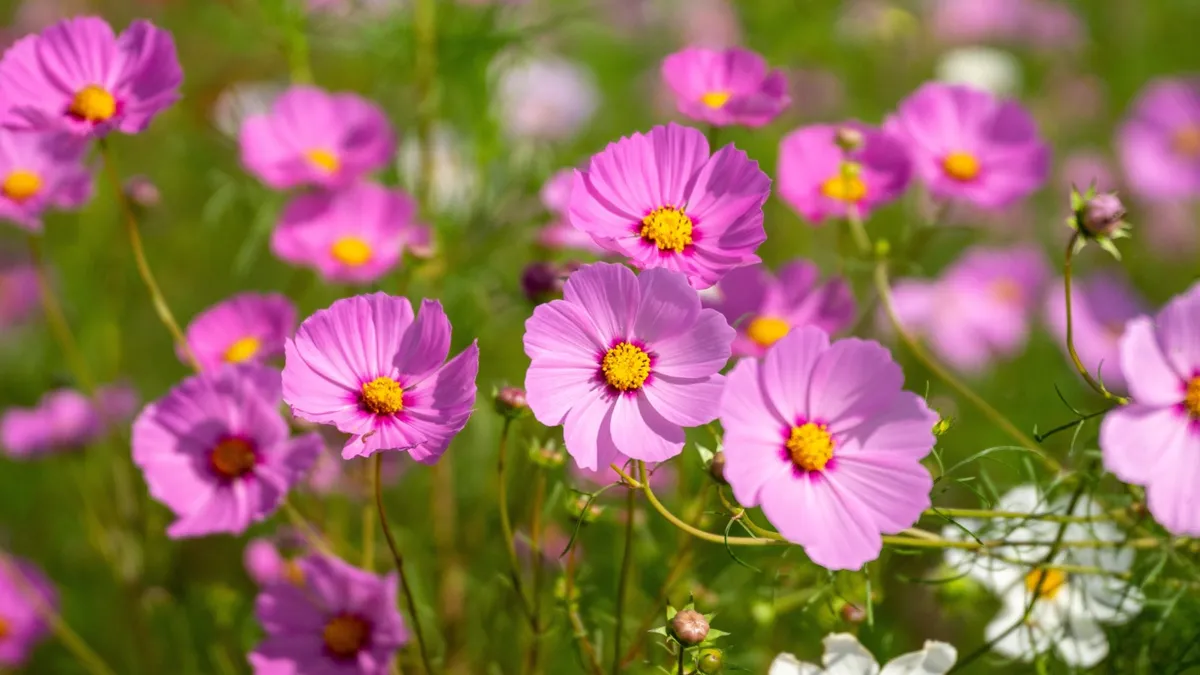
For continuous color from summer through fall, cosmos delivers without effort. Plant once and they'll reseed themselves for years.
Feathery foliage topped with flowers in pink, white, orange, burgundy, or bicolor. Blooms continuously and reaches 3-6 feet tall depending on variety.
Cosmos self-seeds prolifically. Leave a few spent flowers on the plant to drop seeds naturally. Next spring you'll see seedlings throughout the garden without any effort from you.
Requires full sun. Prefers lean soil and produces more blooms with regular deadheading, though this isn't necessary for self-seeding.
4. Allium (Allium spp.)
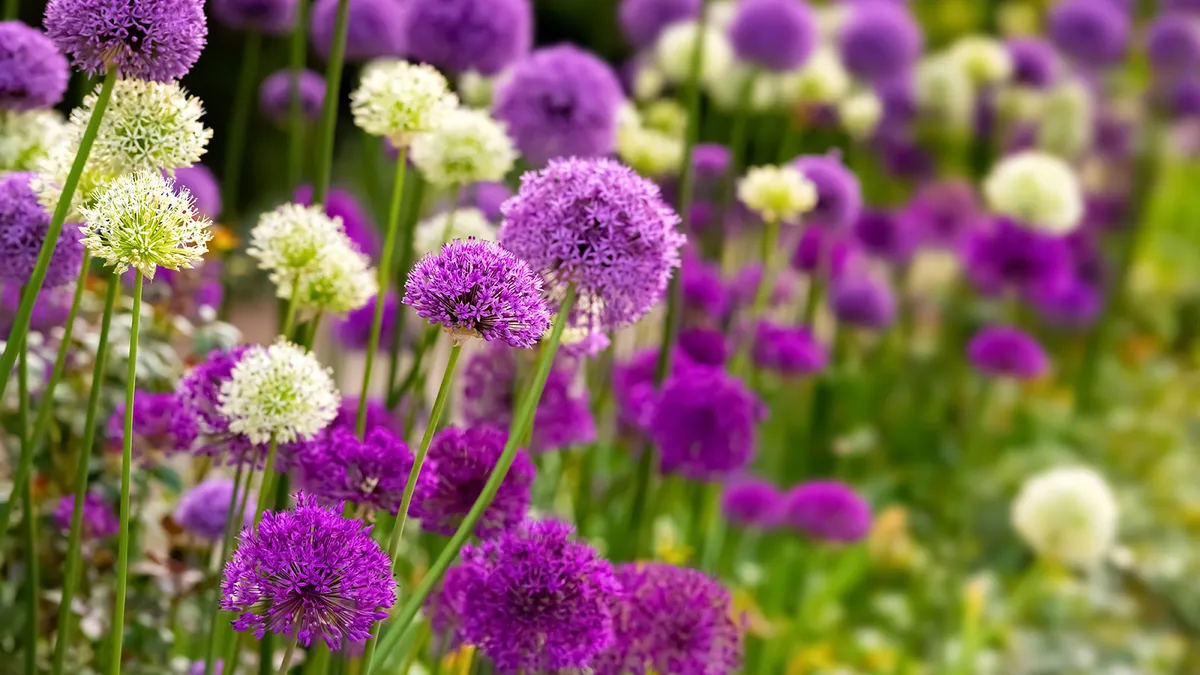
Looking for architectural interest that comes back reliably? Allium is a perennial that returns annually, providing structure and drama while handling its own reproduction.
Globe or drumstick-shaped flowers in purple, pink, white, or yellow. Spring to summer bloomer depending on variety. Heights range from 1-3 feet.
Self-seeds reliably year after year. Seedlings transplant easily if they pop up in wrong locations. Some varieties (chives, garlic chives) are edible.
Full sun and average soil are all they need and pollinators love them.
5. Marigold (Tagetes)

If you're looking for a reliable, cheerful flower that handles neglect, Marigolds are the one. They self-seed dependably and bloom through heat and drought.
Marigolds provide vibrant shades of gold, orange, and red, and are reliable bloomers that tolerate heat, drought, as well as poor soil. Various heights available from 1-3 feet.
Self-seeds readily. Leave spent flower heads on the plant to dry and drop seeds, or hand-harvest seeds to place where you want next year's flowers.
These flowers are simple to grow and requires no special care once established. Predictable performer year after year.
6. Nigella (Nigella damascena) — Love-in-a-Mist

For delicate, romantic flowers that self-perpetuate, nigella, commonly known as love-in-a-mist, fills spaces with minimal intervention. Plant it once among other flowers and it becomes a permanent feature.
Delicate blue, pink, or white flowers with lacy foliage. Interesting papery seed pods appear after blooms fade and look decorative through fall.
Nigella self-seeds readily once established. Plant among vegetables or flowers and it fills gaps naturally. They prefer full sun and reappear year after year.
7. Nasturtium (Tropaeolum spp.)
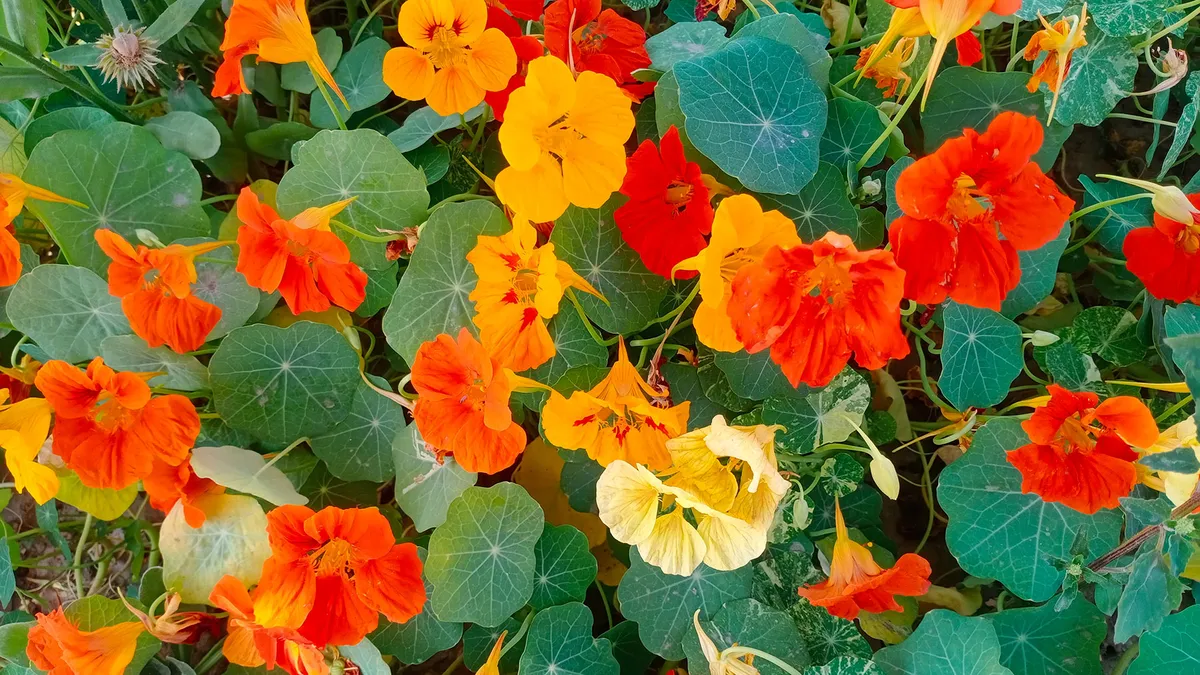
For bright, edible flowers that come back on their own, nasturtiums deliver color and practicality. Plant them once and they handle their own spread.
Bright flowers in hot pink, coral, yellow, and deep red. Comes in vining or bushy forms. Blooms continuously throughout summer.
Seedlings transplant without complaint if they appear in unwanted locations. Leave a few flowers to go to seed for next year's volunteers.
They prefer full sun to part shade and even tolerate poor soil. The entire plant is edible with a peppery flavor. Plus, you'll get frequent pollinators coming to visit.
8. Sweet Alyssum (Lobularia maritima)

Want a fragrant ground cover that fills gaps between pavers and borders? Sweet alyssum self-seeds into tight spaces other plants can't reach.
These flowers are tiny, honey-scented and come in white, pink, or purple. They provide Low-growing ground cover that blooms spring through fall until hard frost. Reaches 4-8 inches tall.
Minuscule seeds self-sow everywhere — between pavers, along borders, and in containers, making this a truly low maintenance plant. They prefer full sun to part shade in hotter climates. Once established, alyssum returns reliably year after year.
9. Poppy (Papaver)

For dramatic late-spring blooms that naturalize throughout your garden, poppies establish themselves and return indefinitely. Plant once and enjoy them for decades.
Poppies are known for their bold, dramatic flowers that command attention. Red is most common, but other colors available. They bloom in late spring and reach 2-4 feet depending on variety.
After petals fall, seed capsules form and naturally scatter seeds throughout the garden. Reappears reliably each spring without replanting.
For the poppy, full sun essential. Once introduced to your garden, becomes a permanent feature.

Follow Tom's Guide on Google News and add us as a preferred source to get our up-to-date news, analysis, and reviews in your feeds. Subscribe to Tom's Guide on YouTube and follow us on TikTok. Finally, you can visit our dedicated Tom's Guide Savings Squad hub for expert help on getting the best products for less.
More from Tom's Guide