




The best VPNs are an ideal tool for protecting your privacy online. They encrypt will encrypt your internet traffic, shield your IP address, and allow you to bypass internet censorship.
While we'd always recommend you subscribe to a paid VPN service, free VPNs exist too. The market is flooded with free VPNs that promise privacy but deliver the opposite: harvesting your data and selling it to the highest bidder. It sounds bleak, but dismiss free VPNs entirely and you'd be missing out.
A handful of reputable, genuinely safe free VPNs exist, and if you know which ones to use, you can get solid online protection without spending a penny – our best free VPN guide details which free VPNs we like and why.
Here's everything you need to know about staying safe with a free VPN, including the three we actually recommend.

The best free VPNs at a glance

Are free VPNs safe to use?
The short answer is: it depends entirely on which one you choose.
When we surveyed almost 2,000 Tom's Guide readers about their free VPN habits, streaming and privacy came out neck and neck as the top reasons people use them, each pulling 24% of the vote.
The demand is clearly there, but so is the risk. A huge number of free VPNs available on app stores exist purely to harvest your data, serving up your browsing history to data brokers or packaging it for sale to hackers. In the worst cases, they're not VPNs at all, just malware dressed up in a privacy-friendly interface.

That said, there are safe free VPNs – you just need to know where to look. Our top three picks, PrivadoVPN Free, Proton VPN Free, and Windscribe Free, are all freemium products from reputable companies. They make money by hoping you'll eventually upgrade, which means it's in their interest to treat you well and protect your data. All three follow strict no-logs policies, have solid kill switches, and use the same AES-256 encryption as their paid counterparts.
Where free VPNs do fall short is in features and flexibility. Expect data caps (PrivadoVPN Free and Windscribe Free cap you at 10-15 GB per month), limited server locations, and fewer extras.
Proton VPN Free sidesteps the data cap with unlimited bandwidth, but restricts which server you connect to. None of them can match a premium VPN for server variety or streaming power, but used correctly, they're genuinely safe.

Is it safe to use a free VPN when travelling?
Using a free VPN while traveling is safe for the vast majority of use cases. If you're looking to protect yourself on public Wi-Fi (in airports, hotels, or cafes), any of our three recommended free VPNs, or one of the best travel VPNs, will do the job.
Your traffic is encrypted and your IP address masked, so even if you're connected to a compromised or fake hotspot, hackers can't see your data. For general browsing, checking emails, or logging into your bank, a free VPN is all you need.
Streaming is where things get more complicated. Both PrivadoVPN Free and Windscribe Free can unlock UK and US Netflix and BBC iPlayer, which is handy if you want to catch up on something from home. The problem is data. With a 10-15 GB monthly cap, a few hours of HD streaming will burn through your allowance fast.
If you're traveling for any extended period and streaming is a priority, a paid VPN with unlimited data and a wider range of server locations will serve you much better. You can check out our guide to the best streaming VPNs to explore some of our favorites.

If you're set on a free option for streaming while abroad, it's worth knowing about EventVPN. Built by the team behind ExpressVPN, it offers unlimited data and 36 server locations, which is significantly more than our top three. The catch is ads, and a 30-second wait before connecting or disconnecting – plus it's also only available on Mac and iOS. If you can live with that, it's a solid free streaming option.
One thing to bear in mind when traveling is where you're going. In most countries, using a VPN is completely legal and unremarkable. But in places with heavy internet censorship (China and Russia, for example) free VPNs can struggle against sophisticated blocking technology. We'll cover that in more detail in the next section.
Can you get caught using a free VPN?
The risks of getting caught using a free VPN are broadly the same as with a paid one, and the best free VPNs use the same encryption standards as their premium counterparts.
PrivadoVPN Free, Proton VPN Free, and Windscribe Free all use AES-256 encryption, a secure and long-time industry standard. A no-logs policy adds another layer of protection: if your VPN doesn't store data about your activity, there's nothing to hand over even if a warrant is served.
Where free VPNs can fall short is in countries with active internet censorship. A standard VPN connection, even an encrypted one, can be identified by your ISP using Deep Packet Inspection (DPI) – the tell-tale signs of VPN traffic are still visible even if the contents aren't. This is where obfuscation matters. Both Proton VPN Free and Windscribe Free offer obfuscating protocols on their free plans (Stealth and WStunnel, respectively), which disguise your VPN traffic as regular HTTPS traffic, making it much harder to detect and block. PrivadoVPN Free has a scramble feature on Windows, though our testing found it less reliable than the other two.
For the vast majority of people, though, the honest answer is no, you won't get caught, because there's nothing to get caught doing. VPN use is legal in most countries, and in places where it isn't, using one of our recommended free VPNs with solid obfuscation gives you a reasonable layer of protection.

How to choose a free VPN
Choosing the right free VPN comes down to what you actually need it for. The good news is that our top three picks each have a distinct strength, so there's a clear best choice depending on your priorities. EventVPN is also worth considering if streaming is your main use case.
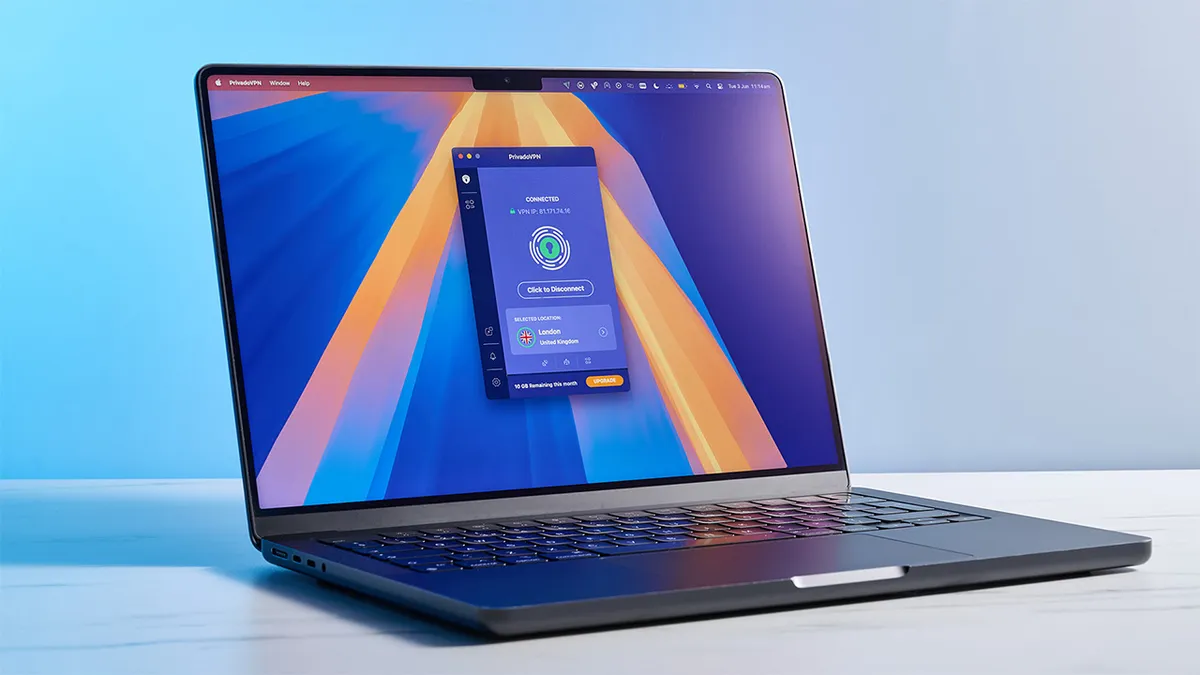
If you want the most well-rounded free VPN for general use, PrivadoVPN Free is the one. It's the fastest of the three, can unblock UK and US Netflix and BBC iPlayer, and has servers in 10 countries. The trade-off is a 10 GB monthly data cap, which is enough for occasional use, but not all-day protection.
Windscribe Free is a close alternative, with a slightly more generous cap of up to 15 GB, more server locations, and a broader feature set. It's the better pick for experienced users who want more control, though its apps are more complex and less beginner-friendly.
If privacy is your top priority, Proton VPN Free is the standout. Its no-logs policy has been independently audited, its apps are open-source, and it offers unlimited data, making it the best choice if you want always-on protection. The downside is that you can't manually choose your server, which makes it unreliable for streaming.
For streaming specifically, EventVPN punches above its weight for a free product: unlimited data and 36 server locations put it ahead of the pack in that department. Just be prepared for ads and a 30-second connection delay, and note it's Mac and iOS only.
Free VPN FAQs
Which free VPN is the safest?
Among free VPNs, Proton VPN Free is the safest option. Its no-logs policy has been independently audited, its apps are open-source, and it offers unlimited data with solid anti-censorship features.
PrivadoVPN Free and Windscribe Free are also safe choices – all three use AES-256 encryption and follow strict no-logs policies. If you're looking beyond free options, check out our guide to the most secure VPNs.
Can free VPNs be hacked?
No VPN is completely immune to hacking, but the best free VPNs are as secure as their paid counterparts when it comes to core encryption.
All three of our recommended free VPNs use AES-256 encryption and secure protocols like WireGuard and OpenVPN.
Where things can go wrong is with poorly maintained servers, outdated protocols, and ad or malware infested free VPNs. There are countless free VPNs where your data is more at risk when using them, than not having a VPN altogether.
Sticking to reputable free VPNs significantly reduces that risk.
Is using a free VPN dangerous?
Using a VPN itself is not inherently dangerous, as VPNs are designed to enhance online security and privacy by encrypting internet traffic and masking IP addresses.
However, it is vital to choose a VPN that you can trust with your data, as well as one that takes security seriously. Suspicious free VPNs can harvest your data, sell it to third-parties, target you with ads, and even monitor your traffic or host malware.
Are free VPNs legal?
In most countries, yes, VPNs are perfectly legal tools for protecting your privacy online. That applies to free VPNs just as much as paid ones.
The caveat is that a VPN doesn't make illegal activities legal, and some countries (like China and Russia) have restrictions on VPN use. If you're unsure about the rules in your destination, it's worth checking before you travel.
The bottom line
Free VPNs have come a long way, but they can't match a paid VPN for server variety, streaming power, or flexibility. If you can stretch to a couple of dollars a month, it's worth it: and many premium VPNs offer free trials or money-back guarantees so you can test before you commit.
Surfshark has a 7-day free trial across all platforms, while Norton VPN offers a 60-day money-back guarantee.
If paying isn't an option, our three recommended free VPNs are genuinely safe. PrivadoVPN Free, Proton VPN Free, and Windscribe Free all use the same core encryption as premium providers, follow strict no-logs policies, and include a kill switch.
Just steer clear of anything that seems too good to be true: a fully free VPN with no ads, no data cap, and no restrictions is almost certainly making money from your data instead.
We test and review VPN services in the context of legal recreational uses. For example:
1. Accessing a service from another country (subject to the terms and conditions of that service).
2. Protecting your online security and strengthening your online privacy when abroad.
We do not support or condone the illegal or malicious use of VPN services. Consuming pirated content that is paid-for is neither endorsed nor approved by Future Publishing.
