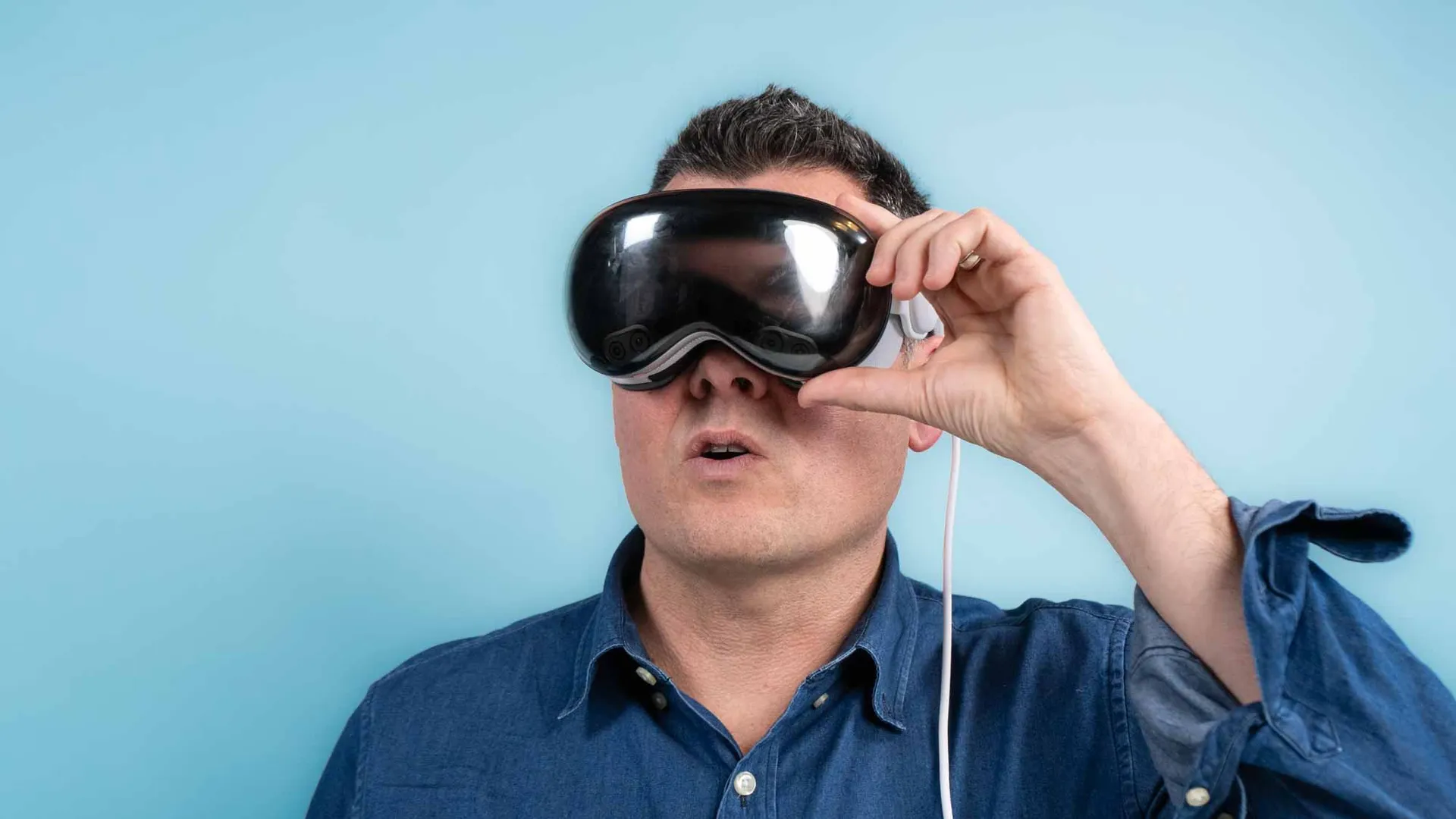
iPhones and iPads come with either Touch ID or Face ID, depending on the model you choose, offering a convenient way to confirm your identity without having to type in a passcode every time you need to use your device. But what happens when you have a headset, like Apple Vision Pro, which isn’t really suited to either? That’s where Optic ID comes into play.
Optic ID is an iris scanner, which can scan the colored part of your eyes to confirm that the correct person is using the Vision Pro headset. This scanning is done thanks to the Vision Pro’s eye-tracking system, with “eye-safe near-infrared light” illuminating the eye for the internal cameras to capture images of your iris.
These images are then sent to the secure enclave section of the M2 chip’s neural engine. It’s there that the system compares the new scan to your existing biometric profile. All that data is encrypted and stored on your device, according to Apple, and never on the cloud.
Apparently the odds of someone unlocking a Vision Pro with Optic ID are around one in a million — which is similar to Face ID. This is because the system matches "detailed iris structure in the near-infrared domain," which "reveals highly unique patterns independent of iris pigmentation."
Apple also says that Optic ID will update your biometric profile every time you use it. That way the system can adapt to how your irises change over time and in different conditions. Meaning you won’t find yourself locked out of the Vision Pro, and forced to type in a passcode, simply because your eyes changed just a little bit too much.
The benefit to using Optic ID is that you can pull on the headset and unlock it right away, without any additional effort. Much like Face ID and Touch ID, Optic ID is also used to authorize various features like Apple Pay, accessing sensitive data or logging into third party apps. Plus you’ll need to keep it activated if you want to use a Persona avatar in video calls on FaceTime and Zoom.
Of course Optic ID still works with the Zeiss optical inserts for glasses wearers, and an accessibility setting lets you change the system to scan a single eye — instead of both.
But like Touch ID and Face ID there are situations where Optic ID will not be available. Including when your headset has just been switched on or restarted or you haven’t used it for 48 hours. Similarly you’ll need to enter a passcode if you haven’t used a passcode in 6 and a half days, and Optic ID hasn’t unlocked the Vision Pro in the last 4 hours.
However it is possible to use Optic ID if your iPhone is nearby. Though you will need to set this up on a device with iOS 17.1 or later, using the guide on Apple’s support site.
You get 5 chances to unlock with Optic ID, and failing that you’ll need to re-enter your passcode. If you’re so inclined, you can also set the headset to erase all data if the passcode is incorrectly attempted more than 10 times.
More from Tom's Guide
- Apple Vision Pro — new viral trend is catching people wearing Apple's headset exactly where they shouldn’t
- iPhone 16 could get a new design — and it's all thanks to Vision Pro
- Apple Vision Pro teardown reveals how complex this headset is — I’m anxious just watching it