As the days stretch out and the cooler weather finally gives way summer, your backyard is likely calling your name. But let’s be honest: nothing kills the vibe of a carefully curated alfresco dinner party faster than a patio that plunges into total darkness the moment the sun dips below the horizon — or worse, a set of cheap solar stakes that flicker out before the dessert course.
In 2026, outdoor hosting has evolved beyond the basic barbecue, and investing in the best patio lights can turn your space into the ideal bridge from your home to the outside world, with both smart and affordable options that will work for every space. Best of all? We've tested each and every option in this guide.
If you're looking for string lights, Brightech's Ambience Pro LED Outdoor String Lights are my favorite pick. If you have a small patio or want to opt for an outdoor bistro ambiance, they can be wall-mounted or strung around a tree or garden feature.
However, if you want to brighten pathways or stairs, I rated the T-Sun LED spotlights as the best path lights. These low-profile lights are elegant and understated.
To help you decide, here are the best solar lights to suit any backyard, lifestyle and budget right now.
Best solar lights overall


Want to make your patio look like an outdoor bistro or Italian cafe? Brightech’s solar-powered string lights will do the trick. This string of LED bulbs are designed to look like retro Edison-style lights, which will cast a warm, gentle glow on your deck in the evening. The bulbs are made of shatterproof plastic, and are designed to withstand winds up to 50 miles per hour, as well as rain, snow, and temperatures up to 122 degrees Fahrenheit. If you're looking for sturdy solar string lights, these are up to the job, and
When we put them to the test, these lights delivered in every respect; enduring two severe rainstorms, one tropical storm, heavy rainfall in a shower and four hours in the freezer with no sign of damage.
They reliably switch on and give around six hours of light, which tends to be all you need for entertaining, especially in summer. They're much brighter and more reliable than the AMIR Upgraded Solar String Lights reviewed below.
The 12 Brightech Ambience Pro lights are connected on a 27-foot cord, with 20 inches between each light. The big gaps between the lights made them easy to set up, and they're versatile enough to work in both trees and along fences and walls.
There’s no ambient light sensor, but the lights last for up to six hours on a full charge. The lights also come with a three year warranty.
- Read our full Brightech Ambience Pro LED Outdoor String Lights review
Best budget solar lights


The beauty of the T-SUN LED solar spotlights is that they can be used at ground level or wall-mounted, giving you flexibility with how you use them. They can also be used with a security focus to illuminate dark areas, such as around an entry way to ward of uninvited guests, or to make areas safe, such as lighting up steps or pathways.
What’s more, these spotlights can be ground-mounted by attaching the accompanying spikes, and used to highlight specific spots within your garden. From illuminating a feature tree or shrub to adding lighting to a garden pond or decorative flower bed.
Be warned, these spotlights give off a bright white light. This is ideal when you need a security or safety feature, but it might not be what you’d choose for softer ambient lighting. However, they do have two settings on the lights, to adjust the intensity of the light. If you choose the lower setting, you’ll also discover that the lights stay on longer, as less solar energy is used to power them up.
Unlike some spotlights, which tend to be square or rectangular in shape, these neat lights from T-SUN have a cone-shaped head with a circular face — giving an altogether softer appearance, which is what makes them so fitting as a delicate spotlight to sit within a flower bed. But, although they are softer than some spotlights in appearance, they are still tough enough to bear the brunt of rain and frost.
- Read our full T-Sun LED Spotlights review
Best smart solar lights


The Ring Solar Pathlights are the best solar lights for anyone who has other Ring products, such as the Ring Video Doorbell. They're great for security - like a Ring doorbell, these lights send your notifications when they detect movement, so they're great for keeping an eye on your property.
We really liked their motion sensors, which we could set to turn on only when they detect a person’s presence, helping to preserve the Pathlights' battery life. Additionally, you can connect them with other Ring devices, so that if the Pathlights sense something, your Ring camera or video doorbell can start recording automatically.
On top of that, they have adjustable brightness settings and work with Alexa, so you can adjust them from your phone or by voice commands.
They're relatively easy to install — you just clip the parts together and stick them in the ground. The only finicky step is adding the Ring Bridge to a power outlet in your house and setting up the app.
However, these are true pathlights, so they won't work for ambient lighting, only for practical path lighting. At $35 a piece, the Solar Pathlights aren’t cheap, and you’ll also need the Ring Bridge ($50, sold separately) to connect them to your home Wi-Fi network.
- Read our full Ring Solar Pathlight review
Most weather-resistant solar lights


If you want solar step lights specifically for your deck or fence, then our winning step lights are worth a look. They’re available in packs of two, four, eight, and 16, and there’s six colorways to choose from.
Each light features three LED beads and needs 6-8 hours to fully charge, providing 8-10 hours of illumination. When we tested them, we found that they over-delivered, staying illuminated for nearly 12 hours at a time, even after a rainy, cloudy day.
They’re not the brightest, but they sufficiently lit our steps, plus they held up fine in heavy rain and high winds. They were a little sluggish after being subjected to freezing temperatures, though. We found them easy to install with a drill and at less than $40 to illuminate between 4 and 8 steps, they're a bargain compared to many of the other options.
The big issue, however, is that these don't have motion sensors. They're on all night, which can help to deter thieves but causes light pollution that could become a point of contention with the neighbours, or break the rules of your homeowners' association.
- Read our full JACKYLED Solar Step Lights review
Best solar flood lights


If your biggest concern is safety and security, you need these lights from Aootek. The motion sensor can detect people or objects up to 26 feet away in a 120-degree arc. During testing, we found it caught everything that crossed its path. This makes them great for practical lighting and security. They're a good choice for a garden door or shed, where you might need practical lighting to help you see in dark winters, or as security lights for a porch or alleyway.
These floodlights, which have an effective arc of 270 degrees, can be set to one of three modes: Security, where the motion sensor activates the light for 15 seconds; On, where the lights turn on at dusk; and Smart Brightness, where the lights turn on a low setting at dusk, and brighten when they detect movement.
We found that just one of these lights can easily illuminate an entire driveway. The 'On' mode lasts for 8 hours, which is one of the best on test, and the other modes last even longer. These lights are very durable too, easily withstanding rain and freezing temperatures.
- Read our full Aootek Solar Outdoor Flood Lights review
Best solar string lights


The AMIR string lights are particularly cute. Add these solar-powered string lights to your pergola, fence, or wall, and you’ve got the makings of a cozy outdoor evening set. They're incredibly easy to set up; just put the solar panel in a sunspot then wrap the wire around a tree or along a fence.
Amir’s solar-powered string lights are 72 feet long, with 200 LEDS spaced 3.5 inches apart. The lights are held together by thin copper wire, which virtually disappears, so all you see are the twinkling lights. The copper wire can also be bent to conform to various shapes, too.
AMIR’s string lights can be set to eight modes, including fireflies flashing, waves, fading, chasing/flashing, fading slowly, twinkle/ flashing and steady on. You can also set them to turn automatically at dusk, and off at sunup. These lights are available in warm white, cool white, and blue, and also comes in shorter 33-foot/100 LED lengths. On testing, we found they were both easy to install and durable, lasting well despite the rain and freezing temperatures.
However, these aren't as light-sensitive as other solar lights we tried. Our number one pick, the Brightech's Ambience Pro LED Outdoor String Lights, turn on even hen it's overcast. These lights, however, are only really at their best after hours of full sun. They're a great choice if you live in Arizona or Texas, but they might not work for Oregon or Washington.
- Read our full AMIR Upgraded Solar String Lights review
Also tested
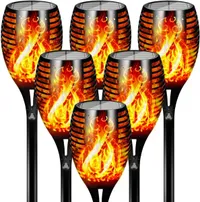
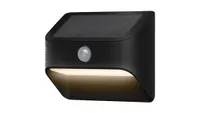
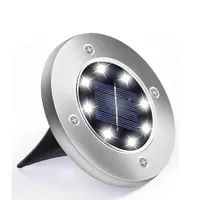
We test many solar lights for our guide, but not all make the final cut. However, these all serve a purpose and are adequate to do a good job. So, if you're after more options, here are some solar lights that we also recommend.
How we test the best solar lights


We tested all of these solar lights over the course of a month at a coastal home in New England. To keep things consistent, we first unboxed them and left them outside to charge in various spots around the yard — in doing this, they would all receive the same amount of sunlight at the same angles. After a week, we placed each light in the freezer for four hours before dusk and then returned them to the yard to monitor which ones functioned as usual and how long they stayed illuminated.
Additionally, we put them to the test for water resistance, and installed each of the lights in appropriate positions to monitor how they stood up to various weather conditions. Over 14 days, each solar light was subjected to a tropical storm, hot and humid days, overcast days and rainy days. We monitored how well they stayed in place throughout.
How to choose the best solar lights
Wondering which solar lights should I buy? Before you pick your favorites, take a stroll around your property at night and consider which areas you want lighting up. Then, think about what solar light type would be most suitable. You might want to brighten up your driveway or the side doors, or perhaps the path itself.
Think about how many lights you are going to need and how bright they will have to be to achieve what you want. If you’re not 100 percent sure, then adjustable power solar lights might be best. Take into account how much sunlight that area gets too. If it’s limited, you will need a separate solar panel which can be better placed.
If you want to improve the aesthetics of your deck or patio, then string lights or Edison bulbs are worth considering. These don’t provide intense lighting, but it’s enough for the background and adds a soft glow. However, if you’re buying solar lights so you can better see the steps, you need ones which are bright and fit for purpose — solar step lights are available for this very reason.
Ease of installation and battery life are important aspects to take into account, especially if you want the lights to last through the night. If battery life is your priority, you might want to consider a solar light with motion sensors — these will provide light only when you need it and ultimately save on power.
Don’t forget about what the solar lights will look like during the daytime as well. You don’t want them to look too cluttered or obtrusive. Some come with stainless steel casing to give a more premium appeal, while others have glass lampshades. Some can also be concealed easily as well, but make sure they’re not a tripping hazard.
It should go without saying, but be prepared for your solar lights to struggle in the winter months or if you live in a particularly cloudy climate. The more sun they get, the longer they will last — ideal if you live somewhere like Phoenix, but not so much if you live in Seattle. The same goes for if you plan to place them in a particularly shaded location; they may not give you the performance you’re hoping for.
Don’t be seduced by the online images before you buy. These can make the bulbs look brighter and bigger than they actually are so look over the specs for accurate information. Be sure to check how many bulbs you actually get and the length of any cable, if you need it to cover a specific area.
Think about what tone of lighting you want in the garden as well. Most solar lights use LED bulbs which project a white light. Some may find this too harsh, especially if it’s lighting where you plan to entertain guests! If you want a warm or soft tone, invest in solar lights with tinted covers.
If you’re about to throw away your current lights, before doing so check they really are broken. If you don’t have much sunny weather, they may be struggling to charge. Bring them indoors and leave them under your regular lights. This will actually charge them! Some also come with a USB charger which you can use.
FAQs
What types of solar lights can you buy?
Path Lights: Solar path lights are designed to light up a path. These more often look like stakes which are inserted in the ground and the solar panel can usually be found directly on top. Bear in mind, if you choose this design, your pathway will need ample sunlight in the day; otherwise, opt for path lights which come with a separate solar panel.
String Lights: String lights feature a long cable which connects multiple bulbs — these can be dainty such as fairy lights or full-size bulbs. String lights look best when draped around the desired area, which can be anywhere from the patio to the flowerbeds. They’re designed for aesthetic effect rather than practicality and so won’t shed vast amounts of light.
Flood Lights: These solar lights are bright and intense, flooding light on your chosen area. They are usually mounted high up on a wall for maximum coverage. They’re great if you want full visibility for added security.
Spot Lights: These produce a narrow beam which can be angled to light up a specific point. They are designed to highlight areas in the backyard and are a great option if you don’t want to fill it with lights. Like path lights, these are usually designed with stakes to hold them in the ground, but they appear much more prominent.
Wall Lights: As the name suggests, solar wall lights are installed on the external walls or fence of your property and provide light immediately around it. These are great for added guidance and security at night.
Step Lights: Solar step lights are a must-have if you struggle with steps around your property at night. These are installed alongside the wall and light up the steps better than a singular light source would.
What is an IP rating for water resistance?
If you want to waterproof tech items, many brands get them assessed for 'ingress protection' (IP), which leads to an IP rating. This rating tells you the conditions the product can withstand, like how much water and for how long, or the amount of dust.
For solar lights, the most common rating is IP65. The '6' refers to the dust protection — in this case, no dust can get inside the device — and the '5' relates to the protection against water. A typical solar light will have a '5' rating, which means it can withstand rain and splashed water.
The higher you go on these numbers, the more protection. Some solar lights offer IP68, which means it can actually be immersed in water without damage. This is ideal if you plan to put them around a pool, where there's a risk they end up in the water, or if you live in an area prone to flooding.
How many hours of sunlight do solar lights need?
Generally, 10 hours in the sun charging will get you 15 hours of illumination. This will vary depending on the types of lights you buy, how much power they draw, the efficiency of the solar panel and, of course, the amount of sun. They'll still charge in cloudy conditions, but not as quickly.